


My first interaction with Mizzou Track & Field came in the form of a profuse apology. Last summer, I was on vacation in Alaska when I had scheduled a time to speak to coach Kyle Levermore about potentially interning with the program as a photographer. I miscalculated the time difference, and as a result missed the call. After a nerve-wracking half hour worrying that I had completely botched my chances at the job, he called me again, and the rest, as they say, was history.
Since that fateful phone
call, I shot 66 practices and 14 meets, including three SEC Championships and two NCAA Championships. I traveled a total of 18,736 miles across nine states. I shot 107,532 photos, edited and delivered 5,497 photos, which took up a whopping 5,283 gigabytes of storage on my archival server.
My first year with the Track & Field program was nothing short of transformative. I met so many wonderful people, visited some fantastic cities and venues, all while pushing myself further than I ever have.
Cross Country

I didn’t know it coming in, but this was going to be a pivotal season for the Tigers. Coach Levermore and his staff were entering their third year at Missouri, with everything to prove. The buds of success had been planted last year, with the men’s team taking fifth at the 2024 SEC Championships, and a promising ninth at the Midwest Regionals. The women’s team appeared less certain, falling to 13th at the SEC Championships but responding with an 11th place finish at Regionals.
From the start, it was clear this team was different. The Tigers’ home slate was a valuable proving ground against some of the best competition in the nation, as the men’s and women’s teams took home second and third respectively in the Pre-National Invitational. The teams also earned spots in the regular season coaches’ poll, the men making their first appearance since 2012. The women broke a similar drought, having last earned a mention in 2017.
My first months with the team were characterized by early mornings and shared suffering. In order to beat the heat of a Missouri fall and work around class schedules, most practices began before sunrise. As tiring as those mornings were, they were my favorite parts of the week. Nothing is more invigorating than the gentle sting of a morning chill, watching the sky greet the sun in a blaze of orange as the birds herald its coming.
Those early practices built a camaraderie between myself and the athletes. They became far more comfortable in front of the camera, which in turn let me capture more natural and intimate moments between each other. I learned more about the athletes, who were wonderfully interesting people beyond college athletes.
I found particularly strong friendships with the international athletes. Having grown up in Massachusetts, I shared some of the experience of attending school in a place so different from home. Mizzou fields runners from across the globe, bringing in athletes from the UK, Australia, New Zealand and Kenya.
Freshman Kobi Walker was one of them, hailing from Brisbane, Australia. Beyond her bubbly personality and bright smile, she is an incredibly accomplished young woman. On top of All-SEC and All-Region honors, she runs an incredibly successful seasoning brand. Back home, she sells an additive-free version of chicken salt, an Australian staple seasoning.
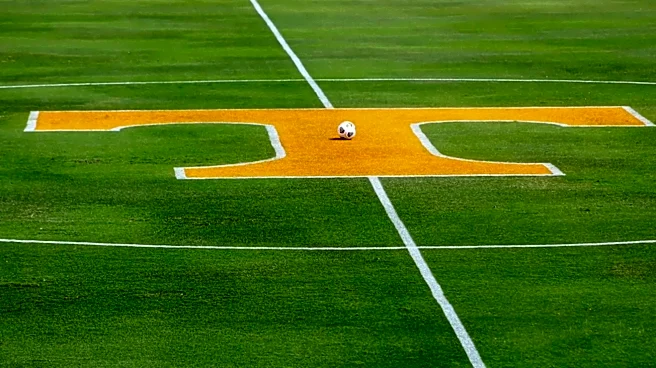
Entering the postseason, the Tigers’ first real test came at the SEC Championships in Knoxville, Tennessee. It was also a test for me as I overslept on race day, forced to miss breakfast as I sprinted down the hotel stairs to catch the team bus in time. There’s a reason they call it the most important meal of the day, as my two packets of Gatorade Energy Chews did nothing to alleviate the gnawing hunger.
The athletes, on the other hand, had a far better time. Both the women and men placed fifth, with Monica Wanjiku and Drew Rogers notching sixth and seventh place finishes, respectively. Morale was high; this was a huge jump from the women’s 13th place finish just a year ago, and the best finish since 2019. As they rolled into Regionals, expectations were elevated, and reasonably so.
The chaos didn’t stop after the race, though. We were flying back home to Columbia, which meant having to change planes in Dallas. Our flight from Knoxville to Dallas encountered several delays, which led to us sprinting across the Dallas-Fort Worth airport to avoid being forced to stay in Dallas overnight. We made it, but our bags didn’t, and we had to drive back to Columbia Regional the following day to retrieve them.

The NCAA Midwest Regional Championships in Stillwater, Oklahoma invoked different feelings depending on who you asked. For the women, they placed fourth as a team, earning an at-large bid to the NCAA National Championship. This was the women’s first team appearance since 2016, and the first in Coach Levermore’s career. Standouts Monica Wanjiku and Kobi Walker earned All-Region honors in their first ever Regional Championship race. Wanjiku’s finish was the best by a Mizzou runner since Karissa Schweizer in 2017.
The men’s team was another story. Elijah Limo and Drew Rogers finished 21st and 24th to secure All-Region titles, but it wasn’t enough. Ryder James collapsed just after the 6,000-meter mark, eventually forced to drop out of the race entirely. Had he held his position, the team would have placed fifth, placing them in conversation for an at-large bid to Nationals. As that wasn’t the case, the Tigers finished their season in a devastating seventh.
Shooting Nationals was incredible. It was the fifth NCAA championship I had covered that year, and Missouri was the host. My boss, Track & Field Sports Information Director Ryan Cullinane, hooked me up with a coveted all-access vest. It was the culmination of all the early mornings spent shooting, the late nights editing, all throughout my freshman year at a school 1,300 miles from home.
On the course, it was The Monica Show once again. She finished in 35th, becoming the second woman in program history to earn All-American recognition as a freshman. For the team, and especially the seniors, it was an amazing way to cap off one of the best seasons in recent years.
That’s what I remember hearing coach Kyle Levermore say to senior Allison Newman, who came to Missouri as a freshman in 2021. She told me that running under the previous coaching staff was, to put it diplomatically, sub-par. She stayed throughout the coaching turnovers and changes, she stayed when the option to transfer was there, and she stayed as the program found its footing again. Allison’s patience brought her to the greatest stage in collegiate cross country, and nobody on the course that day deserved it more.
Indoor Track

Indoor season has never been my favorite. Running in my dry high school gymnasium always gave me a terrible, hacking cough that lasted until it was warm enough to practice outside. From a photographer’s perspective, indoor tracks typically have poor lighting. Skin tones are inconsistent, and the same person can look totally different depending on where they are in the facility. Like always, though, I find a way.
Going from cross country to track season meant being introduced to a new cast of characters. Due to the previous coach’s departure last year, the sprints and jumps rosters were gutted by the transfer portal. Those who remained came under the mentorship of TJ Harris, a seasoned veteran who coached his previous athletes to three NJCAA national championships and over 40 All-American honors.
Mizzou Track & Field is fortunate enough to have an indoor track facility (newly renovated with a removable track) in the Hearnes Center, and the team takes full advantage of that to host a slate of track meets throughout January into the start of February. Similar to the football team hosting Arkansas-Pine Bluff this coming fall, it’s a chance for the team to iron out any wrinkles before facing national-caliber competition.

With sprints, jumps, distance, vaults and throws all practicing at different times, my schedule was very different from the cut-and-dry routine I was used to with cross country. It meant my mornings soaking up the Missouri sunrise were far and few between, and more of my afternoons were spent in Hearnes. My frequency of practice coverage dropped, as afternoon classes clashed with practices.
I also saw far less competitions during the indoor season. For one, it’s the shortest of the three seasons. Five weeks of home meets were followed by a single weekend of travel, before heading to SECs just six weeks after the start of the season. Secondly, it was a sharp reminder of the realities of non-revenue collegiate athletics. I was unable to travel to a meet in Boston, my hometown, because the team was limited in the number of plane tickets they could purchase.

Postseason travel is bit different, as the NCAA covers some, if not all travel, lodging, and food expenses. Our new videographer, Peyton, my fellow photographer Hayden and I all went down to College Station, Texas to take on the best the SEC had to offer. It is such a privilege to have several shooters on our team, and a meet like the SEC Championships is where the additional people become invaluable. Remember this later on. The nature of a championship meet means that several events run simultaneously. Thanks to a well-built spreadsheet, we were able to manage who was shooting what at what time.
In front of the lens, athletes saw mixed success. Pole vault and middle distance found themselves in the lower half of the conference, while the milers, long distance, and men’s hammer carved their names at – or close to – the top.
Monica made her mark once again, earning personal records, 5th place finishes and no. 2 program times in both the 3,000-meter and 5,000-meter races. Suzy Lecoutre also stepped up, placing 10th in the 1-mile finals.
Not to be outdone, Sam Innes and Garik Pozecki took home 4th and 9th places respectively in the hammer throw, with Innes earning a qualifying mark to the NCAA Indoor Championships.
But above all else stood Drew Rogers. Having won the 3,000-meter title the year before, he found his second title in a race nearly half the distance, the 1-mile. A furious kick in the final 50 meters of the race secured the school’s first mile title since 2020, earning Rogers an interview with our very own John Anderson.

There wasn’t much from my end after SECs, as Sam Innes was the only qualifier for the National Championship in Fayetteville. I was offered the chance to attend, but I declined as I had to prioritize some important classwork. Furthermore, I needed to build a solid rapport with my professors, as I would be absent more often during the upcoming outdoor season.
Outdoor Track

My personal favorite of the three seasons, outdoor track is truly the pinnacle of the sport. More events, better venues, better weather, and a larger track to roam around. It also means more travel, as we don’t have the facilities or the reach to host outdoor track meets of much significance.
My season started with a short trip to Nebraska. A straightforward affair, we took the bus up to Lincoln the day before competition. Our trip afforded me the chance to reconnect with some of my closest friends in collegiate track and field, Eli and Jaden, two interns with Nebraska Athletics. One of my favorite things over the last year has been connecting and making friends with so many talented people in the field. It turns every working meet into a reunion with cameras, making the long hours melt away in jokes and banter.
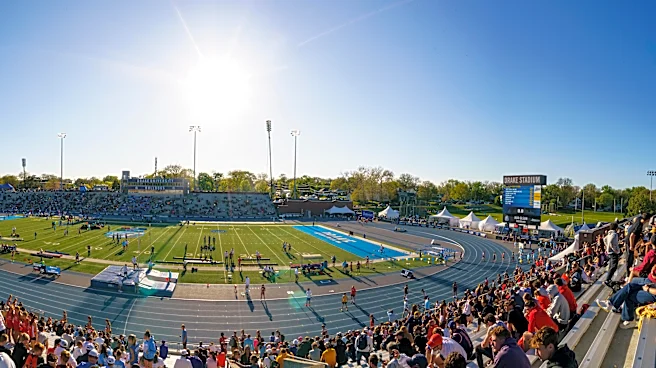
The following week, we piled into the bus once again, marching up to Des Moines, Iowa and the historic Drake Relays. This meet is when I hit my stride in photography. I couldn’t tell you what was in the air that weekend, but the culmination of learned experience saw my work metamorphosize a step above anything else I had produced that year.
If I learned one thing throughout both track seasons, it’s that throwers are, unfortunately, an overlooked group of athletes when it comes to mainstream track coverage. Having thrown myself in high school, I can understand why; it’s hard to get people interested in someone throwing a heavy object once every two minutes. As underappreciated as they are, the Mizzou throws department is quietly among some of the best in the country.
The javelin squad, led by defending national champion Valentina Barrios Bornacelli, was ranked no. 1 by the coaches’ association every single week of the regular season, as well as the end of season rankings.
The women’s hammer throw team carved out a respectable no. 18 in the final rankings, reflecting a strong season of performances capped off by personal bests and a top-10 finish from Petra Gombas at the SEC Championships.
The most memorable part of my time with the throwers, however, was the time spent with coach Robert Weir.
From Birmingham, England, Coach Weir’s career has been nothing short of phenomenal. As an athlete, he has three NCAA National Championships, 12 Great Britain national championships, 2 Commonwealth Games gold medals, and three Olympic appearances.
He’s coached for Stanford, the UK National Team, Oregon, Hawai’i, Clemson, and Weber State, before joining the Tigers in 2020. Beyond personal and professional accolades, he builds deep, genuine relationships with his athletes in and out of the throwing circle.
When I first met Coach Weir, he appeared solemn, never speaking more than what was needed. This wasn’t anything unfamiliar, my high school coaches were similarly gruff, serious older gentlemen. I slowly wore him down though, and by the time SEC Championships had rolled around, the seemly icy exterior had melted away to a wise, kind, dryly funny man.
The final wall came down when I joined a session of dominoes with him, Coach TJ, and Valentina. I would lose nearly every game in embarrassing fashion, but held my own in trash talk. My innocent demeanor lowered their collective guards enough that I put together a master stroke of a round, securing my first, and to this date, only win. It was during a game of dominoes in the Atlanta airport that head coach Dennis Gates of the men’s basketball team came by to say hello. I now attribute dominoes to success in building personal relationships within the Mizzou athletic department, and I’ve yet to be proven otherwise.

Getting back on track, Mizzou sent 16 athletes to Arkansas for the first round of the NCAA Championships. Qualifying for the championship in Oregon requires a top-12 finish in your respective event. This is different from indoor track, where the top 24 marks in the nation advance to the championships, regardless of head-to-head results.
The track & field postseason is a gauntlet, and my travel to Fayetteville was no exception. I flew home to Boston the day after returning from the SEC Championships, but Mizzou’s lovely director of operations Hakim had no qualms in flying me back out for Regionals. A delayed first leg meant that I would miss my connection to the Northwest Arkansas Regional Airport, leaving me stuck in Houston overnight. Fortunately, I was able to stay in a hotel, and arrived the following morning without any further issues.
The first two days were very promising. Day one had Sam Innes qualifying for the championships in the hammer throw, holding his own amongst the likes of Air Force’s top-ranked Texas Tanner and Iowa’s runner-up in Ryan Johnson.
Day two gave way to more cautious optimism. Valentina came away with first place in the javelin throw, topping the runner-up from Rice by a quarter of a meter in a rainy slugfest. The second part of Missouri’s javelin duo, Skylar Ciccolini, had an off day, squeezing in at the 11th place spot. Anything can happen at these meets, and there was one more reminder that would drive that notion home.

When I look back at the postseason push, I often find myself quoting English author and journalist Sir Peter Ustinov, “It’s the hope that kills you.” There’s only 12 tickets to Eugene in each event, and any number of factors can rip one right out of your hands. Dillon Leacock fell a painful four places away from a trip to Oregon in the 400-meter hurdles, even at the peak of his best collegiate season.
But it was one of Missouri’s most consistent runners who would fall victim to the one thing outside of her control. Making yet another appearance in this story, Monica Wanjiku entered the 10,000-meter race looking good. Very good, in fact. Inexplicably, however, she appeared to be flagging in the final third of the race. I didn’t learn until later that night that Monica had suffered a leg injury while attempting to clear another runner who had fallen in front of her.
Two days later, she felt well enough to run the 5,000-meter, but it was clear she was impacted. In spite of her injury, Monica performed well above her seeded ranking, finishing 28th in a field of 47 competitors. For everyone involved, it was such a heartbreaking end to such a fantastic season, and we ended up returning to Columbia that night rather than leave the next morning.
One silver lining of that was my time with assistant distance coach Paige Duca. We had some wonderful conversations, and by the end of that drive I felt we had covered more in those five hours than we had in five months.

The outdoor track postseason is a marathon, not a sprint. I had finished my spring semester of school on May 8, yet on June 7, I boarded my flight from Boston to the NCAA Outdoor Track and Field Championships.
The Pacific Northwest has a special place in my heart. I have cousins, aunts, an uncle and a grandmother in Washington and Alaska, and every time I visit I am blown away by the sheer beauty of the region. Even though my dad was born in Portland, I had never visited Oregon before this trip.
Eugene is like a more walkable sibling of Portland, Maine. The sidewalks are blanketed in the shade of native trees, and it sports an impressive bus network for a city of it’s size. Outside the city center, Eugene stretches into the surrounding hills, which I wish I had the chance to explore further.

The day before the first day of competition, Hayward Field was evacuated due to a bomb threat. University police gave the all-clear later that day, but it stuck in my mind throughout my remaining time at the Championships.
Nobody is immune to a bad day, and our own Sam Innes was unfortunate enough to have his on the big stage. He fouled his first two throws, settling for a safe third throw landing at 63.01m. It was one of his lowest marks of the season, as he would conclude his first and final NCAA Outdoor Championship appearance in 23rd place.
Anything that could have happened that day was completely overshadowed by a world record set in the 110-meter hurdles preliminary round by Auburn’s Ja’Kobe Tharp. The reason you don’t see any photos here is because I was sat on my behind, editing some photos from earlier that day.
Day two was a little less eventful, but it held far more weight in the eyes of Mizzou Track & Field. Valentina was searching for her second-straight national title, and Skylar was on the brink of adding another All-American mention to her resume. Nothing in the NCAA comes easy, and this season especially so.
Remember the winning thrower from Rice at Regionals? She won, throwing just over 60 meters on her final attempt. Two other throwers on their final attempts also reached over 60 meters, both within one meter of the champion.
Valentina showed impressive poise in the face of the tightest competition she had faced all season, fighting her way to a fourth place finish. I don’t think my chest has ever pounded harder watching a javelin competition. Though I was disappointed she hadn’t medaled, her smile melted any of those feelings away. Seeing her embrace her fellow competitors afterwards shook me back to the reality that getting to Eugene in the first place was something to be celebrated.


Nobody wants to hear me complain, but being a team photographer with close relationships to the team in question is so rewarding, but it can be so painful. Watching Skylar take her final three throws of her collegiate career, I (and I’m sure she as well) wanted nothing more than to see her break the top eight. Like many things this season, it just wasn’t in the cards.
She finished in 19th, but like I said earlier, being there in the first place was an accomplishment in of itself. Even more so while earning the Walter Byers Scholarship, a prestigious graduate scholarship awarded to one male and one female athlete each year by the NCAA.

My flight didn’t leave until the Sunday following the championships, so while the rest of the team went out and explored Eugene, I returned to Hayward for the third day of competition. It’s a very meditative experience when you’re given free reign in such a high level event. No obligations, no expectations, I was shooting for myself. I love getting to experiment with unusual angles that wouldn’t normally be feasible when working for the team or a client.

My return flight was the final test of my first year, a 6am departure from Eugene brought me back home by the evening. Two days later, I started my summer internship at WGBH, an NPR and PBS affiliate in Boston.
Final Thoughts

This was a phenomenal experience, especially for my freshman year of college. I was continuously able to further my skills and connect with other wonderful photographers. I’m incredibly grateful to Coach Levermore, Ryan Cullinane, and the rest of the Mizzou Track & Field staff and athletes for putting their trust in me. Abrah Taggart, Hayden Luther, and Peyton Bristow have been three wonderful people to work with day in and day out, and I’m looking forward to getting back to it soon. Sophie Silvers and Karen Steger here at Rock M have been such a joy to work with, and it’s been great having a platform for my photographs to be consistently featured alongside dedicated, impactful reporting.
I’ll be back in Columbia next weekend, so I’ll see y’all then.
-Dan