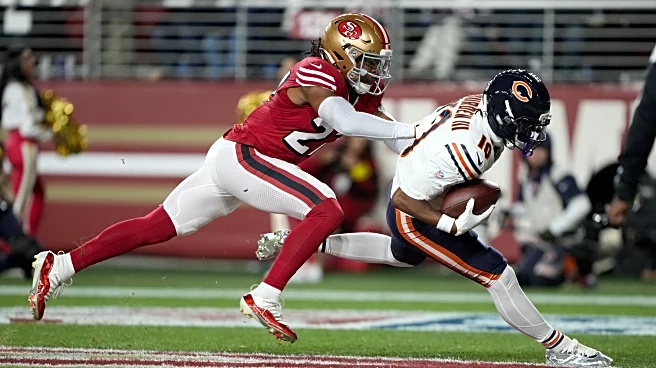

When you build a defense around two players, and both players get hurt in the first couple of months of the season, these are the results that you get. With Nick Bosa and Fred Warner on the field, the San Francisco 49ers allowed four touchdowns on 24 drives.
In the previous nine games, the 49ers’ defense has allowed at least three touchdowns in seven games. None of this should be surprising, as the defense’s pressure rate would have been the fifth-highest this season (39.3 percent) with Bosa on the field.
That number dipped to 26.2 percent heading into Week 17 with Bosa off the field, which is the second-lowest in the NFL.
The offseason acquisitions of Bryce Huff and Mykel Williams were supposed to help supplement Bosa as a pass rusher. The vision was clear. Bryce Huff is currently 21st among all edge rushers who have played at least 50 percent of the snaps in terms of win rate. Sam Okuayinonu is 44th.
Those would feel much more impactful if Robert Saleh had the player who finished third in that category in 2024 behind Myles Garrett and Micah Parsons. Bosa is that transcendent talent.
Taking away one of the best pass rushers is one thing. Adding Warner had to feel like a slap in the face to Robert Saleh. Before he went down with an injury, Warner was tied for the second-most run stuffs among all linebackers and had the lowest completion percentage over expectation in the league. He was on pace to have a career season.
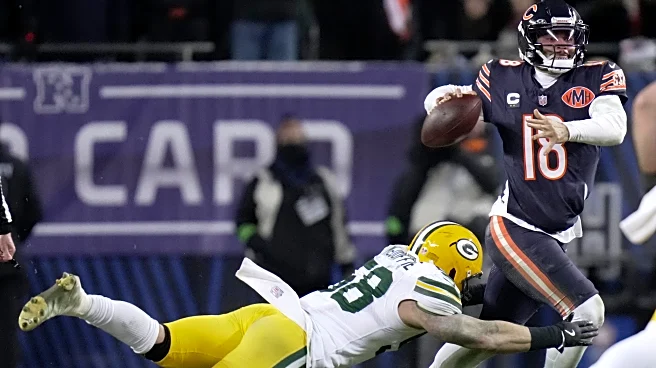
There’s one play from the Bears game that magnifies all of the issues with the 49ers’ defense this season:
Only three quarterbacks averaged more time to throw in Week 17 than Chicago Bears quarterback Caleb Williams. On this play, he took a 7-step drop and wasn’t touched until roughly 3.3ish seconds. When an offensive mind like Ben Johnson schemes a design like this up without moving the pocket, he’s telling you what he thinks about the pass rush.
That is the Bosa effect.
The second Warner left the game with an injury in Week 6, Tampa Bay attacked the middle of the field. For years, the middle of the field has been a no-fly zone for opposing offenses. This year, the 49ers are the seventh-worst defense defending passes over the middle and second-worst over the deep middle. Every coordinator who has had Warner has dared teams to target him. They no longer have to worry about that.
As you can see in the play above, Malik Mustapha, the safety at the top of the screen, feels the need to overcompensate and do one of the linebackers’ jobs when, in a perfect world, he should be deep and taking away a touchdown.
That’s the human element of the Warner effect. For a couple of months now, the safeties have been a little nosy with what the linebackers are doing in coverage, and for good reason. Unfortunately, doing somebody else’s job hangs another teammate out to dry. That’s what happens on this play, and it’s how you end up with Luther Burden against Ji’Ayir Brown 1-on-1 down the field.
That’s not on Robert Saleh. The defensive coordinator does his job and puts his players in a position to make a play. Credit Ben Johnson for doing what we talked about in the preview and using different types of eye candy. It worked.
The lack of a pass rush, trust in the play-call, and your teammates, freelancing when it’s not your job, might sound cool on the radio after the fact, but it’s cost the 49ers for a couple of months now—along with the injuries to the two best players at their position.
Ironically enough, stopping the big play is something the 49ers defense has been able to hang its hat on this year. They have the third-lowest explosive play rate allowed in 2025. Making a team earn a touchdown on a 10+ play drive, at least over a large sample size, is a sign of a well-structured defense.
Banking on a penalty, missed throw, or some kind of offensive miscue isn’t the worst strategy. Now, when those happen, you have to get off the field on 3rd & 14. But you’re putting yourself in a position to get stops.
With the 49ers offense, limiting the opponent to a couple of field goals a half or a miscue that leads to two punts in a half could be the difference between a deep playoff run and an early exit.