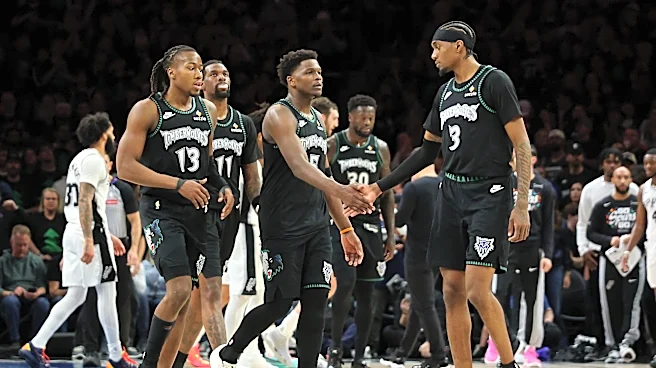

After an unceremonious end to the 2025-2026 season, it seems as though the Minnesota Timberwolves are heading towards an offseason where every indication is that big changes will be made, with the main focus on the roster.
After getting taken out by the two teams battling in the Western Conference Finals this season in the past two playoff runs, plenty of evaluation will take place this summer on the roster and how to ascend to the level required to take down two teams that look poised to be leaders
in the clubhouse for years to come. Nothing is ever set in stone in the NBA, and any number of things could change as time marches on, but it is clear that the Timberwolves need more brains and firepower if they hope to build a true contender around Anthony Edwards.
As the dust settles on another Timberwolves season, our staff picked their most important questions for the team that will be answered before opening night in the fall.

Benny Hughes: What Is Julius Randle’s Value?
I got lucky and was able to have first pick for this, so I opted for the most obvious question that most Timberwolves fans are asking.
After a red-hot start to this year, Julius Randle’s production came crashing down. He had a few rough stretches where his attention to detail waxed and waned, with a promise of consistency once the postseason began. This was not the case as he averaged 16.0 points, 7.5 rebounds, and 2.8 assists per game while shooting 39% from the floor and 24% from three. While it would be disingenuous for Randle to shoulder all of the blame, it is tough to sustain long playoff runs with your second option playing like Randle was this postseason.
You couple this performance with Naz Reid’s playoff emergence and Minnesota most likely looking to retool their front court with Joan Beringer waiting in the wings, and it is not hard to come to the conclusion that it is unlikely for Randle to be on the roster next season.
The bigger question becomes, after much setup on my part, what is his value? The good news is that he is still on a reasonable contract and has shown an ability to produce in the regular season; the bad news is that his value is extremely low after the playoffs. This leads to the larger issue of whether you will have to attach an asset to Randle to get off of this contract, or whether you will be able to get value to re-balance a roster in need of point guard play. I think that as the freshness of the playoffs wears off and the offseason progresses, there will be teams that see the value of a Julius Randle, especially with the new lottery rules punishing the worst three teams in the league with a lower chance of obtaining the number one pick.
I think that a team that is in the 4-10 range (or is in the bottom three and wants to get in the 4-10 range) will see the value of a player like Julius Randle to help them not bottom out. He is still a skilled scorer who can fill it up on any given night. While this isn’t the place you would like to be operating from as a GM, it is still something to consider with any Timberwolves move that is made this offseason.

Leo Sun: What Is “The Core” and Is It Time to Break It Up?
After the Wolves were unceremoniously eliminated in game six, Head Coach Chris Finch took to the podium for his post-game media availability.
“We still have a young core around Anthony, Jaden, and Naz. We’re not planning on going anywhere, but we know we need to keep building this thing out.”
That was his response when asked about some of the younger talent on the team, such as TJ Shannon, Jaylen Clark, and Joan Beringer, in comparison to the San Antonio Spurs youth. Finch made certain to zoom out and mention that though he believes in those young guys, he pivoted to the aforementioned three. That would fall in line with most fans’ beliefs that Anthony Edwards, Jaden McDaniels, and Naz Reid are “the core.”
But what if you zoomed out even further?
Though Rudy Gobert is roughly eight years older than that group, has he not been an integral part of the recent Wolves “Golden Era”? It’s easy to imagine a world where, without Rudy on the team, the Wolves hardly make it past the first round in the last three years, let alone as a top six seed. So, when I pose the question “What is the core?” how would President of Basketball Operations Tim Connelly answer that?
He was the man who acquired Gobert in the first place.
The Wolves are at an important inflection point in their franchise direction. Do they continue to move forward with whatever they deem the core to be, hoping that the trajectory will incline back up in the next couple of years? Perhaps a few peripheral roster adjustments are enough to push them forward towards a championship.
Or was this year a foreshadowing of an incoming decline in the coming seasons? Perhaps the franchise will have to make the painful, but necessary decision to remove one (or more) of the pillars of their core in hopes of building a team that can raise a championship banner.
The Timberwolves aren’t facing a cliff at the moment, but whether or not they will face one sooner than later depends on the conversations the front office is having about “the core.”

Thilo Widder: Is the Front Office Okay Taking a Step Back?
This may be a little too similar to Leo’s and Benny’s, but I think it’s a separate thing entirely.
Do you guys remember the 2018-19 season, when Jimmy Butler blew up the first Wolves team in 20 years to make the playoffs? Do you guys remember the offers that reportedly came in for him?
I do. The Rockets offered four first-round picks and an expiring. The Heat offered the man who would go on to score 83 in Bam Adebayo, alongside some salary filler, and the pick that would become Tyler Herro. Instead, the Wolves took home veteran forward Robert Covington, the 24-year-old Dario Šarić, Jerryd Bayless, and a second-round pick.
It feels like we’re at a similar point today, albeit with somehow more depressed assets in Julius Randle and Rudy Gobert.
Karl-Anthony Towns was 23 when Jimmy Butler was moved, as was Andrew Wiggins. The Wolves could’ve found players to fit the timeline of those two, dip back into the lottery, and then re-emerge like a butterfly from its chrysalis.
Instead, Tom Thibodeau chose job security and took the worst long-term offer that he hoped would guarantee his career as the Wolves’ President of Basketball Operations and Head Coach. It did not.
Tim Connelly and Chris Finch certainly have a far longer leash to work with, but something feels similar. Connelly is in the last year of his deal, and one could argue that while the Towns trade was cap-forced, it was a similar level of prioritizing the now over the future.
Jrue Holiday and Kyrie Irving are popular targets, but both are some of the most overpaid players in basketball. Jrue in particular has an awful deal. Would targeting one of them in a Randle swap make sense? Sure, but it’d be another band-aid to stay afloat in the demonic Western Conference. How do the Wolves get to the tier of the two teams in the conference finals right now? They change. Significantly.
This offseason is, realistically, the last opportunity to reshuffle the deck and still have enough time to convince Anthony Edwards to stick around for the next iteration of Wolves basketball. I hope they take that opportunity, and the lumps that come with it, instead of finding another band-aid.
Either go all in or get off the pot.
*That* is the biggest question I have for this offseason.

Andrew Carlson: What Does Chris Finch’s Style of basketball actually look like?
For the entirety of coach Chris Finch’s tenure, it has felt like a “first comes the roster, then comes the philosophy” mentality.
While there are through lines, it feels as though there are major themes that arise every season that sometimes come to fruition and sometimes do not.
The Wolves have always been bottom 10 in pick and roll frequency under Finch, and just this past season and in the playoffs, top five in iso frequency. Off-ball movement off of isolations and high screens seems to be bankable.
But “playing with pace” was something that never quite made its way to the full team, namely the star player. “Your turn, my turn” basketball, or the ball getting “sticky,” also continues to be a theme. A lot of that was Anthony Edwards being the scorer that he is, but much of it was due to a weird and off-kilter roster construction.
Anthony Edwards never trusted Rudy Gobert as a roller. Julius Randle had a reckless disregard for the “flow” that Finch talks so much about, paramount to his offense.
Ahead of an offseason that might see those two leaving, with the ability to reshape the roster, I ask:
What philosophy will be laid down heading into the season, with perhaps Finch’s last major chance to really shape personnel around it?

Ryan Eichten: How Many Frontcourt Players Will Get Traded?
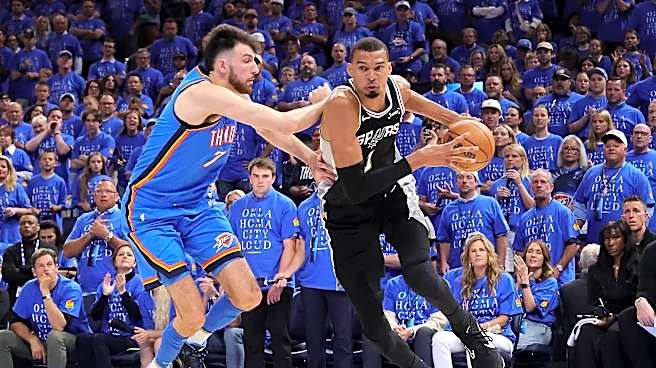
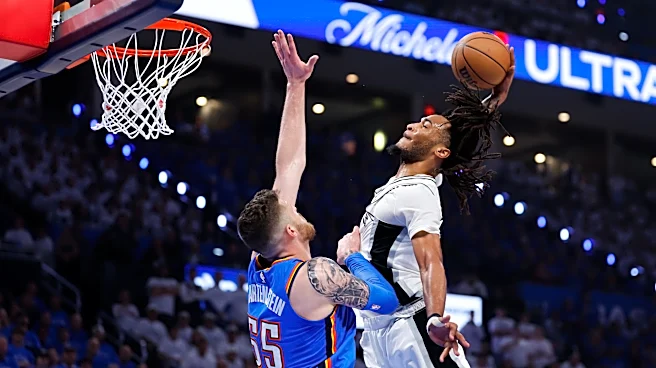
The one thing that the Timberwolves’ series loss to the Spurs made clear is that they are just plain not good enough. That is true of the team writ large, but also true for the front-court pairing of Randle and Gobert, who were both ineffective against Victor Wembanyama and the rest of his San Antonio team.
While both are very talented players, especially Gobert, who is on track to make the Hall of Fame, the Wolves have never fully maximized the pairing since trading for Randle and Donte DiVincenzo almost two years ago.
The question for Minnesota heading into this offseason doesn’t seem to be whether or not they will trade one of their starting frontcourt players, but if they will trade both.
While Ranlde’s poor play and attitude against the Spurs stand out, the pairing of Gobert and Edwards has never found the offensive ceiling needed to break through in the Western Conference. Almost regardless of Randle’s status with the team, it may make sense to move on from Gobert, given the Wolves would likely receive a large package in return.
There are merits to trading one or both of Randle and Gobert, and if a Giannis Antetokounmpo trade materializes, McDaniels and Reid may also be on the table. It feels like this offseason will see more change for the Timberwolves than just breaking up the frontcourt and hoping that does the trick.