




The officiating in Game 2 between the Phoenix Suns and the Oklahoma City Thunder has sparked a full-blown firestorm. Around the league, people are watching the tape, rewinding possessions, isolating moments, and landing in the same place. The whistle was bad. Really bad. So bad that even Bill Simmons is chiming in on the Suns’ behalf, which isn’t something he’s known for doing. Phoenix is generally an afterthought for ‘ole Billy Boston.
Okay.
Bill wasn’t defending Phoenix as much as he was criticizing the Thunder. And that is where plenty of the venom is directed today. The spotlight is bright on the flopping, foul-baiting, and fortuitous whistles that have continually benefited OKC. It never helps when Albert Sanders, the Head of Referee Operations, tweets about his affinity for the Thunder, albeit 12 years ago.
Sure, it’s not correlated. James Williams’ poor officiating performance on Wednesday night is not a direct result of the Head of Referee Operations’ prior allegiances. He’s not a sleeper cell agent embedded deep within the NBA officiating crew with the singular goal of helping the Thunder defeat the Suns in the First Round. But it does make for poor optics.
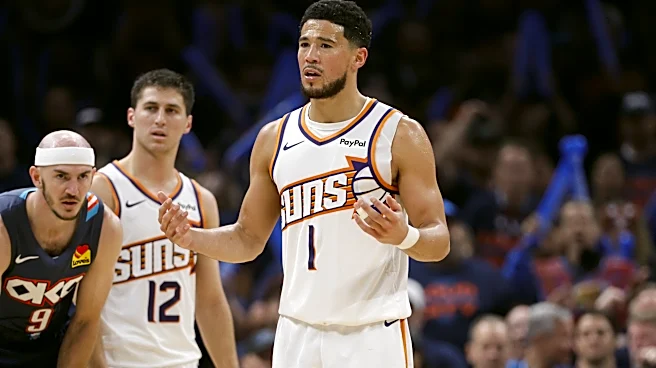
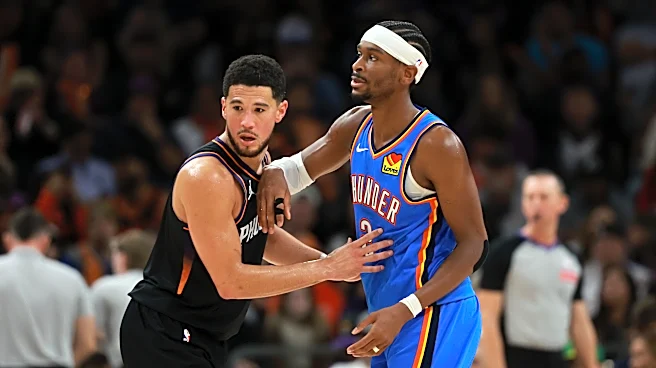
The officiating was questionable during Game 2. It reached a point where, in the postgame press conference, Devin Booker spoke with such clarity that it left little room for interpretation. He said what he saw. He said what he felt.
“It just feels disrespectful,” Booker stated. “I haven’t won a championship in this league, but you know, I have been in it for 11 years now. So to get to this point, to be treated like that, for me to even be saying something out loud. It’s bad.”
And then there is Phoenix Suns owner Mat Ishbia, who took to social media and added his voice to the noise.
I applaud Mr. Ishbia for standing on business. Accountability as it pertains to officiating is something every fan deserves, and is certainly something I’ve had my rants about in the past.
Fines feel inevitable. Booker will hear from the league office, no doubt. Ultimately, it does nothing for Phoenix. Oklahoma City is the better team, and as Mat Ishbia noted, this was not decided by the whistle. That part is understood. What lingers is the bigger picture, how opponents and fan bases view the Thunder, and how moments like this add fuel to a narrative that continues to grow.
The Oklahoma City Thunder are the defending champions, and they carry that weight every night. They rebuilt from the ashes after Kevin Durant left for the Golden State Warriors, and what they turned Russell Westbrook and Paul George into will be studied for years. Sam Presti built a machine. It is precise, it is deep, and it wins.
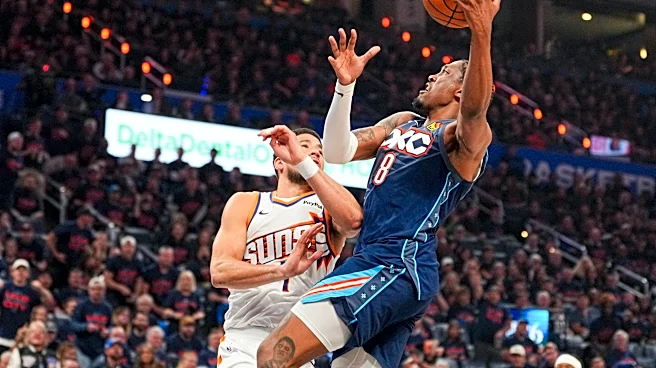
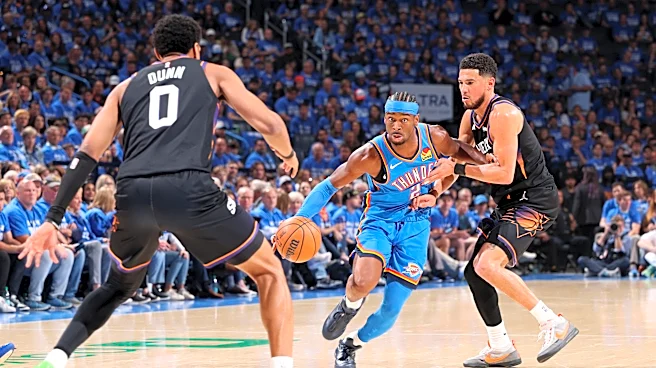
There is also a conversation that follows them. In today’s NBA, players impact the game in a number of ways: scoring, rebounding, facilitating, and defending. But there is another layer, which is a skill nonetheless, and that is the ability to draw a whistle. The ability to control pace, to create contact, and to put officials in a position where a call feels necessary. Oklahoma City leans into that skill, and they have a roster full of players who understand it.
It works. 57+ wins in three straight seasons. A title. And dominance that draws envy from every corner of the league. It also shapes perception. When possessions end with whistles that feel questionable, it pulls attention away from how good they are and places it on how they win. And that part, fair or not, continues to follow them.
I spend a lot of time on opposing team subreddits during games, pulling quotes for the Sub-Reddit Stakeout segment on the Suns JAM Session podcast. It’s one of the darker sides of the Internet, as reactionary takes are the norm and the world is always on the brink of Armageddon. When visiting the Thunder’s game threads, there is one thing that is clear. This fan base feels like it is constantly defending itself. That turns into something else over time. It turns into misery.
They are not sitting in the moment and enjoying a championship-level team. They are dissecting every possession, tracking every whistle, asking why more calls are not coming their way. It reads as hypocritical when you watch the film. Off ball grabbing, pulling on cutters, locking up defenders, then on the other end a box out turns into a grab and a fall and the whistle follows. Because the reputation is there, because the conversation never leaves, they cannot escape it. They live in it. Of all the subreddits this season, they are the best team with the most miserable fans.
There’s a connection between those two realities. When a fanbase is locked into every whistle and every perceived slight, it amplifies the scrutiny around how that team actually plays. And right now, that spotlight cuts both ways. The same physicality they benefit from becomes more visible, more debatable, and harder to ignore. That is why this moment matters beyond the outcome of the series. Even if Oklahoma City advances, the conversation does not disappear. It follows them and amplifies. And Phoenix, by pushing back and forcing those sequences into focus, is helping define how that style will be judged the rest of the postseason.
The backlash from the Suns won’t swing this series. Oklahoma City is going to win, and that is fine. Phoenix gets more basketball, more reps, and more clarity against a better team. That has value. What Phoenix is doing right now still matters. It shines a light. It puts this style under a microscope as the postseason moves forward.
There will be attention on the officiating from Wednesday night. The league will review it, and whistles tend to tighten when the noise gets loud enough. That impacts what comes next. Other teams will see it and other teams will benefit from it. Oklahoma City’s fan base will not like that. That part is predictable.
Zoom out, and it feels like the conversation has shifted beyond Phoenix. It is not that the world is on the Suns’ side, it is that the world is pushing back on Oklahoma City.
For many people, this is when they lock into the NBA, as the playoffs bring new eyes and fresh attention. This is the product they are seeing. Devin Booker gets hit with an unnatural shooting motion call, on the other end, Shai Gilgeous-Alexander lives in that same space. It feels forced. It feels off. And as Booker said, it starts to chip away at the integrity of the game.
And that is the part the league should care about most. Not the fines, not the postgame quotes, not even the outcome of this series, but the feeling it leaves behind. When the conversation shifts from execution to officiating, from greatness to gamesmanship, it muddies what should be a showcase of the sport at its highest level. Oklahoma City is too good, too complete, and too well-built for the discourse to keep circling back to the whistle. But until that balance is corrected, until the game feels as natural as it is elite, this narrative will linger. Not because people are looking for something to complain about, but because, right now, it is too visible to ignore.