
In the late 1970s, George Steinbrenner’s ways of spending big and throwing things at the wall to see what sticks worked out to the tune of two World Series championships and another AL pennant.
That probably
emboldened him to do even more of that in the 1980s, and that… did not work out as well. While the Yankees somewhat infamously won the most games of any team in the ‘80s, they made one World Series appearance in the strike-shortened 1981 season and did not make the playoffs any other year.
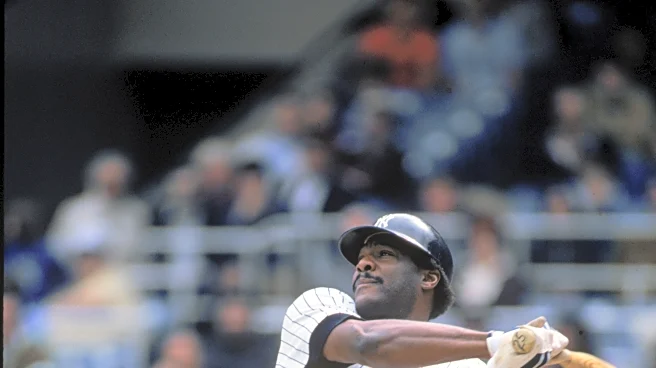
One big name attempt to get the Yankees back to the World Series in the ‘80s was the signing of former AL MVP Don Baylor ahead of the 1983 season. Stats-wise, the move was very good, but it was another move that didn’t lead to any postseason success, and ended on a sour note with George Steinbrenner doing George Steinbrenner things.
Don Baylor
Signing Date: December 1, 1982
Contract: Four years, $3.675 million
A 1967 draftee of the Baltimore Orioles, Baylor broke into the big leagues with the O’s in 1970. After a stop-start first couple of seasons, Baylor started to become a big league regular in 1972. While he had been a solid player, especially at the plate, in the ensuing seasons, he really broke through in 1975. A 145 OPS+ helped him get some down ballot MVP votes. However, it also led him to end up part of a marquee deal.
With the new specter of free agency looming, over in Oakland, Reggie Jackson was set to be part of the early class. As has come up in previous editions of our biggest free agent series, A’s owner Charlie Finley was a bit reticent to spend big on Oakland players nearing free agency. Looking to cash in before losing Jackson to the open market, Finley sent Jackson to Baltimore for a package that included Baylor.
The trade devastated Baylor, who loved his time in Baltimore. He also didn’t adjust well to the Oakland Coliseum, having a couple down seasons at the plate compared to what he had been doing with the O’s. However, he was still solid enough to have suitors himself when Baylor hit the free agent market ahead of 1977. He ended up agreeing to terms with the California Angels, which ended up being beneficial to both sides.
After a good first couple seasons with the Angels, Baylor broke into real stardom in 1979. After hitting 36 home runs with 139 RBI and helping the Angels to the franchise’s first ever playoff berth, Baylor was voted AL MVP in 1979. A more modern statistical look at things casts some doubt on whether he should’ve been the choice, but Baylor will forever have that honor on his résumé.
After ‘79, Baylor had a couple more good seasons with the Angels, before hitting the open market again after the 1982 season. With the Yankees having a core that had just recently made the World Series and Baylor having that MVP in his recent history, that made him the perfect candidate for Steinbrenner to spend big on. Despite warnings from former Yankees and Angels teammates Tommy John and Jackson on playing for Steinbrenner, Baylor agreed to terms with the Bronx Bombers in December 1982. The contract was for four years, with the Yankees holding an option for a fifth, which would potentially take the total dollar amount over $4 million. Combined with a five-year deal given to Steve Kemp that same offseason, the Yanks were making moves to move on from the ugly fifth-place, three-manager “Bronx Burners” experiment.
On the field, Baylor hit the ground running (unlike Kemp). In 1983 he put together what was, according to either WAR, one of his career best seasons. While his home run and power numbers weren’t at the level of his MVP campaign, he hit a career best .303 and his 134 wRC+ would be the third best total of his career. For his season, he would be honored as the AL’s Silver Slugger at the designated hitter position, but while the Yankees as a team improved by 12 wins, they still fell seven games behind the champion Orioles in the AL East.

Baylor’s next two seasons didn’t quite match those feats, but they were also pretty good; he wasn’t the reason they kept missing out on October. He slugged a total of 50 home runs over the 1984 and ‘85 seasons, and again won the AL DH Silver Slugger in 1985. One thing that he never lost from his career in his previous stops to New York was his ability, if you want to call it that, to get hit by pitch. Over his 19-year MLB career, Baylor led the league in HBP on eight different occasions. Two of those came in New York, as he was hit 23 and 24 times respectively in 1984 and ‘85 — both still rank as the two highest totals in Yankees history (Anthony Rizzo tied ‘84 Baylor for second in 2022).
While things on the field were going perfectly fine for Baylor, as mentioned, he was playing under the looming presence of “The Boss” at his most Steinbrenner-y time. Towards the end of the 1985 season, Steinbrenner and the baseball brass reportedly began to see Baylor as more of a platoon player going forward. Baylor, who was still a perfectly productive player, did not take kindly to that suggestion and began semi-publicly feuding with the Yankees’ owner. Baylor requested a trade after the mess began, although he used his no-trade clause to scupper a deal that would’ve sent him to the White Sox for Carlton Fisk. The team reportedly began looking into ways to file a grievance to get out of the deal.
The situation dragged into spring training in 1986, but as Steinbrenner put pressure on the front office to move on from Baylor, they eventually did so. On March 28th, the Yankees agreed to send Baylor to the Red Sox in exchange for Mike Easler. Easler was a perfectly good MLB player and would hit well as a Yankee, but it probably wasn’t as good a return for Baylor as the Yankees could’ve gotten.
In Boston in 1986, Baylor became a respected clubhouse presence on a team that famously got within an out of breaking the “Curse of the Bambino.” Personally, he hit 31 home runs with a 110 wRC+ that year. His biggest moment came in the ninth inning of Game 5 of the ALCS, helping the Red Sox rally to avoid going down 3-1 in the series by crushing a two-run shot shortly before Dave Henderson’s more memorable blast.
The Red Sox traded Baylor to the Twins part way through the 1987 season, and he would help Minnesota win the World Series that season. He played one final season back in Oakland in 1988 before retiring in wake of his third consecutive trip to the Fall Classic (a loss to the Dodgers). Baylor would go on to be a coach, and was named the first manager of the expansion Colorado Rockies in 1993. He led them to one playoff appearance in 1995, and later managed the Cubs from 2000-02. He was diagnosed with cancer in 2003 and battled that off and on until he passed away in 2017.
Considering Baylor’s trade demand and publicly talking about Steinbrenner, you can’t blame George entirely for the mess that this contract became at the end, but Don Baylor’s Yankee tenure was another one from the 1980s that was doomed, despite the player being fairly productive.
See more of the “50 Most Notable Yankees Free Agent Signings in 50 Years” series here.