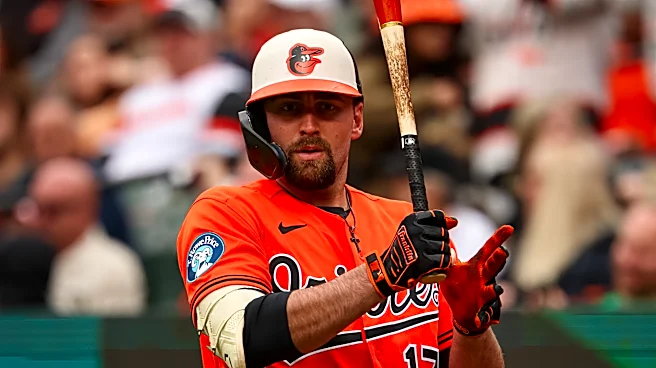

Two years ago, Colton Cowser nearly won AL Rookie of the Year. Last year, he battled through multiple injuries and saw his production decline dramatically. And this year, Orioles President of Baseball Operations Mike Elias is being asked questions about whether or not the former fifth overall pick could be demoted to Triple-A soon.
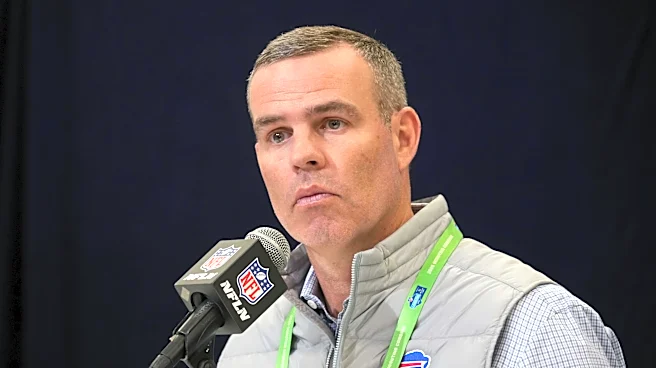
Elias was pretty clear that Cowser isn’t going anywhere. “He’s frustrated,” Elias said “We know the talent level is there, he’s frustrated. Right now, he’s helping us,
and we need him on the team.”
It is obvious to everyone that Cowser has not played up to his expectations or, as Elias said, his talent level. One month into the season, that has forced the Orioles to upend their planned outfield rotation, and it has Cowser’s future with the club in doubt, at least externally.
For the first two weeks of the season, Cowser was the team’s everyday center fielder. Since April 10, he has been used exclusively in the corner outfield spots. And even more recently, he has been treated like a fourth outfielder rather than a starter at all. Over the Orioles’ last 11 games, Cowser has started just four of them. He didn’t start any of the games against the Red Sox this weekend, not even the one against a right-handed starter coming out of an off day.
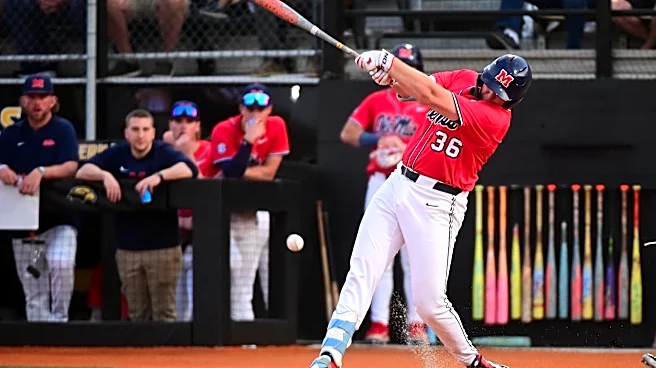
It’s hard to make an argument for Cowser to play any more than he is. The numbers just aren’t good enough. He owns a .200/.274/.236 batting line with two doubles, zero home runs, six walks, and 20 strikeouts.
Strikeouts have always been a problem for Cowser. His 31.7% K-rate this year is actually better than his career number (32.2%), though both are awful. And, as usual, he is pairing it with a fine walk rate (9.5%). The bigger problem is that he has shown no power in 2026. As a rookie, Cowser popped 24 home runs and had a .447 slugging percentage. Last year he hit 16 homers and had a .385 slug despite a myriad of injuries. This year his slugging percentage is the dumps at .236 and he is yet to go deep.
What has saved the Orioles center field position from being an offensive black hole yet again is the presence of Leody Taveras. Signed for $2 million this past offseason, the expectation was for Taveras to be a depth option across the outfield. Instead, he has earned the everyday spot in center with his .288/.400/.441 batting line that includes two home runs, 15 RBI, 11 walks, and 14 strikeouts.
This version of Taveras is much different than the one that found success with the World Series-winning Rangers in 2023. That year saw him post a 101 wRC+ while playing Gold Glove-caliber defense in center. This year, he has a 141 wRC+ and is just passable in the field.
How long can Taveras keep this offensive production up? That’s where things get tricky. His 15.5% walk rate is more than double his career rate (6.9%), and he has a .349 BABIP. Negative regression is probably coming for both of those numbers. He also has below average exit velocities, barrel rates, and hard hit rates.
We may be seeing the numbers start to slip already. Taveras is hitting .143/.217/.286 over his last 23 plate appearances. That has brought his season OPS from 1.016 on April 18 to .841 today. One bad week isn’t enough to take Taveras out of the lineup, especially with Cowser still scuffling. But it could be a warning sign that the Orioles need to figure something out in center field.
Dylan Beavers and Blaze Alexander are the other two Orioles that have played in center this year. Neither looks like a natural fit at the position, and should probably only be used there in emergency situations. But it could be an avenue to go down when one of them is hot at the plate and manager Craig Albernaz is looking to juice his lineup. That seemed to be the logic for Beavers to start there on Sunday.
Down in Triple-A Norfolk, there are two center field options that are at least somewhat intriguing.
Enrique Bradfield Jr. was the team’s top draft pick in 2023. He came out of Vanderbilt as an old school lead-off type. It’s good bat control, limited power, but elite speed and a great glove. The Orioles probably hoped for better batting averages out of Bradfield—he hit .242 last year and is at .224 so far this year—but he still walks a lot and can steal a base at any time. If you need a sparkplug type, he could be the answer. It just might be more a of bottom-of-the-order type of bat than a lead-off man.
Jud Fabian is another name to watch, though probably not an everyday solution. The Orioles coveted Fabian in the 2021 draft, but the Red Sox swooped in and took him instead. He declined to sign with them, returning to Florida for a year, which allowed the Orioles to get their man the following year. The guy is lauded for his physical skills, but has always been killed for his lack of a hit tool. That hasn’t changed this year. He is striking out 29.6% of the time, but he is also walking a ton (21.4%) and has shown tremendous power (five home runs, .440 SLG). The glove and arm are good too. He feels like a fourth outfielder type, but could plug and play with the O’s pretty soon.
Elias didn’t pursue any other center field upgrades this offseason beyond Taveras. He seemingly assumed that Cowser would be fine, and when he needed a breather the club had suitable fill-ins. All the while Bradfield could further develop and prove worthy of being the heir-apparent at the position. For now, that has been a reasonable solution. But if Taveras’ production dries up, which it may already be doing, it will exploit a hole in the Orioles roster than many pointed out all winter long.