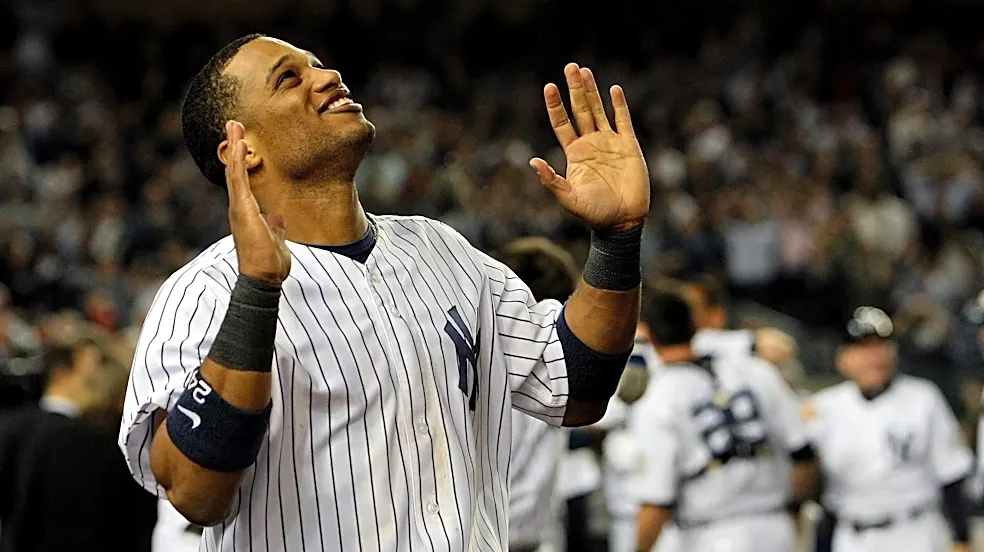


Every generation of Yankees has transcendent talent, and for the faithful fans, homegrown stars have always made their passion burn a little deeper. Robinson “Robbie” Canó was one of these stars. A homegrown wonder kid whose timing, big smile, and smooth left-handed swing made him seem destined to take the torch from Derek Jeter and continue the Yankees’ legacy. Oh, what should have been.
Robinson José Canó Mercedes Born: October 22, 1982 (San Pedro de Macorís, Dominican Republic) Yankees Tenure:
2005-13
Born on the eastern side of the island of Hispaniola in the Dominican Republic, Canó’s dad, a former big leaguer himself, named him after legendary second baseman Jackie Robinson. Canó grew up playing baseball and basketball on the island but also spent a few years in the States during junior high and high school before returning to graduate from San Pedro Apostol High School in San Pedro de Macorís.
Right after graduating, Canó started his journey with the Yankees. In 2001, at 18 years old, he signed as an international free agent. An unheralded signing at the time, Canó began his path to the show that summer, playing for both the Gulf Coast Yankees and Staten Island Yankees.
Canó slowly worked his way through the farm system and up prospect boards. A free swinger with some defensive lapses, Canó started to take off as he filled out his frame. In 2003, his performance earned him a selection to the All-Star Futures Game. His rising stock also made him a potential trade chip as the Yankees tried to cash in on the youngster.
The Yankees offered to include Canó in the Alex Rodriguez deal before the 2004 season, but Texas chose Joaquín Arias instead. Then, at the deadline, they tried to package Canó and catcher Dioner Navarro to the Royals for Carlos Beltrán. The following month, Canó was part of the Yankees’ efforts to acquire Randy Johnson from Arizona. Canó just kept raking, earning his second straight Futures Game selection in 2004 while reaching Triple-A.

After surviving so many potential trades, the stars aligned in 2005 when the Yankees called Canó up to the majors in early May to replace Tony Womack. The closest regular in age to the 22-year-old Canó was a 29-year-old Alex Rodriguez. Unfazed by the star power in the lineup, the rookie slashed .297/.320/.458 with 14 home runs in 132 games. His performance was good enough for second place in the Rookie of the Year voting, behind only Houston Street.
Canó was even more impressive in his sophomore campaign in 2006. During that season, he made his first All-Star team and finished the year slashing .342/.365/.525 with 15 home runs and 41 doubles. The .342 mark was third in the AL, with only his teammate Jeter and Joe Mauer surpassing him in a bid for the batting crown.
Then, the 2007 season started what would become an 11-year run of playing at least 150 games every season. If availability is the best ability, Canó was the best of this decade-long run. Prior to the 2008 season, Canó signed an extension to keep him in pinstripes through the 2013 season. It proved to be a brilliant move.
The 2008 season proved to be the first down year of Canó’s career, as his average dropped to .271. The whole team sputtered that season and finished third in the American League East. In the final season at the original Yankee Stadium, Canó recorded the final walk-off hit in the ballpark’s history.
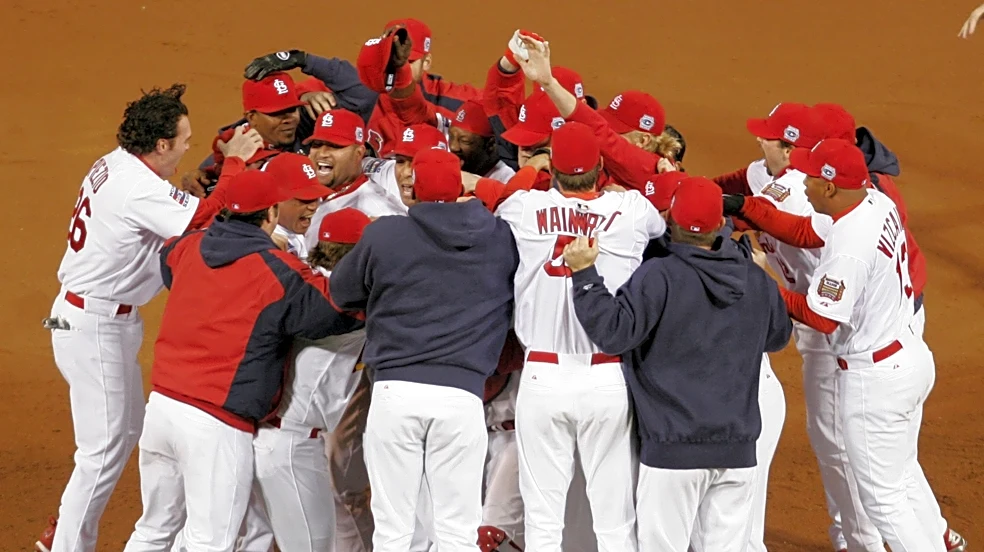
The down year and new stadium prompted ownership to go all in before the 2009 season. With new stars aboard, the Yankees went on to have a historic season. Canó and Jeter became the first middle-infield duo in MLB history to record 200 hits in the same season. The team won 103 games while Canó hit 25 home runs and batted .320. The Yankees went on to win the pennant and take down the Phillies for the championship in six games.
It seemed like Canó had taken the torch and was ready to run the Bronx to another dynasty as he hit .319 with 41 doubles and 29 home runs in 2010. He posted a 143 OPS+ with 8.1 rWAR and finished a career-best third in AL MVP voting, trailing only Josh Hamilton and Miguel Cabrera (also winning his first Gold Glove at the keystone). After struggling in the postseason the previous year, Canó almost got the Yankees back to the World Series himself in 2010, hitting .348 with four home runs in the ALCS against the Rangers.
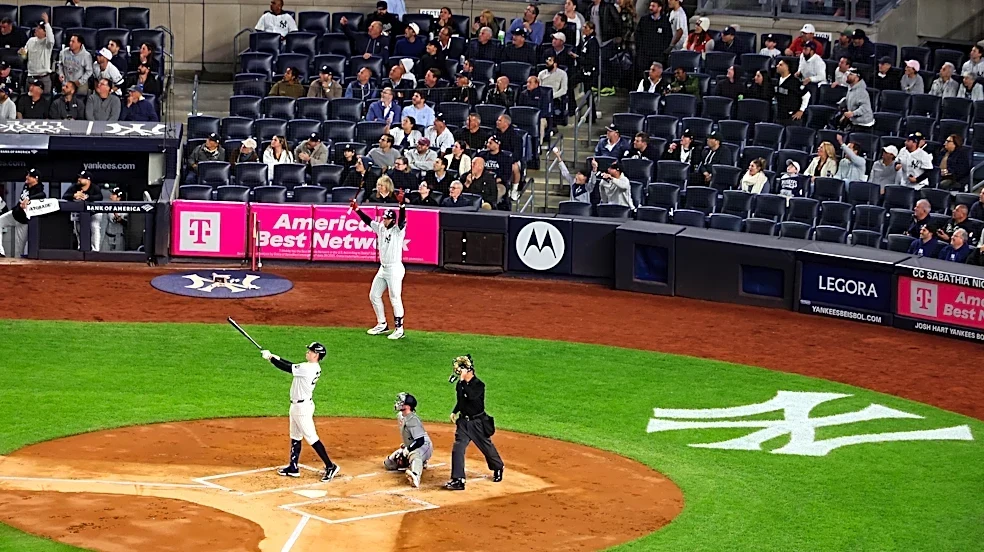
With the championship window still open, the Yankees and Canó kept rolling in 2011 and 2012. The team won the AL East both years before falling to the Tigers in the playoffs. Canó hit a combined 61 home runs over those two seasons while batting .307, plus a career-high 148 OPS+ in 2012. The biggest highlight would be when he won the Home Run Derby in 2011 with his dad pitching to him.

The 2013 season was a year of transition for the Yankees, as injuries ravaged the squad (most notably Jeter and Mark Teixeira) and there just wasn’t enough depth to get the team back to October in what turned out to be Mariano Rivera and Andy Pettitte’s swan song. Canó had another stellar season, hitting .314 with 27 home runs, but without much help, the Yankees struggled and finished third in the division. Canó reached free agency following the season and it seemed like a no-brainer that the star would be back in the Bronx.
However, in a shocking situation, Canó and the Yankees couldn’t reach a deal. The club offered seven years and $175 million but would not come close to the 10-year, $240 million deal the Mariners offered. The heir to the throne signed on the dotted line, packed his bags, and headed off to the West Coast. From that moment on, the Yankees were on a different path. The once-Evil Empire, which chased championships no matter the cost, had a new direction. That new direction has yet to win another title.
For Canó, the post-Yankees years have been complicated. In Seattle, he made three more All-Star teams during the first five seasons of his mega-contract, but he was suspended for 80 games in 2018 after testing positive for a banned substance. The Mariners traded him that offseason, along with emerging closer Edwin Díaz, to the Mets.
Suiting up across town in the other borough, Canó, at 36 years old, was officially on the back nine of his career. He played for the Mets during the 2019 and COVID-shortened 2020 seasons. However, he missed all of 2021 after testing positive for a banned substance for a second time, this time resulting in a full-season suspension.
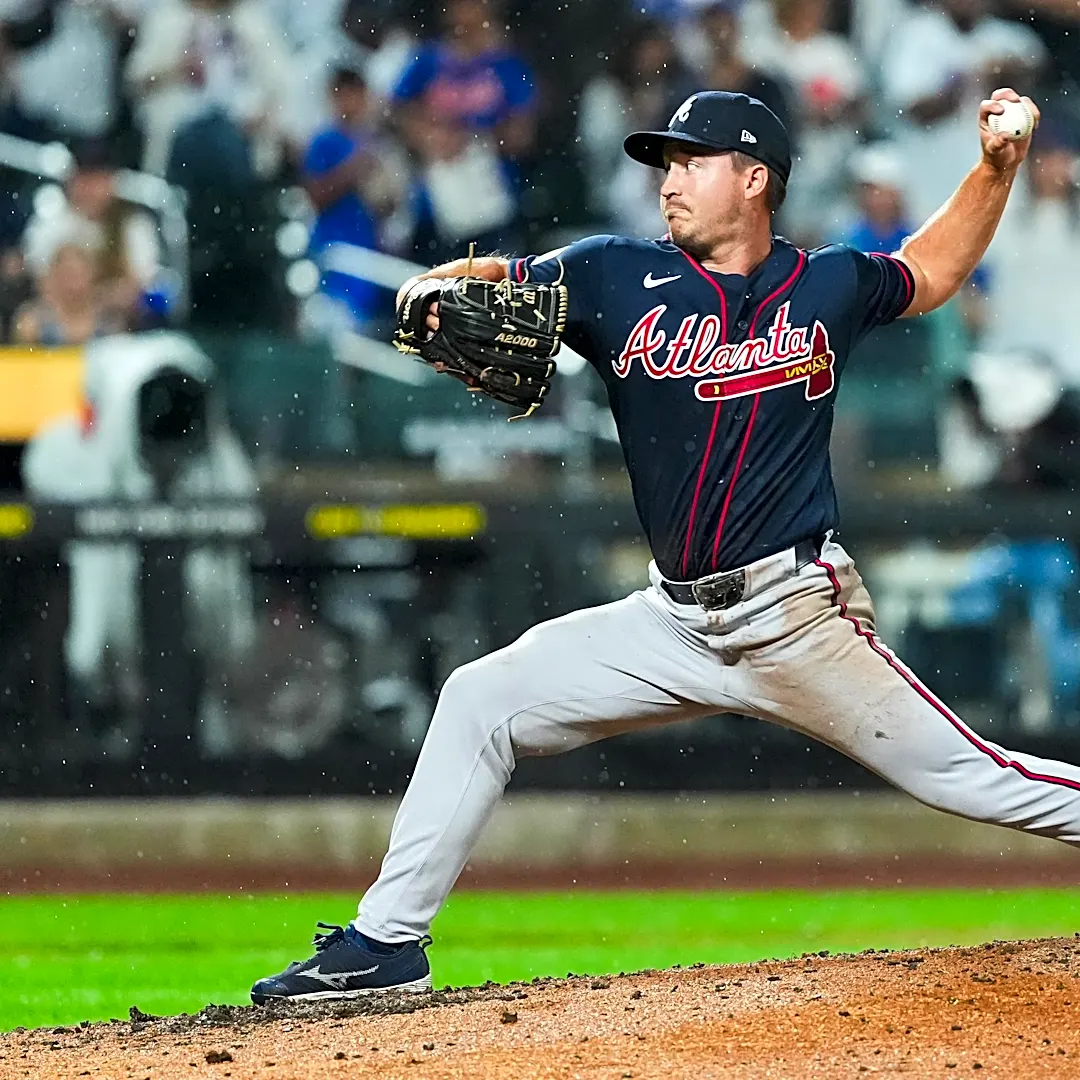
Returning in 2022, Canó struggled and was released by the Mets. He then played out the season journeyman-style, suiting up for the Padres and Braves for about a month each. Canó continued his professional career in Mexico, most recently playing for the Diablos Rojos del México in 2026 and hitting 15 homers with an .826 OPS at age 43.
Over his MLB career spanning 17 seasons, Canó finished with a .301 batting average, 2,639 hits, 335 home runs, and 1,306 RBIs. He was an eight-time All-Star, a five-time Silver Slugger winner, earned two Gold Gloves, and took home World Baseball Classic MVP honors with the Dominican Republic in 2013. In pinstripes, he recorded 1,649 hits, 375 doubles, 204 home runs, and 44.4 rWAR. All four marks rank among the top 16 in Yankees history.
If not for the suspensions, Canó would have a legitimate case for a call to Cooperstown. He is arguably one of the 10 best second basemen to ever play the game, but between the failed drug tests and his departure from the Yankees, Canó’s legacy is complicated. For Yankees fans, he will always be a reminder of what could have been.
All the same, I wish you would’ve never left. Happy birthday, Robbie!
See more of the “Yankees Birthday of the Day” series here.