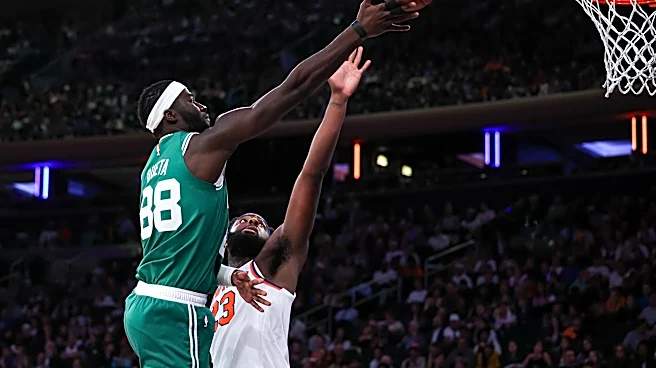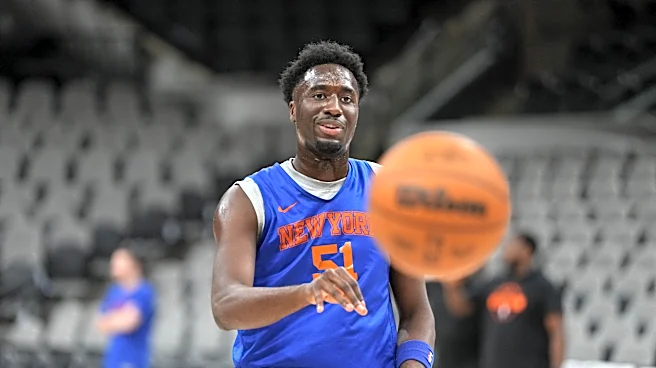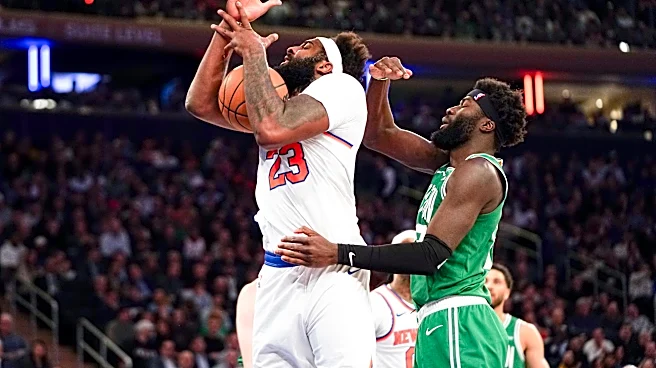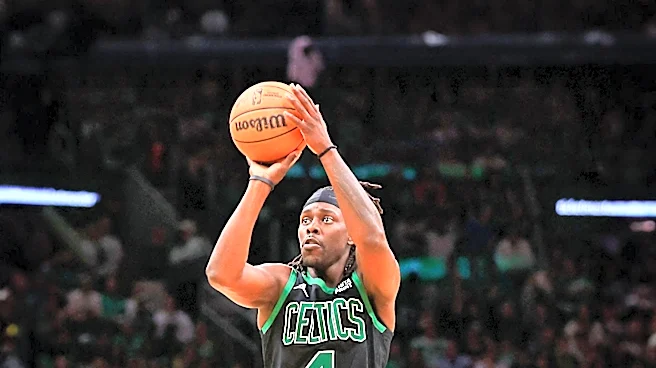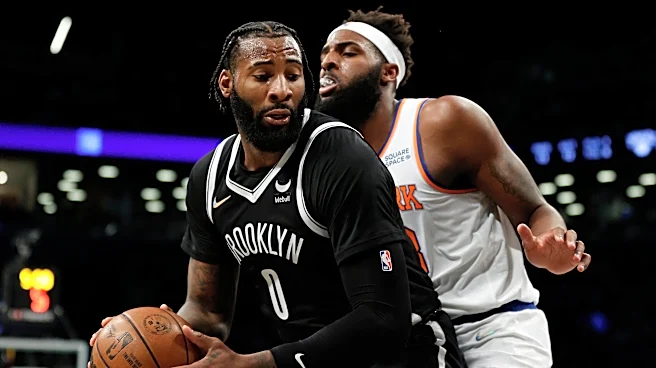




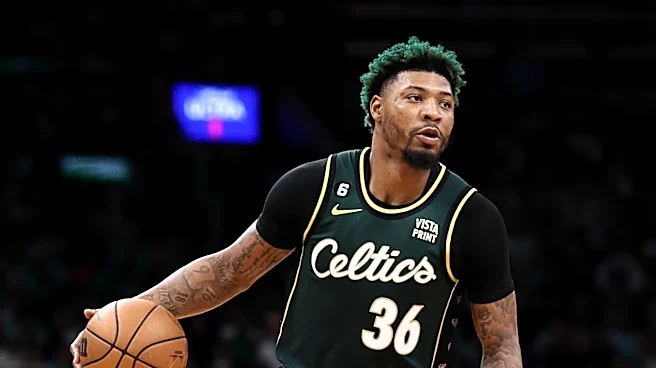
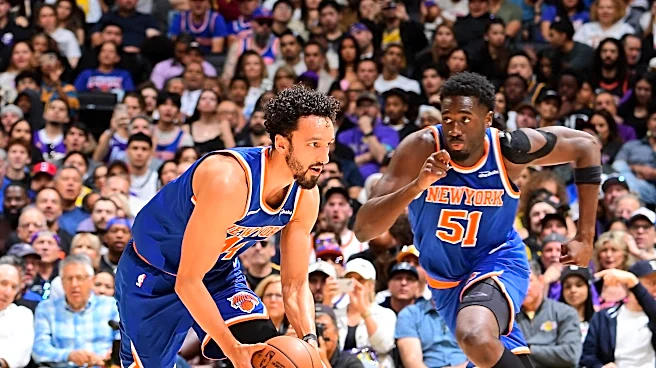



As our focus shifts to next season, the Knicks enter unfamiliar territory as they prepare to defend a championship. While visions of championship celebrations will forever live on in our minds, New York’s front office continues navigating the realities of a salary cap and that second apron nonsense. The most notable casualty of that reality is Mitchell Robinson. The longest-tenured Knick now plays for the Boston Celtics, leaving New York with a massive void at backup center. To fill that spot, Leon
Rose traveled the veteran, low-cost route, bringing aboard Andre Drummond.
It is tempting to view this particular roster movement as a simple one-to-one replacement of a traditional backup center. In a conversation with media personality Mika Ortiz on X, Drummond openly stated he brings a “similar talent” and “similar energy” to the floor. However, if you take a statistical deep dive into both centers, the picture becomes a bit more complex. Swapping Robinson for Drummond fundamentally changes the Knicks’ offensive spacing, rebounding approach, and defensive geometry.
Rebounding is a key component of New York’s identity. However, how they secure rebounds is about to change. Robinson’s primary value is his ability to generate offensive possessions. He did not just secure rebounds; he dismantled defensive schemes. A matchup from last season that demonstrates this best is a game against the Indiana Pacers in March. In 31 minutes of action, Robinson recorded 22 total rebounds and registered a remarkable Offensive Rebounding Percentage of 29%. For those of you wondering, this means that while Robinson was on the floor, he recorded nearly a third of his team’s offensive rebounds. His ability to create second-chance opportunities bailed out inefficient possessions and was one of the reasons the Knicks won Game 5 of the NBA Finals.
Drummond is equally dominant on the glass. His impact is largely on defensive rebounds. While Robinson’s focus is on possession extension, Drummond’s is on possession elimination. During a high-usage contest against the Clippers in November, he secured 18 rebounds and registered a phenomenal 30% Defensive Rebounding Percentage. While his greatest value lies in ending opposing possessions, he is still a highly talented offensive rebounder, even posting a 22.2% Offensive Rebounding Percentage against the Knicks this May.
Replacing Mitchell with Drummond makes the strategic trade-off clear. New York is sacrificing elite second-chance creation for an equivalent in second-chance prevention. Although they may suffer a similar fate, opponents will take on many one-and-done possessions.
The structural changes become even clearer on the offensive end. Robinson is a low-usage backup. His Usage Rate rarely went over 15% and often dropped into the single digits. Also, he provides no floor spacing whatsoever and never takes any three-point shots. Serving simply as a lob threat and putback specialist, Robinson does not require any plays designed for him. Though this kept the ball in the primary creators’ hands, it shrunk the floor, allowing defenders to collapse into the paint.
Drummond, on the other hand, can be deployed as a high-usage backup. This past season, his usage rate showed much higher peaks than Robinson, even logging a 23.7% in a postseason tilt against the Knicks. While Robinson is not a threat from the perimeter, Drummond does take the occasional three. He commands the ball more frequently and operates from various areas. Defenses must respect Drummond a bit more, altering the spacing geometry for guards.
Of course, increased usage means more responsibility. Drummond, dissimilar to Robinson, serves as a far more active passing option. With a practically non-existent Assist Percentage, Robinson is essentially a playmaking vacuum. When he catches the ball, his action either results in a dunk attempt or a reset to a guard. Drummond brings a completely different dynamic. Typically recording an Assist Percentage around 7%, he can operate out of the high post or the short roll. Consequently, this opens the playbook up a bit more while he is on the court. Still, just because Drummond is more of an asset in passing, his playmaking comes with a liability. When Drummond’s usage increases, his ball security almost always plummets. In games when asked to facilitate more regularly, his Turnover Percentage climbed, going as high as 35.3% in a contest against the Pistons.
In Drummond, the Knicks gain a center who provides opportunities for more diverse offensive sets. On the flip side, they are incurring a turnover risk that did not exist with Robinson.
As Knicks fans, we cannot complete any comparison involving Robinson without discussing free throws. Everyone knows the “Hack-a-Mitch” tactic, but Drummond has historically been targeted with intentional fouls as well. Yet, when it comes to foul shots, Drummond has a slight edge. Of course, anyone familiar with Robinson’s work should not be overly shocked by this. Mitch is a severely awful free throw shooter. Drummond is no Reggie Miller, but he can connect at a higher efficiency, especially when his opportunities are less frequent. Drummond is still a liability from the line and will likely face a few “Hack-an-Andre” moments. He is not on Robinson’s level of horrendous.
Defensively, action around the paint will look very different. Providing consistent disruption with blocks and steals, Robinson is a traditional vertical rim protector. Though Drummond matches Robinson’s effectiveness in passing lanes, he is far less of a blocking threat. Drummond relies on clogging the lane, grabbing errant passes, and grabbing rebounds.
Replacing Mitchell Robinson with Andre Drummond is not a lateral move. The Knicks are transitioning from a specialized vertical anchor to a playmaking center who eats up space and creates more offensive variety. The floor spacing is set to shift, the turnover margins will change, and the rebounding will have a much more eliminating-than-creating philosophy. As Mike Brown and company prepare for a title defense, adjusting the half-court offense and defensive rotations to maximize Drummond’s skill set will be a fascinating tactical storyline to follow.
All advanced stats are courtesy of Cleaning the Glass.