






Welcome to Inside the Suns, your weekly deep-down analysis of the current Phoenix Suns team. Each week, the Fantable — a round table of Bright Siders — gives their takes on the Suns’ latest issues and news.
Fantable Questions of the Week
Q1: If the Suns stay at 47 in the draft, they’re most likely going to get a developmental player with identifiable flaws. What player flaw would be the biggest red flag to you?
Ashton: This is a player question, and the easy answer is size or ability to see the court. The NBA combine has taken the measurements, but many of the top picks opted not to play in the 5-on-5 play.
Which leads me to my next point, the answer to the question. The biggest flaw is the player’s character.
Yeah, they had the interviews with mealy-mouthed or just plain stupid questions, but is the player just a little too big for their britches? I am talking about the type that thinks it can make an impact on the league immediately, when very few rookies or even second-year players can. You have to be humble and hungry enough to organically grow within a system. And when that system eventually trades you, shrug it off and realize you are making serious money as an adult playing a child’s game.
Voita: I’ve spent the past week reviewing prospect videos, looking at scouting reports, and formulating who I want the Suns to take if they stay at 47 or decide to move up. And without a doubt, the biggest red flag to me is basketball IQ and the ability to process the game.
I think that’s what has made Oso Ighodaro so valuable, his ability to process and react. He understands what’s happening around him and knows how to make the right decision. That’s a skill that translates.
When you get down to the second round, you’re going to find players who might not be the most athletic. They might not shoot well. They might be liabilities on defense. They might not have ideal size. But if they don’t have the ability to process the game, everything else is a wasted skill. Athleticism only takes you so far. Size only takes you so far. Shooting only takes you so far. If you can’t read what’s happening on the court and react accordingly, those tools become much harder to maximize.
That’s why, as I’ve gone through these prospects, basketball IQ has become the trait I value most. Because if a player can process the game, there’s at least a foundation to build on.
Rod: There are some red flags that I’d say are more positional than others (ie, a center who is a poor rebounder is much more of a problem than a PG who is a poor rebounder), but overall, I’m going with low BBIQ. Unfortunately, that is also one of the things that can’t really be measured, and teams will just have to estimate based on past, pre-NBA performance and interviews. A player can have some of the greatest skills in the world, but if he can’t figure out how to best use them, he’s not going to be a strong asset to the team.
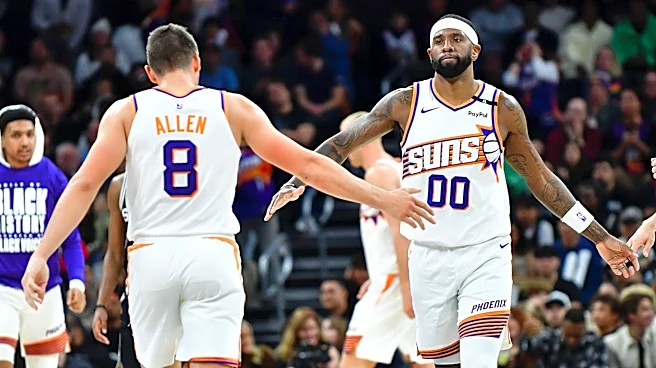
Q2: If the Suns were to trade one of Grayson Allen or Royce O’Neale in the offseason, which would you prefer that they keep?
Ashton: Let me think, if I say trade Grayson Allen, then all the Duke fans on the board will hound me. If I say trade Royce O’Neale, then all the “size matters” fans will hound me.
Put me in the category that “size matters” (it fits 😉 and keep RO. GA is just too often injured for my taste, though he has the clearer upside. But if I am being honest, with all the trade speculation going on, I actually put a higher percentage that both will be packaged for some unnamed asset. Maybe the desert heat is getting to me.
Voita: I’d prefer to keep Grayson Allen. Perhaps that’s me being contrarian. I still think he has a lot of good basketball left in him, and his skill set is one the Suns could use coming off the bench. Yes, he can shoot, but he can also facilitate and get to the rim. There’s more to his game than simply standing behind the three-point line waiting for kick-outs.
I also don’t know if I can go through another season of watching Royce O’Neale become a turnstile on defense.
If Royce is gone, there’s more opportunity for Rasheer Fleming to earn starting minutes and work through everything that comes with that role. That’s another point in Grayson’s favor in my book. Yes, he makes more money. But if you keep him around and he has a good season, he becomes a much more valuable asset next offseason. That’s why, if I’m choosing between the two, I’m keeping Grayson.
Rod: I’d keep Royce over Grayson for two reasons. First, he’s on a cheaper contract. Second, he’s much less injury-prone. Although I think Grayson is the more talented player overall, the biggest difference between the two is simply availability to me.
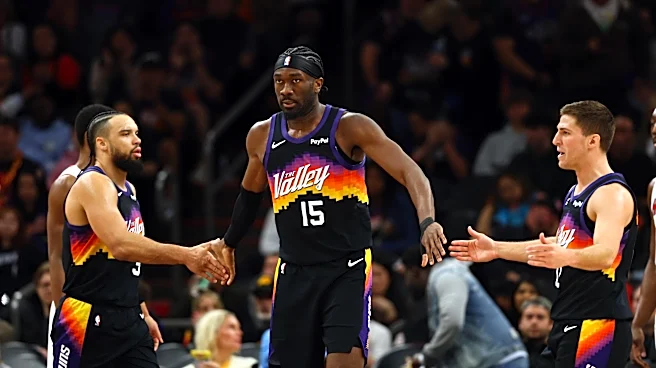
Q3: I read some speculation that, unless Fleming, Dunn, and/or Maluach prove ready to start this fall, the Suns’ starting lineup could be Booker, Green, Goodwin, Brooks, and Williams (or Ighodaro). What are your thoughts on this starting lineup?
Ashton: I am good with it. I stated last week in this space to just run it back and keep it below the repeater tax. Of course, someone has to go. That may very well be CG (that sucks) or Mark Williams, which makes Oso the starter at center. Meh, but it is what it is. I would prefer the veteran, but I think he is not taking the qualifying offer and is taking his skills to another team that is willing to pay more.
Do the Suns lose more games? ESPN has projected as such (10th in the West). This should not surprise anyone, as that is about where I have them as well. Anything above that is another good and surprising year.
Voita: It’s not ideal, but I would much rather have that lineup than one that starts Collin Gillespie.
Goodwin might not have the ideal size for the position, but you’re also not asking him to facilitate the offense the way you would with Gillespie. That’s important because it prevents you from once again running out three-guard lineups, something we’ve seen enough of over the past few seasons. If Goodwin is your starting small forward, he at least gives you an added presence on the glass. Rebounding matters, and that’s one area where he can provide value despite being undersized.
So while I wouldn’t call it the ideal starting lineup, and I’d still love to see Dillon Brooks playing small forward next season, it’s a lineup I find acceptable. Especially if the goal is to continue to develop Rasheer Fleming. The more minutes Fleming gets at power forward, the more opportunities he’ll have to work through the growing pains that come with the position. If the organization truly believes he’s part of the future, then those reps matter.
Rod: First off, I hope the person who wrote that was wrong. As much as I like Goodie, I think his best role on this team is coming off the bench. My preferred starters (for now) would be Book, Green, Brooks, Fleming, and Williams (if he’s still with the team). If Williams is no longer on the roster, Oso certainly has the most experience, and I wouldn’t mind him starting, but I’d want to see a LOT of Khaman off the bench too…like a near 50/50 split in court time for the two of them, with the one playing the best that night finishing.
As always, many thanks to our Fantable members for all their extra effort this week!
APPLE POD:Suns Trivia/History
On June 20, 1969, the Suns officially signed Connie Hawkins as a free agent after the Suns had won a league-sponsored coin toss over the Seattle SuperSonics to determine who got the rights to him. Hawkins had been playing for the ABA’s Pittsburgh Pipers the previous season after having been unjustly banned from the NBA. Hawkins had the ban rescinded after suing the NBA, which then lifted it and settled out of court.
On June 20, 1993, the Suns were down 3 games to 2 in the NBA Finals but led the Chicago Bulls 98-96 in the final seconds of the 4th quarter. The Bulls had the ball and, although Westphal’s sole instruction on the play was for none of the players to double-team any of the Bulls (even Michael Jordan), Danny Ainge left John Paxson to try and either steal the ball or foul Horace Grant, who had missed all five of his shot attempts in the game and wasn’t a good crunch-time free-throw shooter. Grant saw Paxson alone 25 feet from the basket and fired a perfect pass, and Paxson then made a three-pointer with 3.9 seconds left, giving the Bulls a 99-98 lead. A last-second shot attempt by Phoenix’s Kevin Johnson was blocked by Grant, and the Bulls won the series 4-2.
On June 20, 2021, the Suns defeated the LA Clippers 120-114 in the first game of the Western Conference Finals. In this game, Devin Booker got his first-ever triple-double (regular season or playoffs) with 40 points, 13 rebounds, and 11 assists.
On June 21, 1972, KTAR radio hired Al McCoy to call Phoenix Suns games beginning with the 1972-73 season, replacing Joe McConnell, who had called the Suns for 2 years. McCoy was well-known in the Valley (since 1957), and previously was the voice of the Phoenix Roadrunners hockey.
On June 21, 1987, the Suns traded Ed Pinckney and a 1988 2nd round draft pick to the Sacramento Kings for Eddie Johnson. In his 3 and a half season with Phoenix, EJ averaged 18.4 ppg, averaged 36.3% from three, and won the NBA’s Sixth Man of the Year award in 1988-89. He was the first of four Suns players to win the award. The others were Danny Manning (1997-98), Rodney Rogers (1999-00), and Leandro Barbosa (2006-07).
On June 21, 2018, the Suns drafted Deandre Ayton with the 1st pick of the 2018 NBA Draft. They later drafted Zhaire Smith with the 16th pick and promptly traded Smith and a 2021 1st round draft pick to the Philadelphia 76ers for Mikal Bridges, whom the Sixers had selected earlier with the 10th pick.
On June 24, 1998, 2nd-year player Steve Nash was traded to the Dallas Mavericks for Pat Garrity, Martin Muursepp, Bubba Wells, and a 1999 1st-round draft pick (Shawn Marion was later selected).
On June 25, 1993, after 5 seasons with Phoenix, the Suns released 34-year-old power forward Tom Chambers. Chambers was a three-time All-Star with the Sun, averaged 20.6 points (7th best All-Time) and 6.6 rebounds per game, and his 7,817 point total ranks 12th on the list of All-Time Suns scorers. His 27.17 ppg average in 1989-90 is still the best single-season ppg average in franchise history.
On June 25, 2015, the Suns drafted Devin Booker in the 1st round (13th pick) of the 2015 NBA Draft.
On June 26, 1996, the Phoenix Suns used the 15th pick in the NBA Draft to select Steve Nash. Upon hearing the draft announcement, Suns fans booed in disapproval of the (then) relatively unknown player. This was because, despite his impressive college accomplishments, Nash had not played in one of the major college conferences.
Important Future Dates
June 23 – NBA Draft First Round, 8 ET (ABC/ESPN)
June 24 – NBA Draft Second Round, 8 ET (ESPN)
June 30 – Teams can begin negotiations with all free agents
July 1 – Official start of the 2026-27 league year and moratorium period
July 6 – Moratorium ends, official free agent contract signings can begin
July 9-19 – NBA 2K Summer League 2026 in Las Vegas
Late September (dates TBD) – NBA Training Camps open