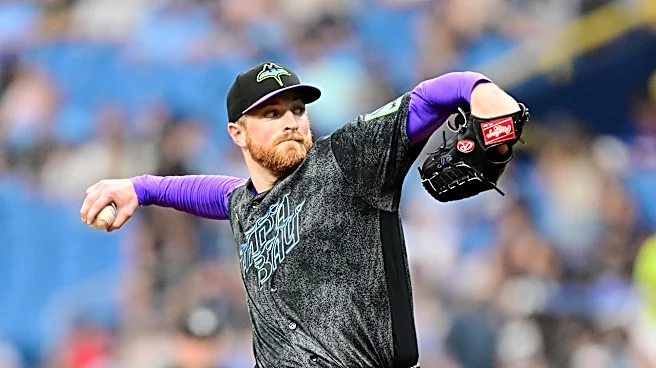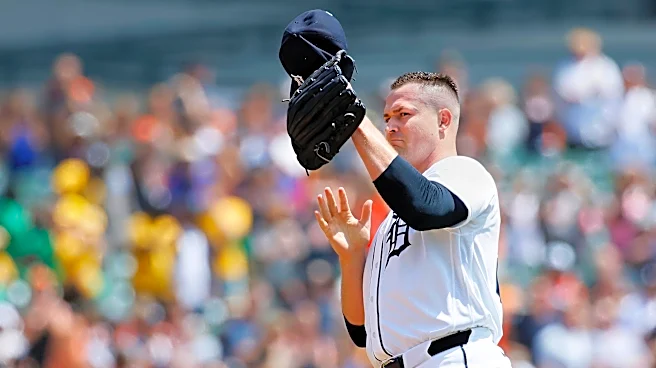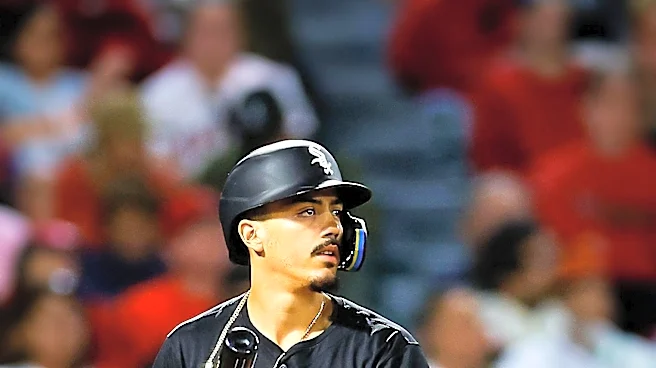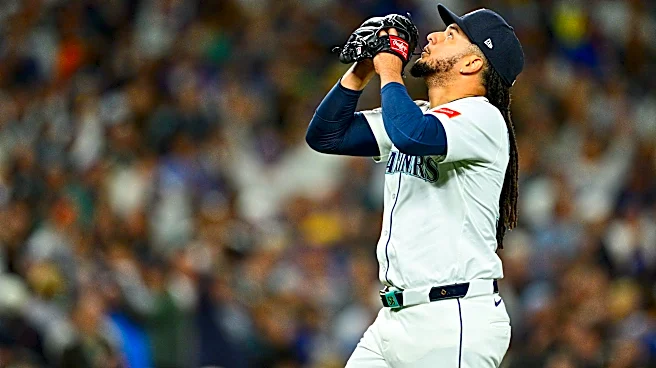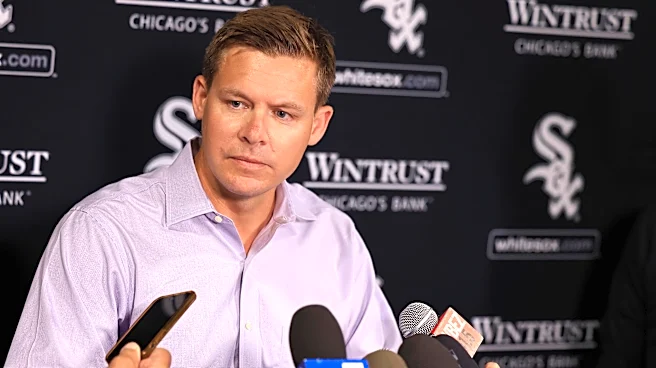

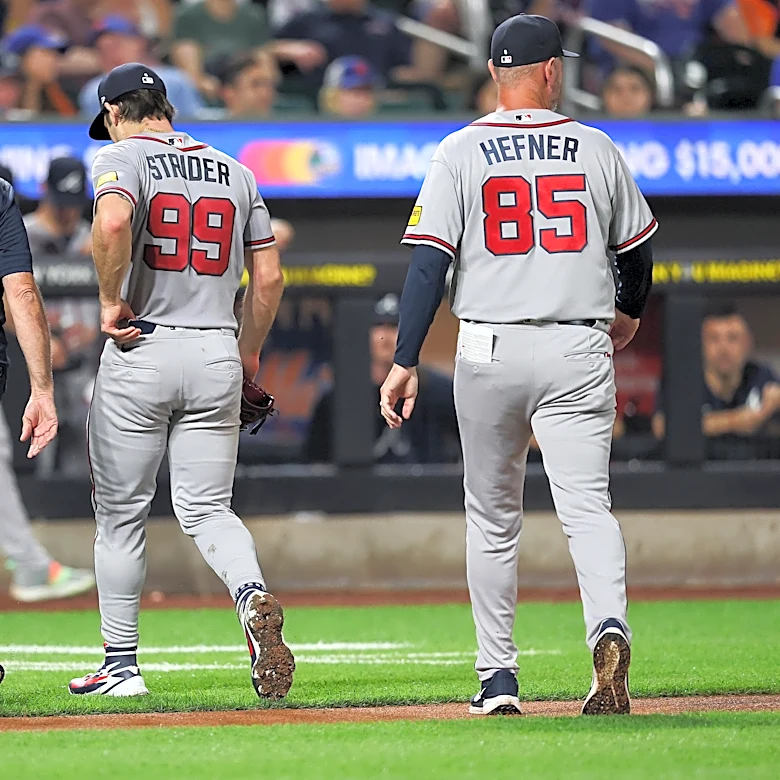
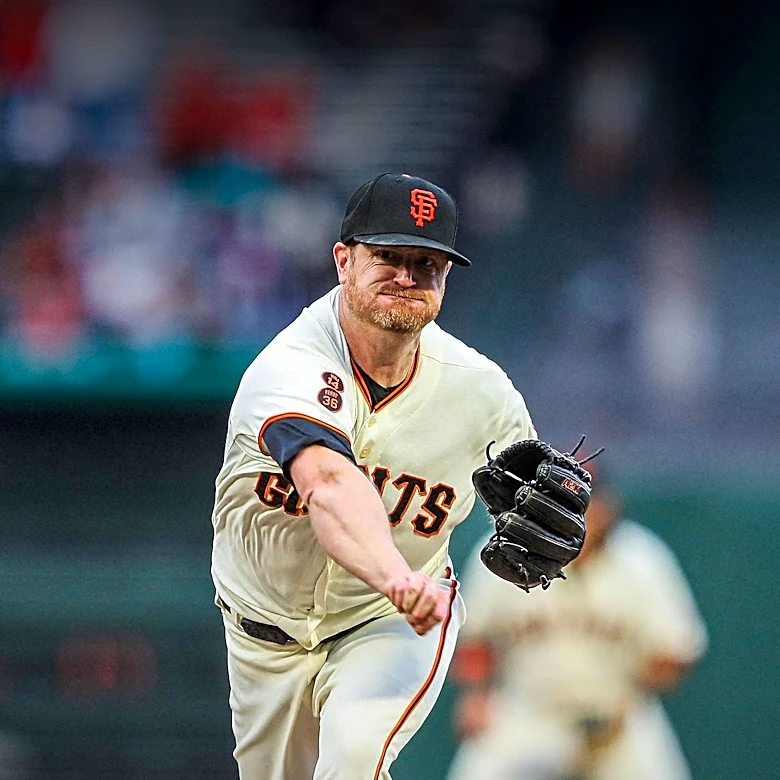

Special Note: This article was written on the afternoon of August 1, hours before the White Sox received Luis Castillo in exchange for Seranthony Domínguez, Nolan Jones and Boston Smith. The White Sox clearly feel like they can turn around Castillo’s decline. I don’t see him as a meaningful upgrade over Erick Fedde and Anthony Kay, so the crux of this analysis remains unchanged.
It’s not often that the White Sox are buyers at the deadline — there’s an incident in the team’s recent history called “the
White Flag trade,” and I think that sums everything up nicely. The last few trade deadlines have conjured the image of the White Sox as a shambled beggar, traveling door-to-door to offer smashed bric-a-brac for pocket change in a thinly disguised request for charity. “Please sir, may I have anything for this rusty Eloy Jiménez?”
The last time the White Sox got to buy at the deadline was back in 2021. That push netted the Sox a return of Craig Kimbrel, César Hernández and Ryan Tepera. They combined for a grand total of -0.1 bWAR to end that season, and the former two have Mr. Tapioca to thank for nearly breaking even.
The greatest trade in White Sox history, of course, is the Oct. 19, 1949 one-for-one swap between the Pale Hose and the Philadelphia Athletics: 21-year-old Nellie Fox straight up for backup catcher Joe Tipton. Nellie compiled 47.3 bWAR in 14 seasons for the White Sox and was inducted into the Hall of Fame. Meanwhile, Joe Tipton stacked up a paltry 2.7 bWAR in his three years with the Athletics, then got himself banned from baseball in 1959 for gambling. (This was back when people still cared about that sort of thing.)
Not every trade can be Fox-for-Tipton, but that doesn’t mean the club should settle for Tepera and the Pips. The first step toward a good deadline is to identify the obvious areas of need.
Let’s break them all down from least to most, starting with the infield:

I mean, you can’t really ask for much more here. Every starter has a bWAR of 2.0 or above and the “worst” one is a rangy shortstop who is on pace for 39 home runs a 92nd percentile Outs Above Average on Baseball Savant:

I am going on record as saying the infield is fine as is. A special congratulations to White Sox GM Chris Getz for finding a useful backup shortstop on his journey to find a starting center fielder.
Speaking of Getz’s luck, let’s take a look at a group of relievers who have managed to become all-around effective despite their $20 million closer being demoted to middle relief duty and then traded away:

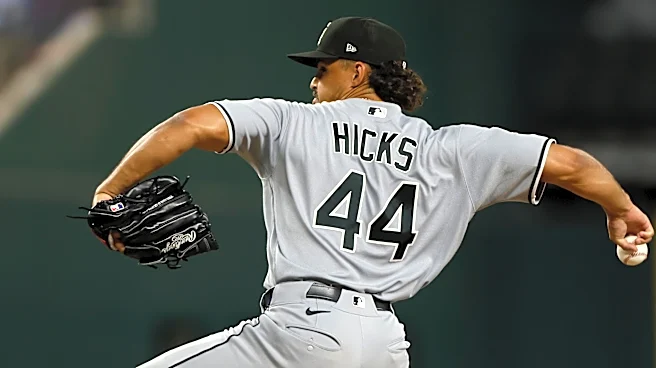
Every single arm at Will Venable’ disposal has an ERA+ better than 100. The three-headed fireman is still thriving in high leverage, Jordan Hicks is suddenly awesome and Trevor Richards has been so good that nobody makes fun of him for stealing Sisqo’s hair. Maybe they fall apart in September, because bullpens are more temperamental than a souffle in an earthquake, but there’s nothing today that suggests it.
Up next is the outfield, which is an even bigger surprise than the bullpen:

Tristan Peters has swung a cold bat recently, but he’s still a terrific center fielder who has anchored the defense all season. Sam Antonacci has been culled into emergency left fielder duty thanks to the law Mayor Daley passed in 1994 that says the White Sox can only use converted infielders in that spot. Fortunately, it’s the easiest spot to outhit your glove, and Antonacci has done that and then some. Montgomery is the right fielder of the future, so there’s no sense in bouncing the switch-hitter out of this lineup. Everson Periera isn’t lighting the world on fire, but only a World Series favorite should be saying things like, “We really need to upgrade our fourth outfielder!”
The next group are technically outfielders, I guess, but in practice they’re designated hitters:

“OK David, you clearly want me to ask you who Randy Roo Bunichuk is.” You’re right, I do! He’s what you get when you combine Grichuk’s splits against left-handed pitchers and Benintendi’s right-handed splits. Will Venable has been so aggressive about pinch-hitting one for the other this season that Benichuk may as well be the real guy. Randy Roo Benichuk is also on pace for 37 doubles, 27 home runs and 103 runs batted in. I hope Venable gets even crazier with it. Before the end of this season, mark my words, there will be a game where Venable is going to pinch-hit one for the another before the fourth inning and I am going to go online and defend it.
We’re getting down to brass tacks now. I don’t want to quibble about the order of these two needs. You could convince me to flip-flop them if you gave me a beer and a compliment. I won’t argue about this, however; they are the two biggest deadline needs for the 2026 White Sox by leaps and bounds:
Catcher:

Poor Kyle Teel. This should have been his breakout season. Instead, it’s a coin toss whether he will recover in time for the playoffs. Even if he does return, could he be expected to carry the lion’s share of the catching duties?
What’s been in his stead has been, lets call it “not ideal.” Edgar Quero has regressed precipitously, the one glaring failure on the 26-man roster for an otherwise successful development year for the staff. Drew Romo hit a few home runs early but now hasn’t been a winning player in months.
It feels mean to say neither of them have done anything well, but I can’t think of a better way to phrase it. Besides the hitting, Quero and Romo have been outright reckless with their ABS challenges at times. Quero’s catching percentiles in Savant are bleaker to look at than Saturn Devouring his Son, and Romo spent the early part of his year jockeying for the league lead in passed balls. The White Sox can perhaps carry one mediocre player in their lineup, but they can ill afford a position that subtracts from winning.
(One) Starting Pitcher:

Before shining the most critical light on this group, I do want to pay them a compliment. Burke, Martin, Kay and Fedde have all exceeded expectations. Davis Martin has regressed recently, but there’s no denying his balanced six-pitch mix. After giving up four runs in the first inning of his last start against the Yankees, Martin bore down and broke the 100-pitch plateau, holding the Bronx Bombers to nothing else. His mental resilience is incredible. He’s a playoff starter.
Sean Burke has broken now more recently, but his numbers are no joke. Burke ranks fifth the American League in strikeouts (140) and fourth in bWAR, and he’s only getting stronger as the season rolls along. He’s a playoff starter.
Now it starts to get dicey: Both Erick Fedde and Anthony Kay have been league average overall, but it’s been up-and-down with both of them. When it’s good, it’s good. When it’s bad, batten down the hatches:

Both men are worth having, but neither is somebody you’d feel comfortable with in an elimination game. That goes double for Noah Schultz, who just doesn’t have it yet. It’s not his fault that a playoff window opened so early but its where we’re at. Schultz is the future, but any action he sees in October should be from the bullpen.
Our final list calls for a starting pitcher and a catcher. Hey Getz, please buy batteries!