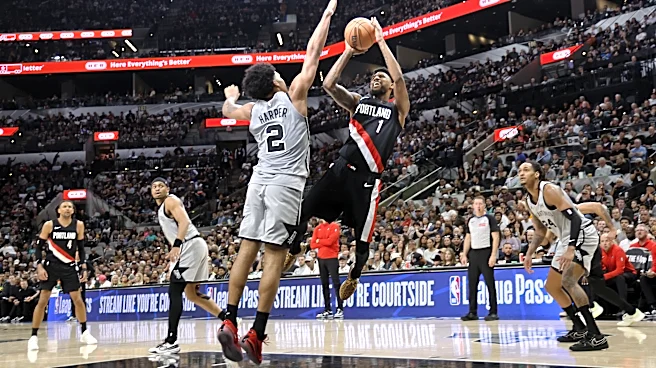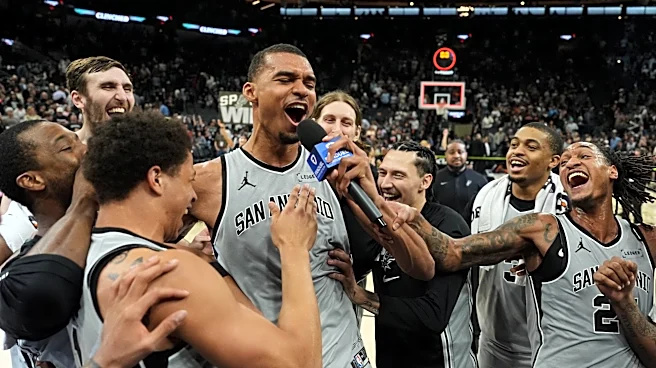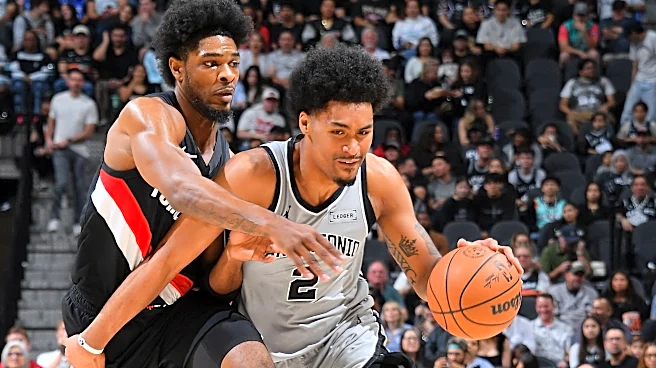





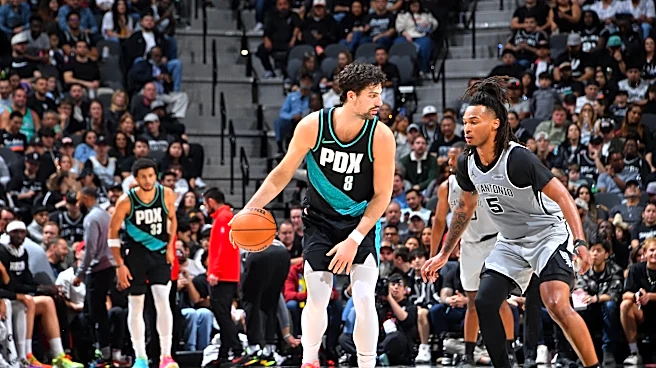
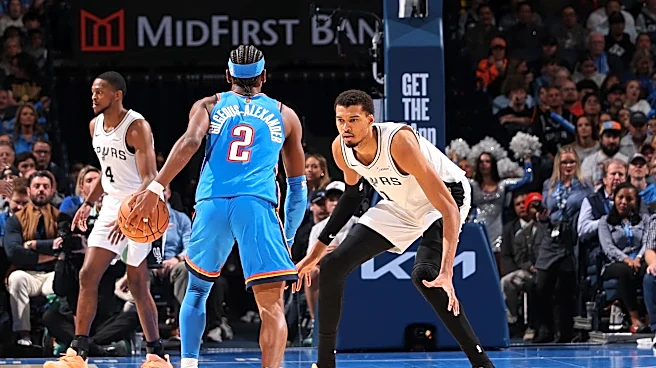
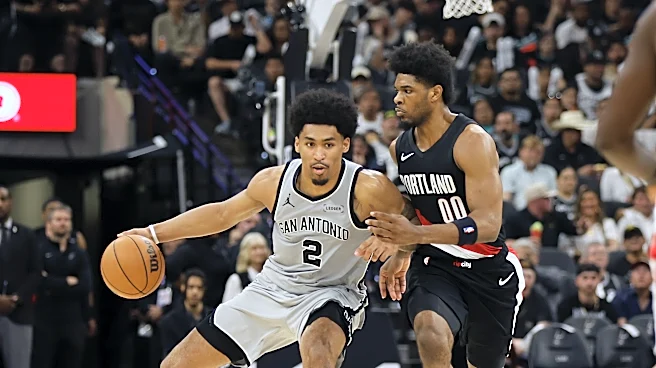
The Portland Trail Blazers are about to head into their first NBA Playoffs series in five years. When they take on the San Antonio Spurs tomorrow, it will be a new-ish experience for many Portland fans. Hopefully it will be the start of many such opportunities.
Before the series begins, this question came to the Blazer’s Edge Mailbag. I wanted to take a moment to respond to it for reasons you’ll soon see.
Dear Dave,
I’m writing this for my 13 year old Tyler. He’s a big Blazers fan and we often read
your articles together. He asked me a question in the car yesterday that I want to pass on to you. He said he’d like it if you could answer.
He wants to know what’s the difference in playoff basketball besides the format? You said the other day that playoff basketball is different. People including you often say that a team needs experience to succeed in the playoffs. Tyler asked what that means and what makes it so different?
We’d love it if you could answer! I know you’re probably busy getting ready for the Spurs series but thank you for all you do!
Vic and Tyler
Hey Tyler! I’m glad that you asked your dad to write! I learned about the Blazers through my dad too. Once when I was a kid I came downstairs and he was watching this cool thing where people bounced a ball and shot it through a hoop.
“What is that?” I asked.
“Basketball,” he said. “It’s a sport people play. That’s our team.”
“Our team? Do our family have a whole team?”
“No,” he said. “The team belongs to the city, to Portland. It belongs to all of us.”
That seemed like a neat concept, so I sat down and watched. I fell in love with the team and the game that day and it’s never worn off. My dad also got me my first basketball and hoop. I did the same thing for my own son and taught him to shoot. I’m so glad that you and your dad have moments like that too. It’s super special. You won’t forget it either! When you’re old and gray you’ll still remember talking ball with your dad.
To answer your question, there are two big differences between playoffs basketball and the regular season.
The first is quality of opponent. In the regular season, about half the teams you’ll play are good, half bad. The really excellent ones come along every once in a while, not every day.
In the playoffs, all opponents are good. If you advance even one round, you’re probably going to run into a really excellent one right there! And they’re not going away. Instead of playing a bad team, then an excellent one, then one in the middle, every game you play is against a really tough opponent.
You can hide mistakes, off nights, and sometimes just being not-so-good at something during the regular season, switching opponents every night. In the playoffs there’s nowhere to run or hide. If you’re not good, you’re going to lose quickly.
The other major change is the amount of time the opponent has to prepare for you. It can be up to a week before the first game of a series starts. After that, you play more or less every other day for up to two weeks. During that whole span, the opponent has only one thing to think about: how to beat YOU.
You’re familiar with the concept of a Plan A, Plan B, and Plan C? If A, your first plan, doesn’t work, you try Plan B. If B doesn’t work, you try Plan C. If C doesn’t work, you start praying.
With all the time in the world to prepare for one opponent, playoffs teams are really good at taking away the other team’s Plan A. That’s the very first thing they plan for.
This brings up one of the big realities of the postseasons. Teams with the HUGE stars—those ultra-talented guys whose basketball rookie cards are worth fortunes—have a big advantage. Think of Kevin Durant being able to shoot over anyone because he’s 7-feet tall with the offensive skills of the best shooting guards. Or LeBron James with his basketball smarts and unstoppable physique. Or Steph Curry and his ability to hit three-pointers lightning quick from anywhere on the court (and six places off it). Those guys are a Plan A that cannot be stopped. If you can execute your Plan A at will and you can cut off the opponent’s Plan A at the same time, you’re probably going to win.
If superstars aren’t dominating the action—or if two teams have equally-matched superstars—then the team with the better Plan B usually wins. This can be because of better supporting talent, because of some team skill or characteristic that can’t be overcome, or sometimes just because of experience. A team usually won’t win every night with a Plan B, but they don’t have to. Best-of-seven playoffs series are about averages. If you’re better than the other guy, it’ll show in the long run even if you lose a game or two.
But here’s the thing. By about Game 3 of the series, each team has made its best attempt at Plan A and at least one, if not both, have probably gone to Plan B too. But this is only the third game! There’s at least one more left, maybe up to four!
Teams adjust to each other between each game. What worked in Game 2 might get taken away in Game 3. And that will have to change in Game 4. So Plan C’s and D’s and E’s and then circling back to A all happen in a long series. Teams with a lot of options in how to play—either a deep team with great players or a team with multi-talented players who can adjust to different styles—often have an edge in long playoffs series.
During the regular season, teams only occasionally get forced into their Plan B. Nobody even thinks about Plan C much. By the time you’d go to it, the game is already over and you’re on to the next opponent, trying Plan A all over again in a different city. The playoffs require teams to dig deep, adjust constantly, and execute under a variety of circumstances with few mistakes through lots of different plans.
If you make mistakes during the regular season, it doesn’t hurt much. You lose a game maybe, but that’s just 1 of 82. Or maybe your mistakes don’t hurt you at all because the other team is so bad you win anyway. In the playoffs, 2-3 mistakes in the right quarter can cost you the game. And one game can cost you the series. So much more rides on every moment, every play. The tolerance for bad play is far lower than in your normal games. This puts a ton of pressure on everybody from players to coaches to referees, even.
Put this all together and you’ll understand the reason it’s going to be hard for the Blazers to beat the Spurs in this series.
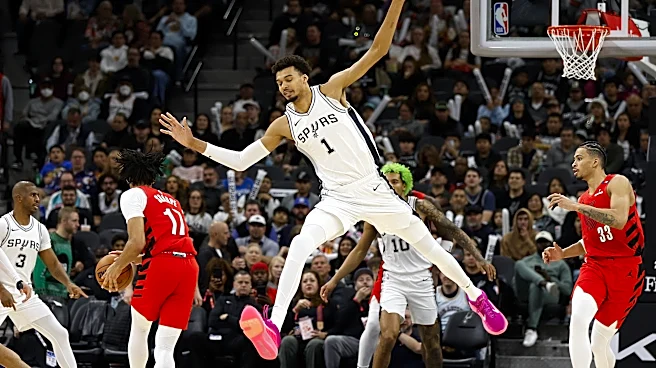
First, San Antonio has one of those Plan A’s that can’t be stopped in Victor Wembanyama. He can do almost everything well. You can’t take away one thing from him and say your job is done. He’ll just beat you in a different way! Deni Avdija is good too, but he hasn’t shown he’s Wemby Good. The Spurs will have an easier team forcing the Blazers out of their Plan A than the Blazers will stopping the Spurs.
Second, Portland’s Plan B hasn’t been that good. They haven’t been healthy all season. They haven’t had time playing together to develop a coherent Plan B. Usually their back-up plan is either to shoot a lot of threes and hope they go in or give the ball to a scorer and watch them try to score in isolation. Neither of those work very well…at least not enough to last for seven competitive games. This is doubly true because San Antonio knows this and will be preparing for it.
Third, the Blazers don’t even have a definable Plan C. Most of their players have never been in the playoffs before. Those that have aren’t the main guys on the team. The Blazers have potential depth going for them, but depth without direction doesn’t mean much. They’re going to need to prove they can execute in ways they haven’t so far this season to make this a real series.
But hey, there’s always hope. And if hope fails, Portland’s players will at least gain experience for next year, when they’ll know better what they need to do to succeed in the playoffs.
I hope that answered your question! Enjoy the games, Tyler! May your first real playoffs experience and the Blazers’ first experience in a while both be great!
And if you all want to send a question to the Mailbag, you can email it to blazersub@gmail.com and we’ll try to answer as many as possible.