




I spend so much of the offseason looking backwards at the previous season, but this time of year, my thoughts start drifting to the next season. What lessons did we learn from last season that could give us clues for this season, both from the Green Bay Packers and a leaguewide perspective?
I’ve had all these thoughts jumbled in my head about the future of the Packers offense, so I thought I’d write about them. Shout into the void, etc. I don’t know how much of these “clues” are real or which ones
I’ve simply been drawn to in my own head, but it’s a fun thought experiment for me, so maybe it’ll be tolerable for you.
We’ll start with the big trend.
Multiple TEs
Listen to any podcast or read any article from smart Xs & Os people about the big takeaway from NFL offenses in 2025 and this is something you no doubt have heard all about. We’re talking about 12 personnel (1 RB, 2 TE, 2 WR) and 13 personnel (1 RB, 3 TE, 1 WR).
Per data from SumerSports, usage of 12 personnel has increased each of the past 4 years. Only by a couple of percentage points each year, but we have gone from a leaguewide 17.3% usage in 2022 to a leaguewide usage of 22.3% in 2025 (a 5% jump). For 13 personnel, we saw a slight dip in 2024, but overall, we have gone from a 4% rate in 2022 to a 5.4% rate in 2025. If we look at both of them together, that’s a 6.3% bump over the course of 4 years.
One of the main questions is whether or not we’ll see that continue. Is this a flash in the pan or a shift in the way offensive football is currently being viewed? The draft could give us a potential tell in terms of how some teams feel about this. Between the 22nd pick in the 2nd round and the 31st pick in the 3rd round, 8 tight ends were taken. While a couple of the tight ends fit the mold of a big WR (Vanderbilt’s Eli Stowers and Ohio State’s Max Klare), most of them profile more as blockers who could give you a little something in the pass game. Some of those blocking TEs went to teams who already have multiple tight ends that see the field, with Head Coaches who are seen on the forefront of offensive thinking (the Rams, Bears and Jaguars, most notably).
If you look at the Packers’ draft, you will not find a single TE. In fact, you’ll only find a single offensive player. And, as much as I like Jager Burton (we University of Kentucky alum need to stick together), I don’t think we’re going to see him getting any run as a TE.
The next question is this: do the Packers currently have a TE room that is capable of leaning into 12 & 13 personnel more in 2026?
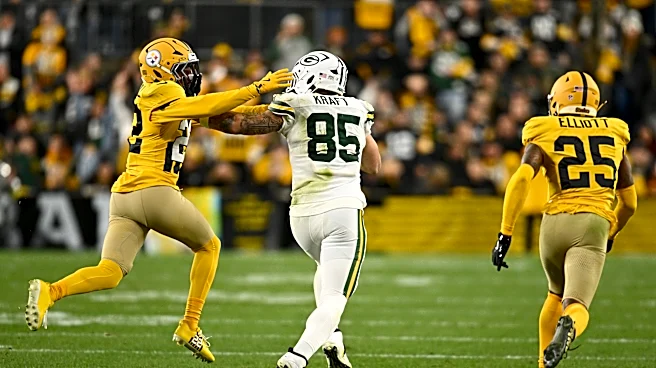
They have Tucker Kraft coming back from injury this year, and, if you believe his words (the words of a madman), he’ll be full-go in Week 1. I don’t need to say a ton about Tucker Kraft. He was well on his way to being considered one of the best TEs in the league before his season-ending injury. He ended up on top of the TE EPA per Play ranking (+4.5), just edging out Trey McBride (+4.2) and George Kittle (+4.0). He was first in Yards After Catch Per Game with 44.1, a full 9.2 yards better than Trey McBride in second place.
Behind Kraft, it’s a bit of a question mark. Ourlads has Josh Whyle (the world’s tallest HB) as TE2, Luke Musgrave as TE3 and an assortment of dudes after that. I like what Whyle can bring to the passing game, but he’s not much of a blocker. The same goes for Musgrave. I tend to like Musgrave more than most, but he’s never shown himself to be anything more than a limited player. Both he and Whyle will try to block, but they just aren’t very good or consistent.
As for the “assortment of dudes”, we’ve got four names: Messiah Swinson, Luke Lachey, Drake Dabney and RJ Maryland. Swinson & Lachey both profile as blocking TEs, while Dabney & Maryland are both receiving-first (only?) TEs. As intriguing as a couple of those guys are, they’re not particularly versatile or consistent pieces.
For the next question: did they try to make any moves to bring in more TEs? The answer is no, not really. Not aggressively, anyway. Swinson & Dabney were kicking around last year. Maryland was an undrafted free agent, and one they’re hoping is able to rediscover his pre-injury form. They signed Wake Forest TE Eni Falayi as an undrafted free agent this year, but he failed his physical and is, as of this moment, still unsigned (a shame, because he’s a really fun player with true blocking ability). They brought in Lachey as a free agent (and they must have liked him, because he had failed his initial physical, only for the Packers to sign him a little later when he passed a physical).
All things told, they went after two undrafted free agents (signing one) and signed another free agent off waivers (Lachey, by the way, was a 7th round pick of the Texans in 2025 out of Iowa). That doesn’t look like a team that was aggressively pursuing TEs to chase a trend.
You know what they did do this offseason? They signed two of their receivers (Christian Watson and Jayden Reed) to extensions. That is, of course, a year after taking a WR in the 1st round of the draft (Matthew Golden) and another in the 3rd (Savion Williams).
From looking at the depth chart and the moves made this offseason, it looks like a team that is prioritizing wide receivers more than tight ends.
Which brings us to our second point.
Matt LaFleur’s comments
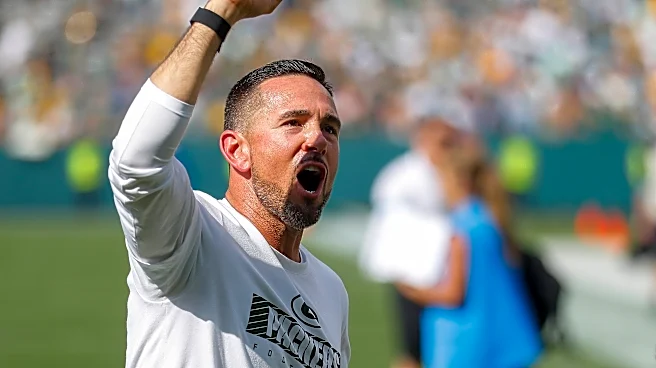
There has been a lot of hubbub and hand-wringing over this quote, and I get it. You don’t necessarily want to hear “we’re stripping everything down and start like it’s year 1” when it is, in fact, year 8 and the team now has quite a few guys who have been on the team for a decent stretch of time. Unless we’re in the building, there’s no way to truly know what this looks like, but I – a man very much outside of the building – have thoughts & theories.
My first thought is that this could just be a normal stripping back that needs to happen. Be in any place long enough and you start to accumulate things. For an offensive coach, you may start with a pared-down playbook full of some of your favorite things, but, over the years, it naturally grows. The league changes. You change. New ideas are put into the playbook. Variations on a core concept, variations on the variation, variations on that variation, and so on. But there are still things you believe in that stay in the playbook. Maybe they don’t always work, but man, sometimes it’s hard to burn that old toy.
Offseason is a time of reflection & self-scouting. Last season didn’t go the way the Packers (or most of us) envisioned, so maybe that reflection goes a bit deeper. Do we really need this play? And if we don’t need this one, we don’t need the dozen variations off of it. And if we don’t need any of that, maybe we don’t need this run play that is so closely tied to it, either. Break out the scalpel, boys, it’s time to get to work. Long live the new flesh, etc.
There’s another reason that has been kicking around my brain as of late. Generally speaking, offenses change every year. Sure, not always massive changes, but good coaches shift every year, depending on the guys on their team and the current state of the league. And, despite what some folks seem to believe (and despite the fact that there are some holes in parts of LaFleur’s Head Coaching game), Matt LaFleur is a very good offensive coach and playcaller. He tinkers and makes adjustments/improvements every single year.
We already talked about how the Packers look to be more set up as a team operating out of 11 personnel (1 RB, 1 TE, 3 WR). They don’t appear to be chasing the heavy TE packages. They’re talking about “stripping everything back.” So what direction could they be looking to go?
To me, these scream “up-tempo.”
Can the Packers run an up-tempo offense?
We’re not talking about Chip Kelly blurball here. We’re talking about a tactical approach. Catching the defense in a mismatch, then being able to go no-huddle while keeping the playbook open enough to be able to run a varied package of plays.
To be able to do that effectively, you need to have players who are able to make the offense effective from a variety of attack points. In simpler terms, can you find a mismatch in either the run or the pass game with the same group of players on the field? Are you able to put the defense in conflict with a group of players?
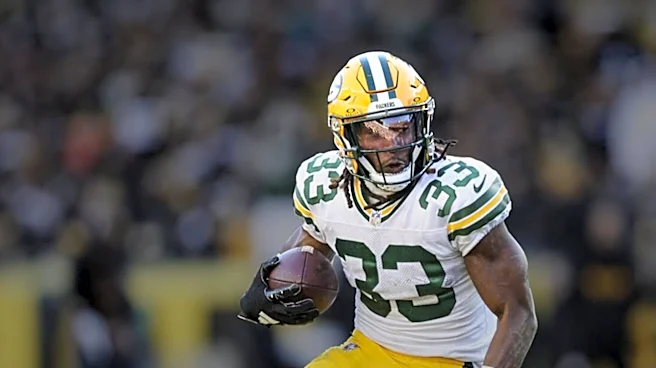
If we assume the Packers’ preferred starters out of 11 personnel are Christian Watson, Jayden Reed, Matthew Golden, Tucker Kraft and Josh Jacobs, then the answer is yes. There’s a slight downgrade in receiver blocking than there was last year, but Watson is still very good on that front and Reed/Golden at least know their assignments and have shown an ability to lose slowly.
With that group, you can effectively run outside power.

Or Insert Duo.

Or go into a Quads passing attack.

Or go standard 2×2 spread.

The idea is to have a lineup that can effectively run or pass. When you catch the defense at a disadvantage, that allows you to go up-tempo at a moment’s notice, without telegraphing what you’re going to be doing as an offense. You’ve got an advantage, but you’re still able to project a sense of balance. In our own lives, aren’t we all just trying to project a sense of balance?
The other benefit of up-tempo is that it can force a defense to be a little more simplistic. It’s hard to get to the entire defensive playbook if you’re unable to substitute or do anything other than basic checks at the line. As defenses get more multiple and complicated, offenses need to find every advantage they can get. Going up-tempo with a versatile and dangerous group is one of the best ways to do that.
Will the Packers go up-tempo?
Brothers and sisters, that’s the million-dollar question. Teams are operating at a slower pace, and the Packers were leading the charge last season. Under LaFleur, they’ve never been a particularly fast team. In 2025, the Packers were last in the league in Drives Per Game, averaging 8.7 drives per game (per FTN). It’s not like having more drives means you’re a great offense – the team with the most drives per game in 2025 were the Browns with 10.6 – but picking up the pace wouldn’t hurt, especially if increasing pace means you’re exploiting a mismatch. But LaFleur has always run a deliberate offense with a lot of motions.
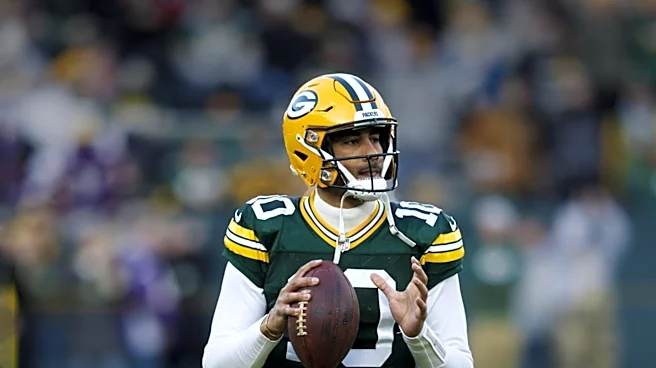
All that being said, I’ll still cling to the possibility. In Jourdan Rodrigue’s excellent Playcallers podcast series, Sean McVay credited LaFleur with creating an up-tempo system that allowed them to access more of their offense while operating out of no-huddle. So it’s something LaFleur has in his bag. Combine that with Jordan Love rounding into form as a more complete QB last season – marked by having more control at the line – and it’s possible that the Packers offense comes out this season looking much different than the offense we’ve seen over the last couple years.
Is that wishcasting based on crumbs? Buddy, you bet it is. But right now it’s the middle of July and all we have are crumbs. In Jess Walter’s magnificent Beautiful Ruins, you can find this quote:
They are young and the trail is wide and easily traveled. And even if they don’t find what they’re looking for, isn’t it enough to be out walking together in the sunlight?
It’s a quote I go back to many times for a myriad of reasons, but it also captures where I find myself. It’s July. And even if the Packers don’t turn into an up-tempo team in 2026, isn’t it enough to spend some time with it in my head?
Albums listened to: Ed O’Brien – Blue Morpho; Midrift – Silhouette; Widowspeak – Roses; Death Cab for Cutie – I Built You a Tower; Fleetwood Mac – Rumours; Nine Inch Nails – The Fragile