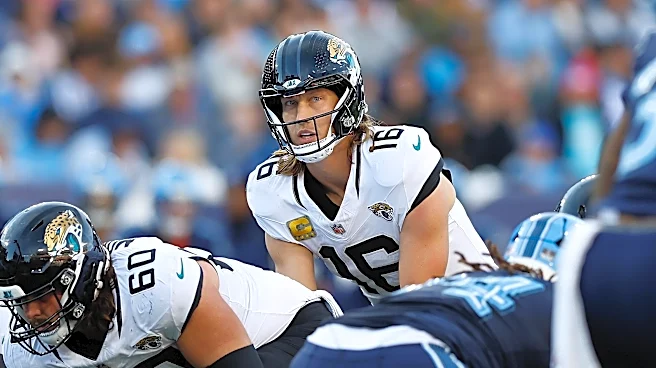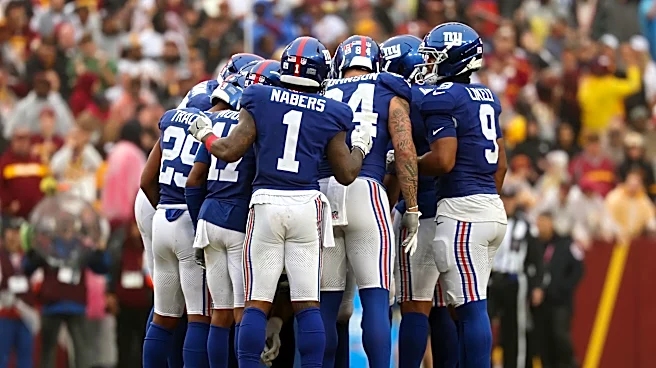


The New York Giants return to action in Week 11 when they take on the Jacksonville Jaguars..
The 5-3-1 Giants enter the game as 5.5-point underdogs at home against the 7-2 Jaguars, per FanDuel. The Giants are coming off of a frustrating, and potentially significant, loss to the Washington Commanders in Week 10, while the Jaguars are riding a 3-game winning streak that features performances of 42, 33, and 40 points.
The Giants are entering the toughest stretch of their schedule, and this game is believed
to be an early litmus test to see if they have what it takes to hang with the best the NFL has to offer.
The last time the Giants were significant underdogs, they responded by outplaying the Houston Texans and delivering a stunning upset following a bad loss to the Saints. Can the Giants’ offense respond to the loss to the Commanders and keep pace with one of the most prolific units in the NFL?
Stats that matter

The Jaguars’ scheme
The Jacksonville Jaguars aren’t a team the Giants see all that often, and this is the first time they’ve faced off with Liam Coen as head coach and Anthony Camponile calling the defense. So with that in mind, the best place to start is with an overview of the type of defense the Giants will be facing.
And in that, the Jags are more familiar than we might have expected. In fact, the schedule makers have done the Giants a low-key favor by making this game after the Eagles and Commanders. That’s because Camponile has spent time under both Vic Fangio and Brian Flores and runs a hybrid defense that incorporates elements of both schemes.
The Jaguars run a high rate of Cover 3, Cover 4, and Cover 6 shells, much like the Eagles. And like Fangio, Camponile likes to use sophisticated coverage rotations to move between looks and shells after the snap. As we’ve seen with the Eagles and Fangio’s various acolytes around the NFL, the sophisticated rotations are a good way to both limit explosive plays and help create pressure passively. The rotations help confuse quarterbacks and keep the ball in their hands, giving pass rushers time to work. At the same time, the use of stunts, twists, and simulated pressures confuses blocking schemes and wastes blockers, creating advantageous match-ups elsewhere.

The Jaguars start the above play in a classic Cover 4 shell, but walk a safety down to cover the slot just before the snap. Combined with the field-side cornerback (bottom of the screen) taking inside leverage, that clues us that they’re actually playing a Cover 3.
The Jaguars respect the Texans’ play-action, with a fifth defender coming downhill to gap out the potential run, while the second level defenders freeze. The play design is also able to hold the free safety, keeping him from getting to the vertical route in time. The play is a big gain for Houston, but only because the protection holds up and C.J. Stroud is able to layer the ball over the trailing defender and put it where only Nico Collins can make the play.
The Jaguars’ blitz rate is on par with the “Fangio Adjacent” defenses in the NFL at just 23.7% (10th-lowest). But when Camponile he does blitz, he uses similar structures as Brian Flores.
Flores builds the blitz into every aspect of his defense, showing heavy pressure to gap-out the offense in the run game while creating uncertainty as to which defenders are — or are not — rushing.

This play shows the other side of the Jaguars’ defense. There’s significant milling around the line of scrimmage, with all but three defenders crowding the tackle box. It’s almost impossible to know at the snap who’s rushing, who isn’t, or what coverage is even being called.
They ultimately drop into a split-field coverage and there’s an opportunity for an explosive play down the sideline. However, the pressure and confusion force the ball out on the hot-read before Ward has a chance to see the open man down the field.
Can J.J. McCarthy stay explosive?
One of the biggest aspects the switch to J.J. McCarthy at quarterback has been unlocking the explosive elements to the Giants’ passing game.
That could be significant in this game because, as Gus Logue of Big Cat Country tells us, the Jaguars have been hurt by explosive passes in the past. They’re currently the sixth-worst defense in the league in defending explosive passes (+0.82 EPA/play), despite playing the likes of the Indianapolis Colts, Baltimore Ravens, and Tennessee Titans over the past three weeks.
None of those teams are offensive juggernauts this year, and while that doesn’t mean the Jaguars are a paper tiger (no pun intended), there might be an opportunity to exploit.
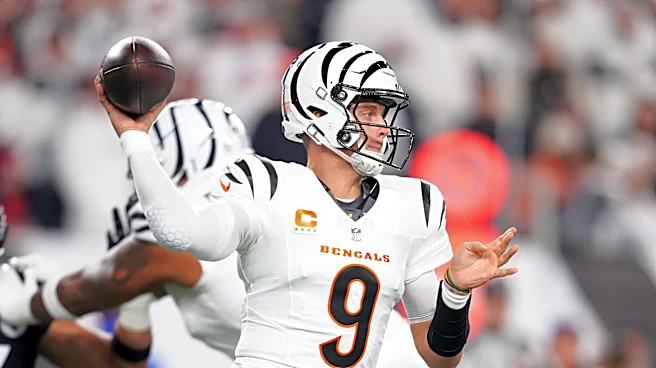
Right now, McCarthy leads the NFL with an average of 10.4 air yards per pass while still having a good-enough completion percentage of 64.7. For context, Joe Burrow has a completion percentage of 66.4 percent, but is only averaging 7.4 air yards on his passes.
And while some of McCarthy’s aggressiveness downfield has been due to third-and-long situations, he’s still been very willing to attack downfield.
The Giants have speed on their offense to threaten defenses vertically. Malik Nabers is the Giants’ go-to receiver down the field, but they’ve also used Darnell Mooney and Malachi Fields to attack the perimeter. They’ve also recently begun using Jalin Hyatt as a “sacrificial X” receiver, sprinting down the field to force defenses to respect the vertical aspect. McCarthy has attempted deep passes to Hyatt twice now, each time just failing to connect for a big play, and it could be worth going to that well again.
The Giants don’t want to live on deep, low-percentage throws. Doing so will keep their offense volatile and unsustainable. However, they’re going to need to be as aggressive as possible in this game to score touchdowns.
Not only do questions (or outright concerns) about placekicker Dominic Zvada remain, but the other side of the ball sees a Jaguars’ offense that is among the best red zone offenses in the league, going against a Giants’ defense that’s one of the league’s worst in the red zone.
The Giants can not force their defense to try and win the game single-handed, which means hitting their explosive plays whenever they can get (or create) the opportunity.
Run the ball, or at least simulate a run game
The Giants have done much better running the ball since getting Cam Skattebo more involved. Skattebo had a career day against the Houston Texans in Week 7 and ran well against the Commanders after returning from his hamstring injury, with a combined 202 yards and three touchdowns in those two games.
The Giants should remain committed to their identity as a running team.
However, they should also be willing to extend the running game if they aren’t finding room around the line of scrimmage with the arrival of Jordan Davis and Davon Godcheaux on the Jaguars’ defensive front.
Skattebo had 121 total yards against the Texans, and 122 total yards against the Commanders, which includes a combined 41 receiving yards. Skattebo, Devin Singletary, and Gregory Desrosiers all have upside (in different forms) as receiving threats out of the backfield. And while the Jaguars’ blitz packages could frustrate their pass protection as well as running game, there could be opportunities to use the backs to replace the blitzing defenders and keep the offense on schedule.
Using their running backs as receiving threats is also a potentially useful deviation from their usual tendencies.
The Giants love to use 22-personnel packages with two backs and two tight ends on the field.
However, they seldom throw out of those looks, however, and much prefer to run with Patrick Ricard and Chris Manhertz on the field. That tendency, and the accompanying expectation, could make play-action a potent weapon from 22-personell. The Giants have (briefly) used a “pony package” with Cam Skattebo serving as a fullback. With Nabers and Isaiah Likely on the field, that could give the Giants four capable receivers while Manhertz serves as an extra blocker.
Play-action is typically considered the prelude to a “shot” play down the field, but a quick angle, flat, or wheel route could get the back in space safely and allow him to run against the secondary as opposed to the defensive front.
The Giants have proven very hesitent to throw to their backs, with Skattebo and Singletary combining for just 29 targets all year — one fewer than Darnell Mooney.
The Jaguars aren’t bad against running backs in coverage, allowing 5.6 yards per target (per SharpFootballStats). That’s far fewer than teams like the Colts (7.9) or Cowboys (7.6) but actually worse than the Giants’ own defense (5.4 yards per target). It’s also more yards per target than the Jaguars allow to tight ends, which is a league-leading 4.8 yards per target.
The Giants will need to find, and take advantage of, every opportunity they can to get the upset in this game.