




A brainchild of one of Europe’s original super agents, Gigi Peronace, the Anglo-Italian cup was a competition set up in the early seventies that pitted English and Italian teams who didn’t qualify for European competitions to play against each other.
The idea for this competition came after Third Division Swindon Town were refused entry by UEFA into the Inter-Cities Fairs Cup, having won the League Cup. Angered by the injustice of this, Peronace set up this competition in protest at the snobbery shown
by UEFA.
A fairly simple format was adopted. There were three groups of four teams, two of which came from England and the other two from Italy. Each team played those from the other country twice, once at home and once away.
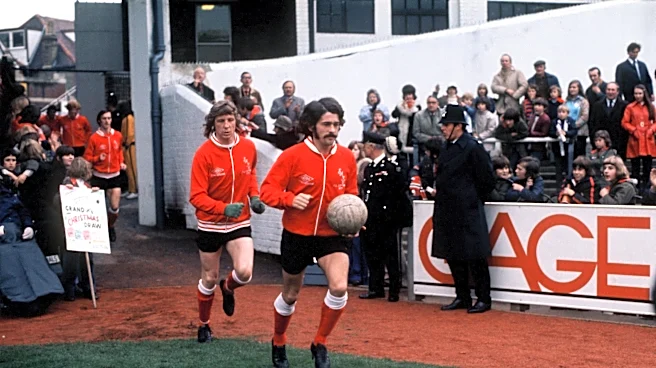
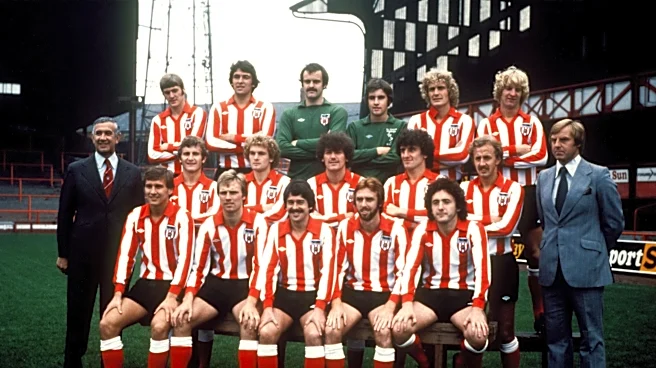
On this day, Sunderland took on Lazio for the first time in the competition at Roker Park in front of a small crowd of 3,764.
Featuring soon-to-be-famous names on Wearside such as Jim Montgomery, Bobby Kerr, and Denis Tueart, the lads won 3-1 with goals from Kerr, Tueart, and an own goal from Giuseppe Papadopulo.

Despite being one of Sunderland’s first entrances into a first-rate European competition, the appetite for the competition was extremely low, and in all honesty, the competition was treated as a pre-season competition, where the lack of interest in it was paralysing its potential progress.
A bigger crowd of almost 6,000 turned out for the second game, where a 2-2 draw with Fiorentina followed at Roker Park, putting the Black Cats in a good position to qualify as they headed to Italy to play Lazio and Fiorentina.
Unfortunately, the Italian’s got the better of us over there, winning 2-1 and 3-0 respectively on their own patch to send us packing our bags and out of the competition.
Sunderland would be invited back at the end of the 1971/72 season, this time grouped with Atalanta, Cagliari, and Leicester City, but the competition became unsustainable due to a lack of interest in it, along with the safety fears for fans due to violence at some of the games.
It was abandoned in 1973 with representatives for it citing fixture congestion as the main reason for its cancellation.