


Baseball is impish, unpredictable. Weird things happen every single game, and player development is nonlinear, and revelations can change the fortunes of individuals or groups.
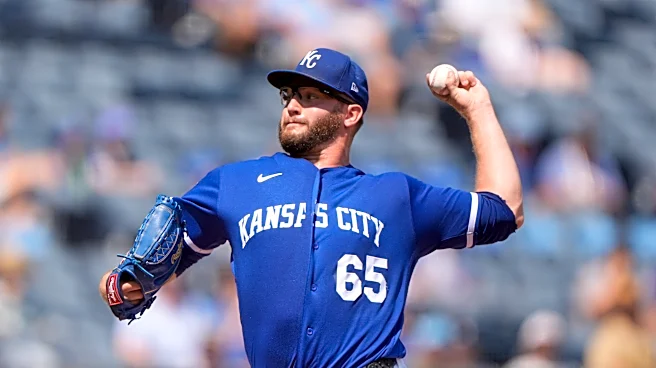
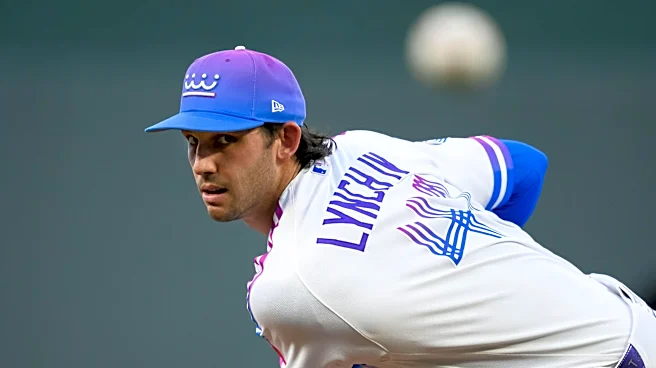
But some things are extremely predictable, and Daniel Lynch IV not cutting it in his second go-round as a starting pitcher is the type of thing that the Kansas City Royals should have seen coming from a million miles away.
Normally, sticking a good reliever into a starting pitching role is a fine enough idea to try if your team
is out of it and you need starting pitching. When Lynch started his first game in early August, the Royals were indeed out of the playoff picture and desperate for some healthy starting pitching. And in Lynch’s case, he used to be a starter. Why not, yeah?
Except in this case, there was a clear answer to why not: because Lynch was a bad starting pitcher. Lynch exclusively pitched as a starting his first three seasons in the big leagues, and in those 51 starts from 2021-2023 he posted a 5.18 ERA and a 4.79 FIP. While he wasn’t exactly death to lefties, his main problem was that he couldn’t get righties out; against right-handed hitters in his first stint as a starting pitcher, he allowed a .283/.348/.465 triple slash, a .350 wOBA. You just can’t survive in that role when the average righty hits like Bobby Witt Jr. off you because teams can just stack right-handed hitters and make you pay.
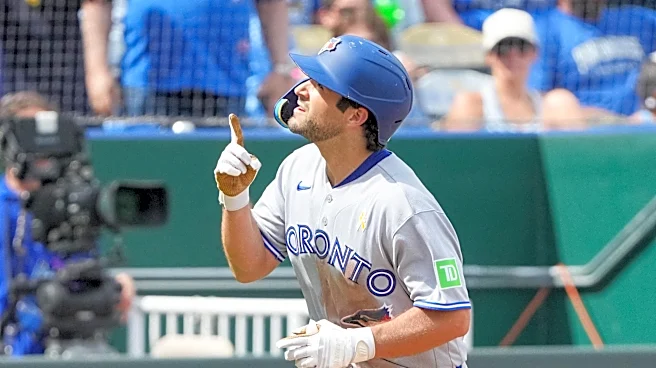
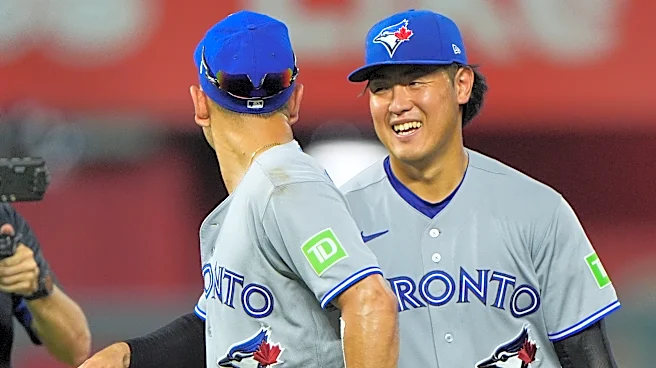
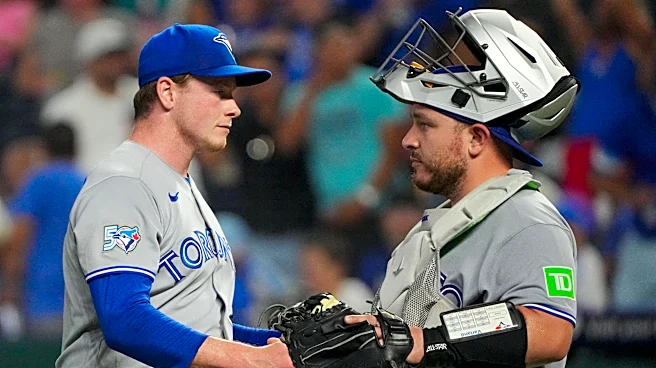
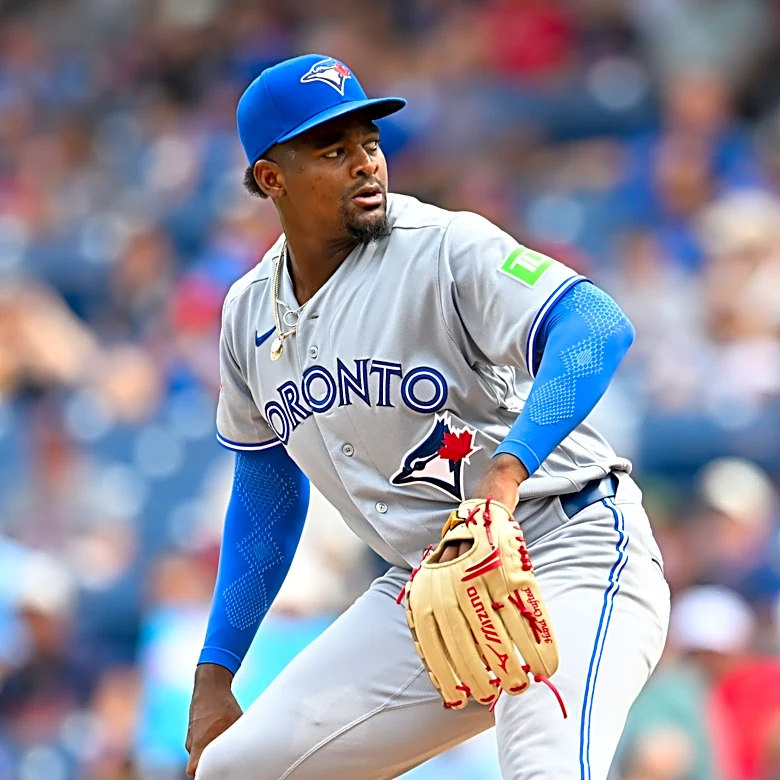
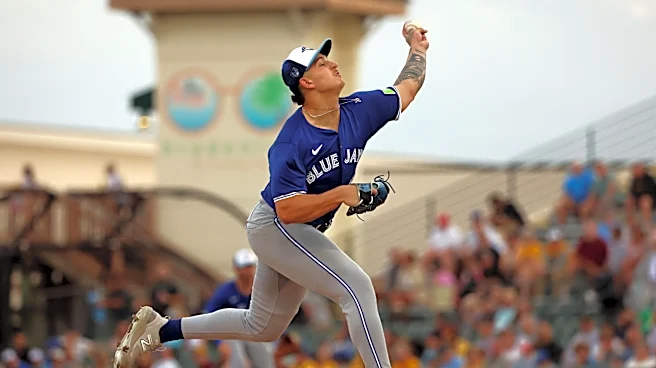
On Friday, this example was in full swing. Lynch left hanging changeups to right-handers Vladimir Guerrero, Alejandro Kirk, Kazuma Okamoto, and Ernie Clement. They didn’t miss these less-than-stellar offerings and resulted in the game getting out of hand before the Royals could even come up to bat.
In the second inning, Lynch gave up a single to right-handed Myles Straw on a middle-middle sinker. Guerrero then smashed a hanging curveball that Witt was barely able to snag, a dive that saved a run. But then Kirk doubled and that run came home to score. Five runs. Two innings. All damage from right-handed hitting.
Other than that second Kirk double, none of those pitches to those hitters were competitive offerings. Across five innings, Lynch didn’t strike any Blue Jays player out and only generated two swings and misses, with only one of those coming against a righty.
I’m not just highlighting this because it is a particularly gruesome outcome. I’m highlighting it because it’s indicative of Lynch’s 2026 experience as a starting pitcher. Some small sample size demons are in the data, but in 20.2 innings of work as a starter he has a 6.97 ERA and a 5.4% K-BB rate. He’s given up at least two runs in five of his six starts, and Friday’s start was the first time he completed the fifth inning.
What makes this frustrating is that the Royals do not need to try to find a place for him on the roster. On the contrary; Lynch has established a home as an effective reliever over the past three years, where he’s posted a 2.47 ERA and a .278 wOBA against. This year, he’s been even better: a 1.96 ERA and a .241 wOBA against. He’s done this by limiting his fastball use and leaning more heavily into his sinker and slider.
I don’t need to tell you how awful the Royals bullpen has been. You’ve seen it. Kansas City may have needed somebody to start, but Lynch was, and is, their best reliever on the roster, even with his heavy platoon splits (even in relief). And then there’s the whole thing where this muddies the waters for him next year, too. I am aware that starting pitchers make more money, and I’m sure Lynch is also aware that starting pitchers make more money, so that’s why he was up for giving it another go. Still, seems weird to risk injury getting stretched out, on both the Royals and Lynch side of things.
But man, none of this really matters when the results of this “experiment” were so easily foreseen. I knew that it would be a bad time when the Royals announced that Lynch was gonna start again. On Friday, I knew it would be a bad time when I saw the lineups. Sometimes, baseball can’t be understood. Other times, like this scenario, it’s the simplest thing in the world, and that maybe you shouldn’t overthink the obvious.