





This will have a lot of data, so if you don’t want to look at and think about numbers, just skip to the conclusions at the end.
For those who are unaware, the only positions that play ever offensive snap (by design) are the OL and the QB. So in an ideal situation, all five starting offensive lineman and the QB play 100% of the offensive snaps. On good (or really bad) and healthy teams, this can sometimes be less than 100% if the starters are removed late in a blowout games to give the backups some game experience.
The offensive line is also unique in that familiarity with the guys playing with you on the line is critical to performance. That being said, it is rare for a team to have the same primary starters at all five spots on the OL for two consecutive seasons (more on this later).
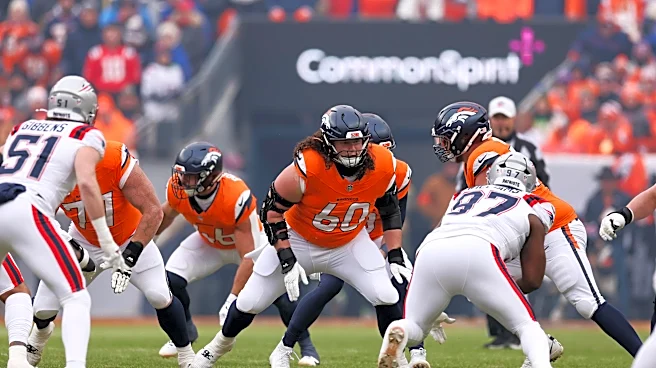
Over the last 11 seasons (2015-2025) roughly 316 NFL offensive lineman have played a snap in a regular season game. The fewest was 292 in 2019 and the most was 348 in 2021. I was able to scrape the offensive snap number for every lineman every season in this study and then I was able to convert that to a % of total offensive team snaps for that season. This data is from SISdatahub.com. There were 19 offensive linemen in 2025 that played every snap on offense for their team. Because of injuries and blowouts, Mike McGlinchey had the highest percentage for the Bronco OL at 1067. The team ran 1092 offensive plays which was the 5th most in the NFL in 2025. So MM played 97.7% of the possible snaps for us in 2025.

There were 68 OL guys who played 90% or more of their team snaps in 2025. This was one of the lowest total values during the time. The lowest, 66, was in 2023. So I decided to figure out a way to use the numbers to compare OL health across the league. I came up with a formula that uses the number of guys who played >90% (times 3.5), plus the number of guys who played >80%, minus the number of guys with >20%, and minus the guys who played >0% (divided by 2.5). In this way the >80% and the >20% cancel out each other making the value very heavily weighted by the >90% number. The formula was designed to get zero for an average season, positive for a “healthy” season, and negative for an “injured” season.

If you use this for the eleven seasons you see that in four of five years 2015-2019, the league had fairly healthy OLs with the exception of 2017. The average was 31.6. The average for the last six seasons was -6.8 and the trend is downward. This could be a result of teams using a sixth offensive lineman more, but I doubt it since that have been fairly stable.
Now this does not look at players who got hurt before the regular season started that were projected to be starters. Most teams don’t have the same starting offensive from year to year. In fact there were only seven instances over the last six seasons where a team had the exact same starting offensive line for two consecutive years. Starters defined as guys who started eight or more games.
2020-2025 there are 25 possible spots per team for an OL guy to be the same from year to year. The Broncos had 14 out of a possible 25 which was decent, but not great.
- 2020-2021
- 2021-2022
- 2022-2023
- 2023-2024
- 2024-2025

The Broncos data is below with Bolles holding (no pun intended) down the LT spot for all six seasons. No other spot has been as stable on the Bronco OL. RG has been the next best with only 2021-2022 breaking the streak for the Broncos at RG. The least stable (no surprise) for the Bronco has been RT with the Broncos having a different starter at RT every season from 2020 to 2023 when we signed MM after the season. Note that that 2021 column is 2020-2021. As you can see, the Broncos did not have the same starting line in any of the consecutive years. They did have four out of five in three of five though.

The starting RT (greater than 8 GS) for the Broncos in 2020 was DeMar Dotson, in 2021 it was Calvin Anderson, and in 2022 it was Billy Turner. RT has been a problem for the Broncos in the last decade. MM has solidified that spot and it has led to improvement in the offense overall.
The two teams with the least OL continuity are the Bears and the Raiders during this time. They only have eight slots of a possible 25 that were continuous over two consecutive seasons (see in the NFL table above).
I don’t have a good explanation for the dropoff in OL health over the last six seasons. It could be a function of the elite OL guys just getting older (and more injury prone) without a wave of younger guys to step in a fill their shoes.

or if you prefer below is the overall OL health score by team by season

You can see that by my formula, the Broncos had their healthiest OL in 2023 when they had an OL health value of 10.8 which was one of the highest values that season – only the Bills and the Bengals had healthier OLs that season. The highest possible score if all 5 starters play every offensive snap is 15.5. The 2019 Colts came the closest to that. They had 5 offensive lineman who played >90% and only seven offensive lineman played any snaps on offense. No team has had on OL where fewer than seven guys played during the season on offense during this timeframe, but there are at most two such teams in any of these seasons, while some seasons where the minimum is eight.
The team with the least healthy OL during this time period were the 2022 Rams with a score of -13.0. The Rams had only one OL guy who played >80% or >90%, the had 11 who played >20% and 15 who played any snaps on offense. Fifteen is the most offensive lineman used on offense by any team during this timeframe.
The 2023 Broncos had four OL guys who played 90% or more and five who played 80% or more. Also the Broncos only used eight offensive lineman that season (who played any offensive snaps).
Bronco 2023 starting OL
Garrett Bolles – 999 snaps – 98%
Ben Powers – 999 snaps – 98%
Lloyd Cushenberry – 996 snaps – 98%
Quinn Meinerz – 969 snaps – 95%
Mike McGlinchey – 884 snaps – 87%
Cameron Fleming, Quinn Bailey and Luke Wattenberg combined for 214 offensive snaps that season and many of Baileys 66 were as the 6th offensive lineman.
The projected starting lineup for the Broncos on the OL is the same as it was at the end of the 2025 season.
Bolles – Meinerz – Wattenberg – Powers – McGlinchey
All it takes is one significant injury to change one of the starting spots for 2026. Entering 2025, we expected Ben Powers to be the starter at guard, but his injury meant that Alex Palczewski (10 GS) started more game for the 2025 Broncos than BP did (6 GS). The front office could decide to move on from Powers for cap reasons, which would most likely mean AP starting at guard.
GB is 34. QM will be 28. LW will be 29. BP will be 30 and MM will be 32. Without doing a bunch of research on the subject I would guess that is one of the oldest starting offensive lines in the NFL. They will have an average age of 30 years old. Even though age is not a predictor of injury, there is a strong correlation with older players getting hurt more often than younger players.
Thankfully the Broncos have two players who have shown that they are competent starters if they are needed in Alex Palczweski and Alex Forsyth. I also have high hopes for Frank Crum developing into a serviceable swing tackle if not a starter. Kage Casey also has me optimistic since for the first time in almost a decade the Broncos actually drafted an offensive tackle.
Conclusions
Offensive lines in the NFL have become less healthy over the last five or six seasons for some reason. I did some analysis on correlation between OL health and offensive performance, but all correlations are fairly weak. The correlation between OL health an pressure rate allowed was 15% and the correlation between average yards before contact per rush (an indication of OL run blocking proficiency) was 17%. This would suggest that pressure allowed and average YBC/run are more tied to the QB and the RB respectively.
If there is interest I can follow up later on this month with a look at how young offensive linemen have developed (or not developed) after they enter the league. Let me know in the comments if you want to read about that.