
One hallmark of the AJ Hinch-era Detroit Tigers, especially with Scott Harris in charge, has been flexibility. On a roster without many stars, Hinch’s job has been to maximize the value of each player. This takes different forms for each facet of the game. On the position player side, it usually means defensive versatility – eight Tigers played at least two positions at some point last season – pinch hitting for any potential edge, and a general trend favoring the platoon advantage.
Today, I’m going
to take a look at how Hinch attempted to control the game with his offensive strategies. To do so, I’ll be comparing how often he puts his players in the best position to succeed and how well they do once they get into these advantageous situations. Spoiler alert: he’s very good at it.
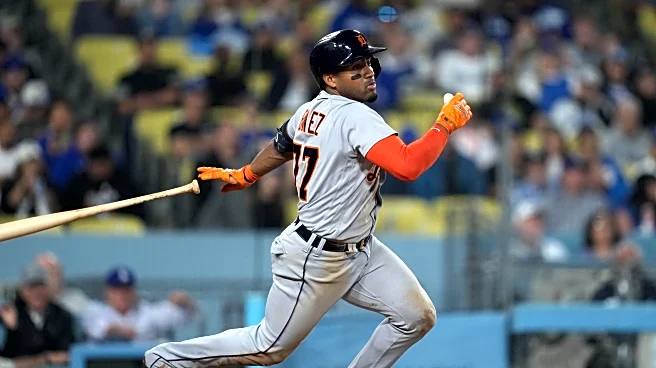
Let’s start with pinch-hitting. This is the part of a game the manager can most obviously exert his control. The eye test says Hinch loves to pinch hit, often to our collective outrage. Let Kerry Carpenter hit! What do you mean Trey Sweeney is hitting for Javy Baez against a right-handed reliever? Taking a step back, though, shows Hinch frequently used his weapons at the best time and situations. Here’s a table showing both how often teams used pinch-hitters, and also how well they did, sorted by wRC+.
Here’s what stands out from that table. Firstly, the Tigers lapped the field in pinch hitting plate appearances. I sorted by success because that’s important too, but Detroit was first in plate appearances for pinch hitters. Their 41-PA lead on Cleveland and Texas is roughly the same as the gap between Cleveland/Texas and Arizona in 12th. Put differently, the Tigers pinch-hit about 80% more than a league average team.
Fortunately, those weren’t wasted plate appearances. Detroit’s collective wRC+ of 106 ranked 7th overall, but that’s not the whole story. Only one of the six teams ahead of them, Toronto, used an above-average amount of pinch hitters. Essentially, the Tigers pinch hit more than any team and got better results than all but one team who came close to matching their frequency. Teams like Washington might have done a bit better, but by using less than half the plate appearances as Detroit, it impacted far fewer games.
Interestingly, there’s pretty limited connection between overall team quality and pinch-hitting frequency. The Phillies and Yankees are the only top 10 offenses with a far below average number of pinch hitters, while Seattle and Toronto are in the top 10 for both team wRC+ and pinch hitting PAs. There isn’t a painstakingly obvious trend that says good teams should or shouldn’t pinch hit; it’s a personnel decision that Detroit has decided to go against the grain to lean into.
Conventional wisdom says pinch-hitting is generally a poor idea. The “pinch-hit penalty” is pretty widely accepted. Last year, the league-average pinch hitter posted an 81 wRC+ last year, about the same as Matt Vierling or Andy Ibanez. Managers know this, and yet Hinch intentionally embraced pinch-hitting in 2025.
Clearly, Detroit thinks they’ve found an advantage here. With both intentional roster building decisions and Hinch’s generally hands-on managing tendencies, Detroit has created an outlier. It seems likely that Hinch is driving this shift for Detroit, since he’s ultimately responsible for deciding who plays when and where and for preparing his players to impact the game. By making this a fundamental part of his team strategy, players know their role and players on the bench anticipate getting into the game rather than just sitting on the bench until their name is called. It’s a small area to have a large advantage in, but consistently timely results from pinch hitting can skew more games than a typical 200-PA sample would suggest.
Another element of offensive optimization is the platoon advantage. There’s a lot of overlap here with pinch hitting, because most pinch hitters will enter to obtain the platoon advantage, but consistently getting the platoon edge goes far beyond pinch hitting. Here again we see Hinch’s Tigers prioritizing this strategy. Let’s check a similar table as before, but with the platoon advantage replacing pinch hitting.
As with pinch hitting, the Tigers are one of few teams to be in the top-10 for both platoon-advantage PAs and performance. Using the platoon advantage, though, seems like a better understood strategy than pinch hitting, though. Team performance is clustered pretty tightly around average, unlike for pinch hitting. There also seems to be a much stronger relationship between team success and how well they do with the platoon advantage, which makes sense. An ambitious manager can get the platoon advantage in something like 4000 plate appearances, rather than 200 for pinch hitters. This means Hinch stands out less, but still compare favorably to the rest of the league when it comes to leveraging the platoon advantage for his hitters.
Neither of these stats is the end-all, be-all, of course. Both have some flaws or overall codependency with other, more important, variables. It’s difficult to distinguish which managers get the most plate appearances to batters with the platoon advantage from managers who have lots of switch hitters, for starters, and the best offenses get more plate appearances in basically any situation by way of making outs less frequently. Still, it’s better to be good at these than not, and the way Hinch has separated the Tigers from the rest of the pack is particularly notable. It’s particularly crucial for a team with a deep roster of average or better hitters, but little in the way of true star power on the offensive side.
When considering his success with both pinch-hitting and platoons and with the frequently-covered, highly-aggressive baserunning the Tigers have exhibited lately, it’s clear Hinch is doing his best to maximize every player on his roster. For the Tigers to bounce back from a disappointing second half with a similar roster, he’ll need to continue getting more out of his players than anyone expects. Look for continued aggression with the flexible parts of his roster, and hope for continued success, as Detroit tries to win its first division title of the decade.