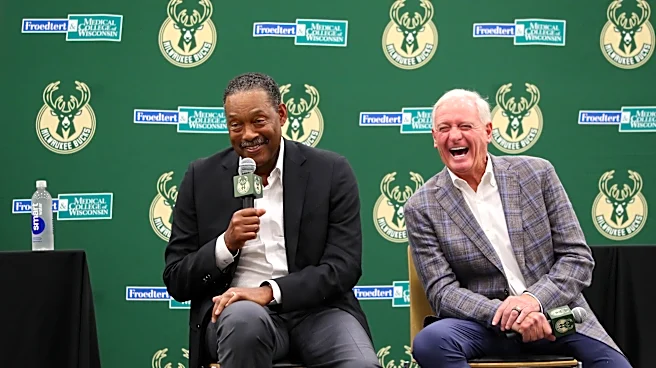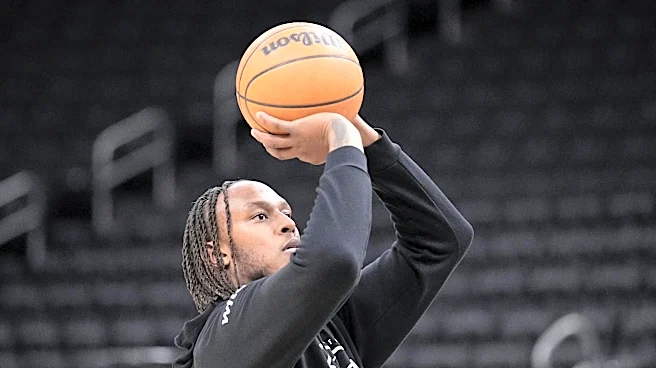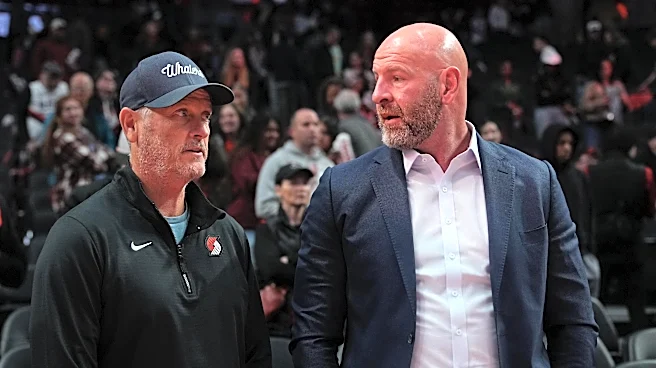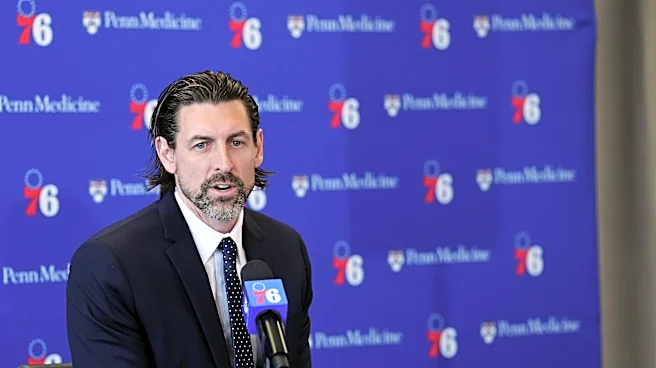

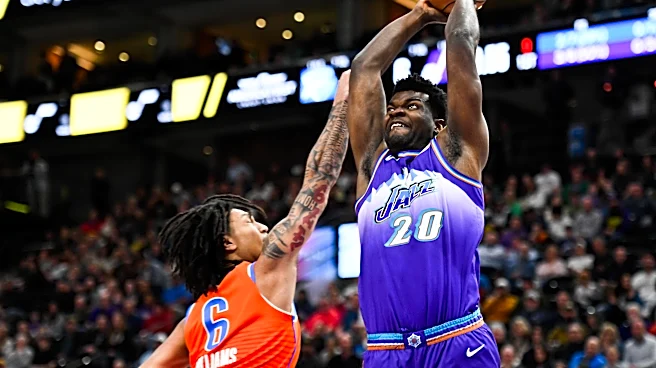
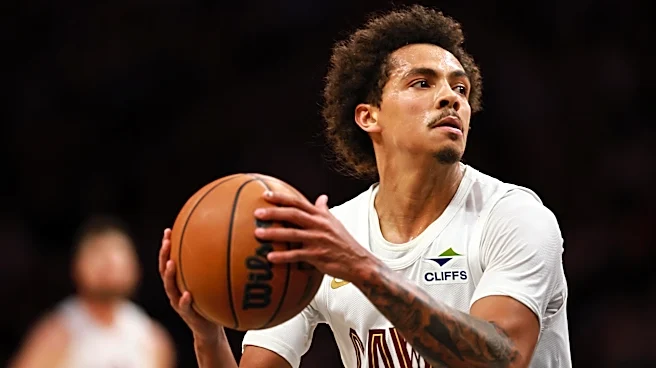


The 2026 NBA Draft happens begins Tuesday night. The Sixers are likely going to make their only pick in this year’s draft at 22nd overall. It’s an important pick for the franchise as it was the primary return in the highly-scrutinized Jared McCain trade from this past February. With Mike Gansey taking over as the team’s new president of basketball operations, we felt now was a good time to look back on Gansey’s draft record in Cleveland, a front office he worked in for nearly a decade.
Before we go
any further, it’s important to point out that Gansey was always working under Koby Altman in Cleveland. That’s likely to change now that Gansey is in Philadelphia. If you take the Sixers at their word that Bob Myers will only be involved from afar, Gansey’s going to be making practically all the final decisions when it comes to personnel and day-to-day basketball operations.
We’ll see what Gansey has up his sleeve in his first offseason running the Sixers, but the most widely-held belief as to what the Sixers are going to do with the 22nd overall pick next week is to use it on a player that can quickly assimilate into their rotation and give them some much-needed bench help. Gansey’s tenure in Cleveland’s front office spanned a long enough time to see the Cavs drafting in a variety of places across the first round which makes this an interesting exercise. Without further ado, we’ll look at the hits, misses and TBDs of the Cleveland first-round picks under Gansey.
Hits
Collin Sexton (8th overall – 2018): Sexton was the first draft pick the Cavaliers made after Gansey was promoted from the G League to assistant general manager. Perhaps this one might be more in the gray area. Sexton has played for four teams already since being drafted and has never made an All-Star game, but I do think if you’re simply deciding between hit and miss, Sexton is a hit. For his career, he’s averaged over 18 points per game and shot just below 40% from the three-point line. His assist totals could likely be a bit higher, but he’s always been more of a combo guard than a true point guard anyway. Plus, he had to be good enough for Utah to want as a piece in the Donovan Mitchell trade four years ago, right?
Darius Garland (5th overall – 2019): Much like Sexton, Garland is no longer with Cleveland, although he stuck around with the Cavs much longer than Sexton did. Additionally, there should be no mixed feelings on Garland’s time in the NBA. The two-time All-Star slowly got better in his first three seasons as a pro and perhaps what’s most notable about his statistical increases is that his assist average went from 3.9 per game to 8.6 per game from his rookie season to his third season in the association. If you’re still scratching your head as to why Cleveland traded Garland in a deal that brought back James Harden, you’re not alone, but the sole action of drafting Garland has to be a hit.
Evan Mobley (3rd overall – 2021): This one’s a no-brainer. Mitchell is probably Cleveland’s best player, but Mobley is definitely the second-best player on the Cavs’ roster in that case. The USC product is a walking double-double and is just one year removed from winning the NBA’s Defensive Player of the Year award.
Additional hits: We do want to take some time for Cleveland’s ability to dig up Sam Merrill and Dean Wade while Gansey was working there. After one season in Milwaukee and another in Memphis, Merrill was fighting for survival in the NBA in 2022. He joined Cleveland’s G-League roster to start the 2022-23 season and by March was signed to a 10-day contract with the Cavaliers. Since then, he has blossomed into a rotation player that’s usually playing between 15 and 25 minutes per night.
Wade joined the Cavs immediately after not being drafted in 2019. He would appear in 12 games at the NBA level in 2019-20 before playing 63 and becoming a fixture in the NBA for years to come. He’s grown to the point where he’s starting more than half the regular season games he’s appearing in for Cleveland. His stats don’t stand out, but he’s certainly been a positive return on investment given that he’s still with the organization seven years after not being drafted.
Misses
Isaac Okoro (5th overall – 2020): After six seasons in the NBA, Okoro has at the very least carved out a role for himself as a professional, but when you’re merely a role player as a top-five pick regardless of how weak the draft might have been, that’s a disappointment. And yes, if you’re thinking “Wasn’t 2020 the COVID draft that took place in November?” you’d be correct, but we still had most of the college basketball season take place in 2019-20. The point is, Okoro has became a decent wing defender who doesn’t score a lot and while that’s kept him around in the NBA, it’s not enough to be a hit as a top-five selection. Cleveland moved on from Okoro last season too, trading him for Lonzo Ball last offseason which should tell you a lot.
Ochai Agbaji (14th overall – 2022): While Agbaji never played a game for the Cavaliers, he wasn’t one of those selections who saw his rights get traded to another team on draft night either. Therefore, we have to include him here because Cleveland at least drafted him with some intention of him playing in Northeast Ohio. Agbaji was selected at the end of the lottery four years ago, but was included with Sexton in the trade to Utah for Mitchell just before training camp opened for the 2022-23 season. He’s started less than half the games he’s appeared in during his four seasons in the NBA, his numbers have fluctuated but have never been anything that have stood out and it would come as no surprise if he’s hanging on for dear life just to survive in the NBA a couple years from now.
To Be Determined
Jaylon Tyson (20th overall – 2024): This one’s probably the pick that could be the most insightful for Philly’s 22ndoverall pick next week for a couple of reasons. First off, it’s a pick that was made just two years ago and is the closest of all of these selections in the first round to 22nd overall. Tyson was also the only pick of these first-rounders that wasn’t a lottery pick. Additionally, through two seasons in the NBA, Tyson’s early career arc seems to be mirroring what you get out of good picks made in the first round outside of the lottery.
Much like Tyrese Maxey for the Sixers, Tyson did not come right into the NBA and start a lot of games. Now, his role was less in Cleveland during his rookie season that Maxey’s was in Philly, but Tyson took a big leap from his rookie season to his second season. He started just three games as a rookie and that number ballooned to 42 starts in 2025-26. All of his statistical numbers went up and Cleveland is probably most encouraged by a 10-point uptick in his three-point percentage from 34.5% in 2024-25 to 44.6% this past season.
It’s still just a TBD because these players often improve incrementally and we’ve only seen one season of incremental improvement from Tyson. He’ll have to continue to get better like Maxey did as he takes on a bigger role for the Cavaliers and plays even more minutes in the future. Having said this, it looks like this pick is trending towards a hit for the Cleveland front office.
Verdict
While there are more hits than misses, I think most juries would still be deliberating if this was the only available evidence put in front of them. With the exception of maybe Sexton, all of these players are still young enough in their NBA careers for things to change in a positive or negative direction, even if you might have your mind made up on a lot of them.
For purposes of the exercise, I had three hits, two misses and one TBD which leaves the final grade very difficult to give anyway. It’s also worth noting that most of these picks, particularly the ones in the top 10, were likely Altman’s calls as it would only be logical to assume that Altman was making the more impactful roster decisions and Gansey was tasked with finding marginal improvements. That’s another reason why Cleveland selecting Tyson seems like the best reflection of Gansey in the present day. By the 2024 draft, Cleveland was coming off a season in which it made it to the second round of the playoffs. Its core, mostly built by Altman, was in place and marginal upgrades were more easily achievable.
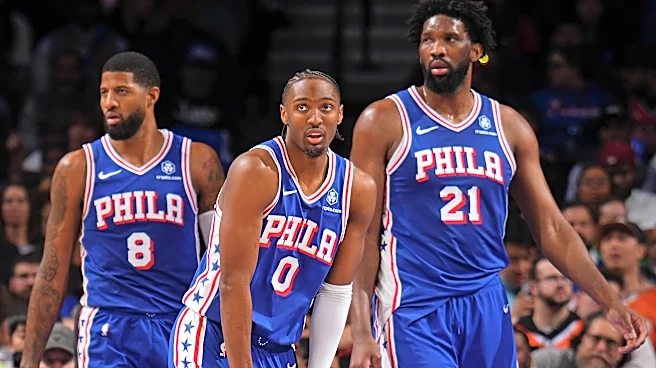
We should note that the marginal upgrades like Merrill and Wade are also a good sign for Gansey’s future in Philadelphia, particularly in the short term. If you subscribe to the widely-held belief that Philadelphia is simply stuck with Paul George and Joel Embiid for the next few seasons, then how else are they going to improve? Even if they hit a home run at 22, that’s still just one player for a team that needs probably three or four serviceable bench players to feel good about its rotation next season. Adding cheap talent in the second round, undrafted free agency or simply players like Merrill who were late bloomers after one or two changes of scenery is how you improve marginally. Doing that enough in the next 6-24 months might just be enough for the Sixers to become a contender with Embiid and George still on their cap sheet. Plus, finding cheap rotation players that are young would give fans more reason for optimism about what the team could look like in the 2030s, presumably built around Tyrese Maxey and VJ Edgecombe.
At the end of the day, there’s more to like than to dislike when it comes to Cleveland’s evaluation of draft prospects with Mike Gansey in its front office. It’s a thumbs up for Gansey based on what we know, but you probably also shouldn’t be brimming with confidence either.