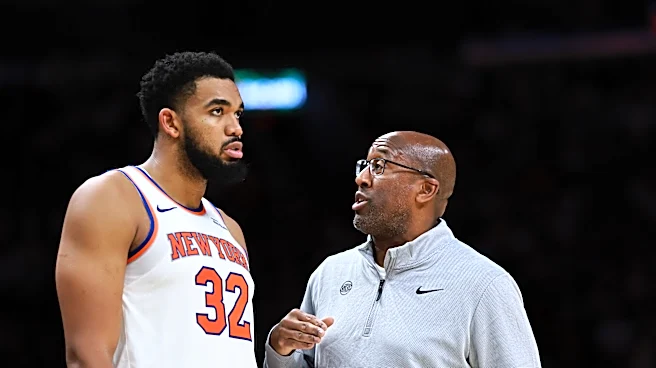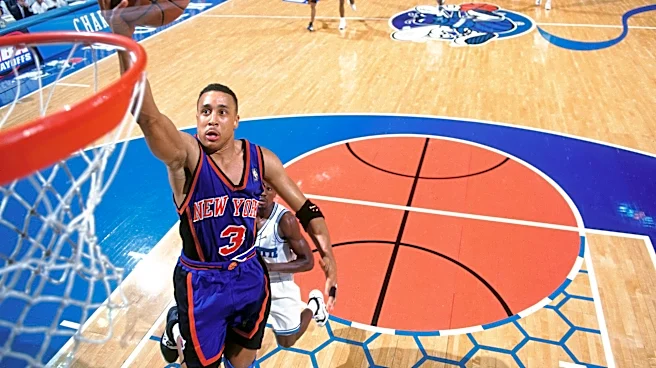


Let’s cut right to it. Trimming down decades of Knicks basketball to four shooting guards is an agonizing task.
Carving out the floor general Mt. Rushmore incited a few fierce debates. But the 2-guard spot is a whole different bag of beans. In many cases, the shooting guard position is the soul of the franchise. It has never just been about scoring. We are not simply looking at players who plumped up their stat sheets. New York’s history at 2-guard includes a mixture of confidence, erratic shot-making,
and gritty defense that carried the emotional weight of the fan base.
Getting the list down to four faces meant leaving some legends off the rock. Even though their careers are worth the praise, they too are left in the viewing area, glancing up at the Knicks’ true shooting guard elite.
The Cuts
Before we get into the mountain, let’s show a little love to the ones that just missed the cut. The basketball historians are going to be furious with me, but neither Richie Guerin nor Carl Braun made our Rushmore.
Leaving Guerin off of the mountain really stings. The franchise’s first true backcourt superstar, he made the All-Star team six straight times and was the first Knick ever to score 50 points in a game. We all remember that 57-point outing in 1959, right? That single-game point total served as the franchise record until Bernard King finally broke it in 1984. The premier scorer of New York’s early days, Braun led the team to three straight finals appearances in the 1950s and earned five All-Star appearances himself.
So why are they both off the mountain?
When you really sit down and look at what makes a modern Knicks legend, it is not just about strong, consistent numbers in an eight-team league. It is all about lasting impact and the iconic playoff moments that define a generation. Most importantly, it is about banners. Guerin and Braun laid the foundation, but the four players on our Mt. Rushmore built the house.
Earl “The Pearl” Monroe
When the Knicks traded for Earl Monroe in 1971, the basketball world was skeptical about the fit. The narrative was that he could not coexist in a backcourt with Walt Frazier. Both possessing an overwhelming amount of flair, they were rivals who both needed the ball in their hands to be effective. Legitimate questions surrounded how two alpha players could both thrive in Red Holzman’s team-first system.
Instead of clashing, the two stars adapted perfectly. They formed the “Rolls Royce Backcourt,” which remains one of the greatest duos in NBA history. Sacrificing a chunk of his individual scoring numbers, Monroe brought a playground style of basketball that completely shifted New York’s dynamic. His elite spin moves and hesitation dribbles haunted defenders and effortlessly opened up the floor for his teammates.
Together with Frazier, Monroe figured the backcourt out and won the 1973 NBA Championship. A two-time All-Star in a Knicks uniform, Monroe is a Hall of Famer whose #15 hangs in the rafters of Madison Square Garden. Without a doubt, “The Pearl” is the undisputed first face on our mountain.
Allan Houston
If we are discussing the purest, most visually pleasing jump shots in basketball history, Allan Houston makes the short list with his flawless mechanics. The Knicks’ primary offensive anchor in the late 90s and early 2000s, he consistently carried the scoring load in an era where points were hard to come by.
Sitting fourth all-time in franchise scoring with 11,165 points, Houston only trails Patrick Ewing, Frazier, and Willis Reed. Using that aforementioned silky smooth shot, he is also second in franchise history in made three-pointers. A two-time All-Star with the Knicks, Houston’s consistent effectiveness continued even as the roster around him shifted.
Though his stats are worthy of recognition, they are not what puts Houston’s face on the mountain.
Obviously, it’s the runner in Game 5 against the Heat in 1999. If you were alive at the time, you know exactly where you were when it happened. Even though I was just 10 years old, I can still remember sitting on my living room loveseat, the only person paying attention, and jumping up and down as Houston ran down the court, punching the air in celebration. You know exactly how it felt watching that ball float in the air, bounce off the front of the rim, hit the backboard, and finally fall through the net with 0.8 seconds left.
Without question, it is one of the top three most important shots in Knicks history. It sparked an unfathomable run to the finals and secured Houston’s spot on Rushmore.
John Starks
This is where we ditch pure stats and lean into culture and unfiltered passion. John Starks does not have the numbers of a Guerin or Bruan. But if this mountain is based on what it actually means to be a Knick (FYI, it is), Starks might be the most important face carved up there.
The origin story itself is legendary. We all know about his bagging groceries, playing in the minor leagues, and going completely undrafted. Literally fighting his way onto the roster, he famously attempted to dunk on Patrick Ewing in practice and injured his knee, keeping the team from cutting him. From that moment on, he transformed into New York’s emotional engine. Consistently playing with a chip on his shoulder, Starks feared no one. Whether it was Michael Jordan, Reggie Miller, or anyone else stepping onto the Garden floor, he was up to the challenge.
Of course, we will always have “The Dunk.” It is the ultimate highlight and a play that still gives so many people chills every time it is shown.
Of course, because we are Knicks fans, we must acknowledge the pain. Starks cannot be brought up without mentioning the 2-for-18 shooting performance in Game 7 of the ’94 Finals against Houston. It still stings (maybe not as much after this season). Starks was both deeply flawed and incredibly erratic, but he gave his absolute heart and soul to New York. He lived and died with every possession, just like fans do both in the stands and at home. You cannot write the history of the Knicks franchise without John Starks.
Dick Barnett
The final spot is where we bring the hammer down on anyone clamoring for us to include the 1950s guys. Dick Barnett possesses the ultimate “ace in the hole” in this debate for one simple reason: rings.
When people reminisce on the golden era of New York basketball, Frazier, Reed and Monroe generally receive most of the historical glory. However, Dick Barnett was a ruthless and high-scoring contributor who served as a crucial piece of both the 1970 and 1973 championship teams.
Averaging close to 16 points per game over his nine seasons with the Knicks, his signature Fall Back Baby” Jumper was close to unguardable. A bizarre mechanical masterpiece, the shot devasted defenses for years. When Reed went down in the 1970s Finals, players like Barnett stepped up and kept the offense going. We simply cannot construct a Knicks shooting guard Mt. Rushmore and leave off a two-time champion whose jersey is retired—the hardware and legacy matter. The debate ends right there.
So, there it is.
We have “The Pearl,” Houston, Starks, and Barnett. It is a Mount Rushmore built on elegance, grit, and hardware.
Now it’s your turn. Who am I disrespecting? Are the historians right to demand Guerin over Starks? Does Barnett really deserve the nod over Braun just because he won two rings? Did I totally miss someone obvious? Let me know where I went wrong below.