
The shadow of Josep Maria Bartomeu has never quite left the Camp Nou, but the former president has now stepped directly back into the light. In a series of wide-ranging interviews, most notably with Diari ARA, the man who led the club from 2014 to 2020 defended his record and dismissed the idea that his management is the root cause of Barcelona’s current financial struggles.
He expressed a clear sense of fatigue regarding how his tenure is still being used as a shield by the current board, noting
that Joan Laporta has justified many of his own decisions by pointing to the “inheritance” left behind. To Bartomeu, this has become an excuse five years after his departure.
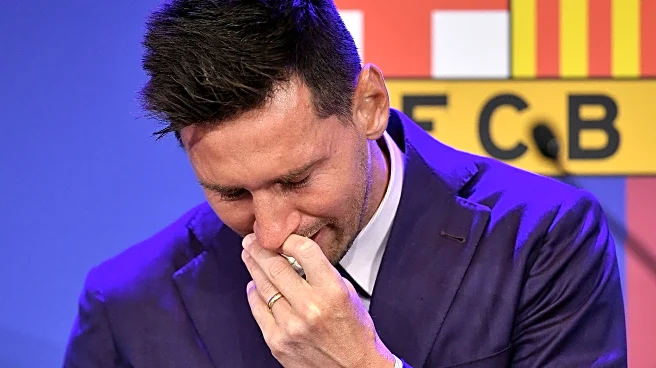
One of the most sensitive points of his defense centers on Lionel Messi. Laporta has claimed that Bartomeu’s economic handling made Messi’s 2021 exit inevitable, but the former president argues the opposite. He claims that if things had been handled correctly, “it would have been perfectly possible to renew Leo Messi and sign players.”
According to Bartomeu, the current board artificially inflated losses to 555 million euros, a figure he says La Liga’s own audit disputed by pointing out 283 million euros in provisions. This accounting maneuver, he suggests, is what actually crippled the club’s Fair Play margin.
But his comments didn’t stop at finances. Bartomeu touched on the emotional weight of his reputation, admitting that while some people on the street still ask for photos, others look at him with “a bad look.”
When confronted with the label of being the worst president in the club’s history, he finds the claim almost humorous. Fans and local media have put a lot of the club’s crisis down to Bartomeu’s decisions, but he has defended his reputation.
He pointed to his sporting record of thirteen titles in six years and a profit of over 100 million euros prior to the pandemic as evidence to the contrary. However, he did admit to significant regrets, specifically the dismissal of sporting director Andoni Zubizarreta, and the failure to initiate a squad overhaul immediately after the 2019 collapse in Liverpool.
Regarding the controversial “Barçagate” social media scandal, Bartomeu maintained that the club never intended to create fake profiles to disparage players or opponents. He explained that after Neymar’s exit and the political tension of October 2017, the club needed to monitor online sentiment to satisfy sponsors. He insisted the goal was always to deliver positive messaging and stated in court that he was unaware of any smear campaigns. He stood by the decision to hire a monitoring service, however, noting that the club continues to perform similar social media tracking today.
He also addressed the spike in the wage bill during his final years, which jumped from 365 to 521 million euros. While acknowledging the risk, he argued the club’s record-breaking revenue at the time made it sustainable until the pandemic hit. He also clarified the 2020 contract extensions for players like Marc-Ander ter Stegen and Frenkie de Jong, explaining they were not “gifts” but a way to defer payments after a clash with a locker room that refused a straight 20% salary cut. According to Bartomeu, only four players agreed to help by restructuring their deals to earn less in the short term and more later.
Regardless of the reason, the massive spending on salaries and transfer fees during the Bartomeu era put Barcelona in a precarious position which became a full-on crash after COVID hit.
As for his relationship with the players, he denied that Messi ever ran the club. While he acknowledged Messi’s influence in the locker room, he recalled the famous “Burofax incident” – when the Argentine star sent an official communication to the club that he wanted to leave in the summer of 2020 – as a moment where he had to stand firm. He told Messi and his family that a free transfer was impossible because the club needed him for both sporting and commercial reasons. In the end, Bartomeu still believes Messi was underpaid for what he generated, lamenting that the Argentine “was fired” before he could lead the current crop of youngsters.