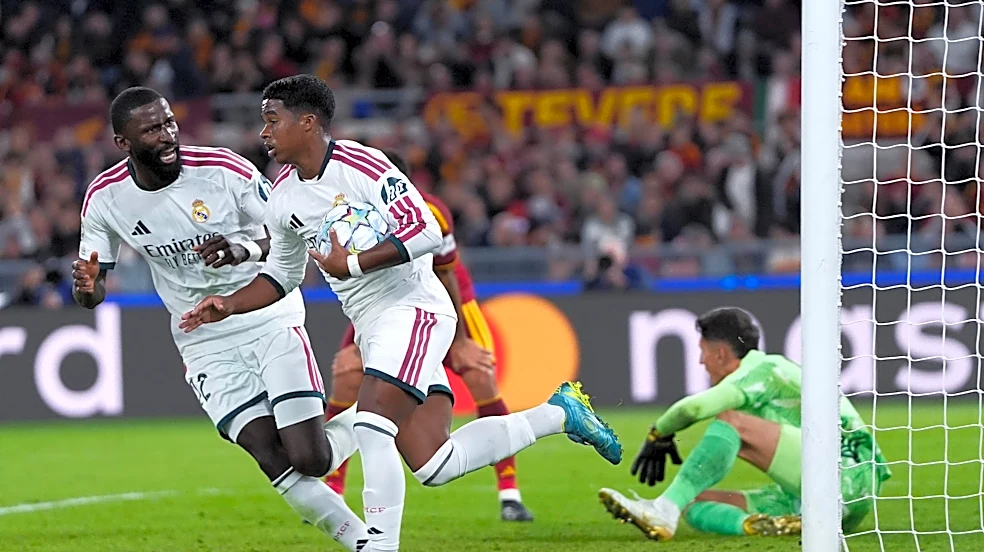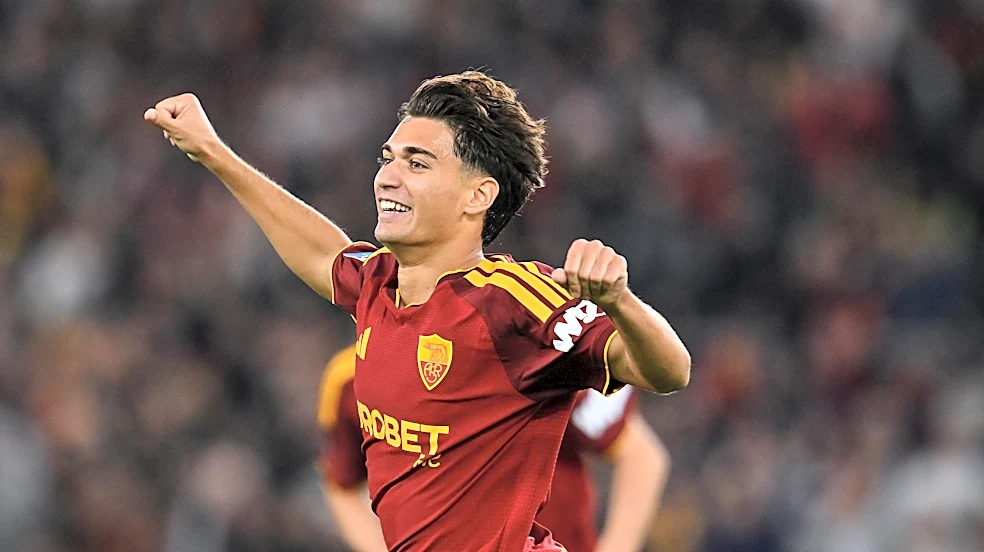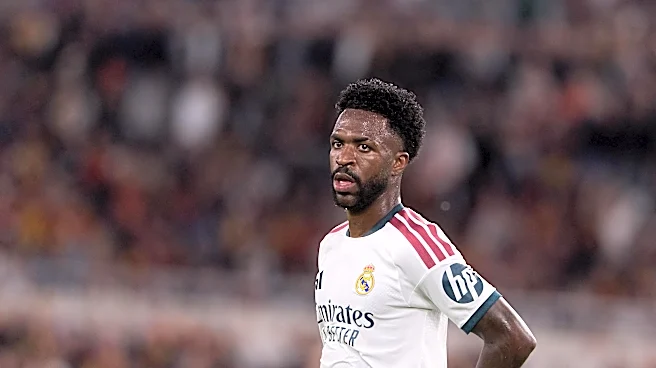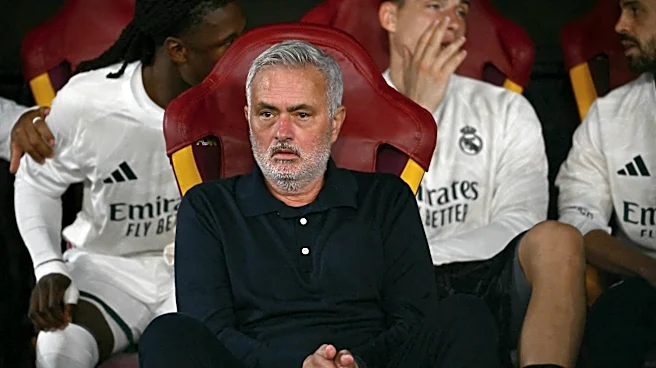




Teams have become more reliant on man-marking high presses, and Gian Piero Gasperini is one of the leading advocates of such an approach. Many teams have found and implemented different solutions based on the personnel available and the coaches’ ideas and styles. Relying on long balls and turning the game into a battle of duels and transitions is one of them.
So, going long is not the primary problem. It’s more about what happens when the ball lands.
Against these kinds of systems, winning the 1v1
battles and bossing duels are a must to keep the danger away. Mopping up second balls after the aerial duels is of the same level of importance.
Deploying a front three of Mbappé, Diomandé and Vinicius Junior and targeting them via long balls was not a wise choice for José Mourinho to opt for because they aren’t capable of working out these situations successfully. The three forwards rarely show aerial capability.
Here is the aerial duel win rate of that aforementioned trio in the 2025/26 season in their respective leagues, according to Wyscout:
- Yan Diomandé: 28.21%;
- Kylian Mbappé: 40%;
- Vinícius Júnior: 18.18%;
What added insult to injury is that the team looked disjointed when the ball landed, and the distances were large. So, the second balls and knockdowns were the starting point of Roma’s turnovers and transitions to exploit Real Madrid’s defensive frailties.
This is the first minute of Roma against Real Madrid. Gasperini sets up a man-to-man high press; Real Madrid looks for long balls over the top:

The goal was clearly to put Jude Bellingham in a situation where he could fight in the air, and either he or Mbappé could win the second ball & then find a runner in behind (Valverde late run or Vinicius run beyond).

However, Real Madrid is not prepared for the other scenario: Roma winning the second ball, which is the event most likely to happen because they commit numbers around the ball and jump with intensity. You have Fede Valverde sprinting forward with Aurelien Tchouaméni and the backline staying still. As a result, you have a team split into two distant units, where Roma could work out a turnover or retain possession:

Roma gets into a settled possession, whereas Real Madrid’s lines are still disjointed. Vinicius Junior remains high and unaware of what’s happening behind his back when he decides to narrow inside. Hence, Wesley and Soulé overload Cucurella around the box:

13 minutes later, Real Madrid went long from the goalkeeper against Roma’s man-marking high press.

Wesley easily controlled the knockdown with Vinicius Junior lethargically jogging back. If not followed by intense jumps and immediate space squeezing, long balls are an opportunity for the opponent to turn over. Wesley comfortably drives through Real Madrid’s unit, whereas Dybala drops in unmarked, arriving at Tchouaméni’s blindside to receive:

With the lack of tracking back from Vinicius Junior, Wesley and Soulé outnumbered Cucurella. The former overlapped the latter, getting into a crossing position. Courtois hardly managed to block off the cross:

The same scenario repeats itself after Real Madrid works the ball to Cucurella, who clips it into the space behind Roma’s backline. Without urgency to step up, Mbappé again jogs, which gives Mancini time and space to collect the second ball. Mbappé keeps watching without dropping to close down De Roon and leaves Vinicius outnumbered near the flanks as Soulé looks for an inroad toward the inside. The dominoes keep falling, and Roma exploits the stretched space between the lines, navigating passes and cutting diagonally through Real Madrid. The hosts could’ve accessed the far side had the referee not have stood on the ball’s path:

Even if there was a route to work the ball via short passes, Real Madrid was reluctant to go this way. Going long requires a target man to increase the odds of winning the aerial duels or a plan to latch onto second balls. Los Blancos were short of solutions in both cases.
Here, there is a clear path for Courtois to play to Bellingham on the ground and look for a bounce pass. However, Courtois hoofs it long to Diomandé. Hermoso is first to win the ball in the air because Courtois’s delivery lacks accuracy.

Bellingham is outnumbered in midfield and is distant from Pisilli. Valverde doesn’t close the distance quickly with Pisilli. As a result, the latter picks up the second ball. Dybala and De Roon offer support and numbers around the ball. So, they can exploit the late step-out from the backline to get in behind.

The share of Courtois’s long passes increased as Real Madrid played in a neutral game state. With the inability to win aerial duels upfront and with the lack of urgency and intensity to squeeze the space from the players behind, the team was left open to variance. Those long balls turned into turnovers for Roma and led them to get into scoring situations. In general, according to Markstats, Roma generated five high turnovers, which means Gasperini’s side had been able to win possession 40m within Courtois’ goal.

After the game, José Mourinho said: “If we started the game with the 11 players who ended the game, I think they would have scored 5.” From the game plan’s side and the starting lineup, Mourinho’s intentions revolved around directly accessing the front players and taking advantage of their 1v1 ability against Roma’s defenders. The double pivots were tasked with spreading across the pitch to drag their markers and open up the passing lane between Courtois and the front line. This is clearly evident in the value that Courtois added to the progression via passing.

The starting lineup, Mourinho’s intentions, and quotes would make sense only if the team displayed a solid defensive show and didn’t concede that amount of turnovers and transitions. However, putting the players who have the skills and ability to keep things ticking with the ball on the bench deprived the team of exerting control and left it short of solutions in terms of progression and chance creation. As a consequence, Real Madrid appeared vulnerable when defending and toothless when attacking.