


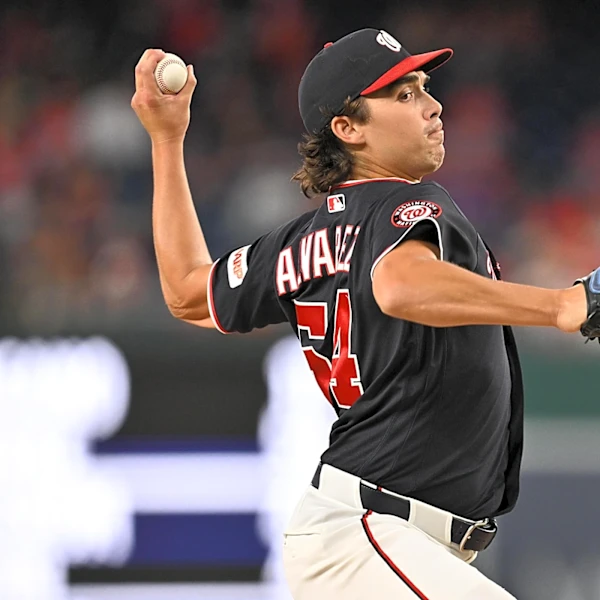
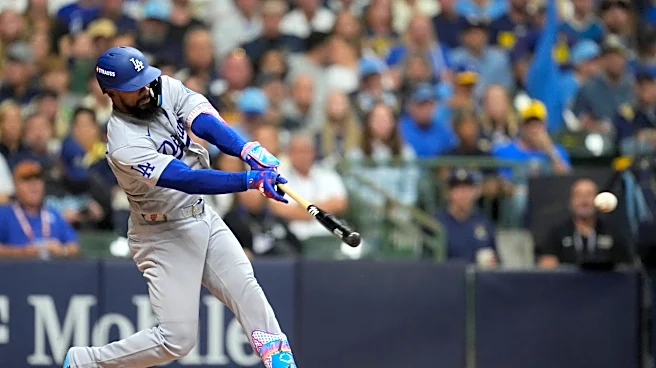
Dodgers starter Yoshinobu Yamamoto is one of the best pitchers, and one of the best postseason performers, in baseball.
In Game 2 of last year’s NLCS, Yamamoto mystified the Brewers offense, throwing 111 pitches en route to a complete-game victory. Less than two months ago, he went six innings and struck out nine in a game the Dodgers went on to win.
Yesterday, in Game 2 of the 2026 NLCS, he couldn’t make it through the third inning.
It took Yamamoto 45 pitches to get through the order once. The second
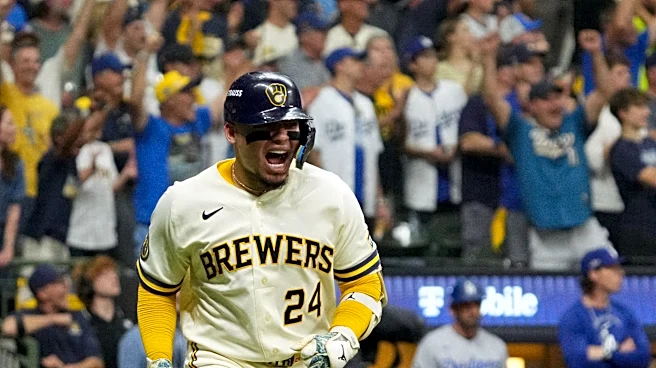
time around, he struck out leadoff man Jackson Chourio on three pitches, but the Brewers kept grinding. Brice Turang worked a six-pitch walk, then William Contreras flew out after battling for seven pitches.
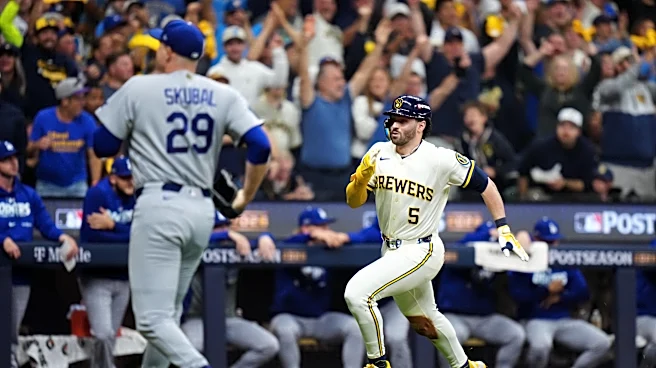
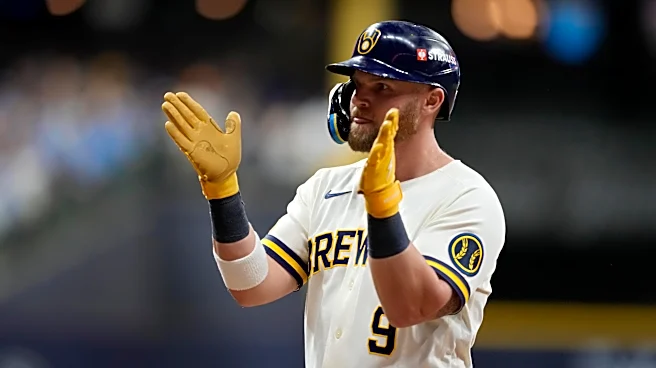
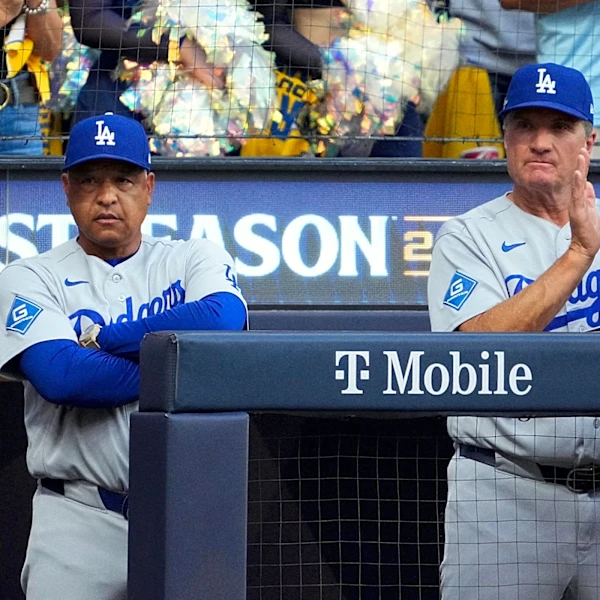
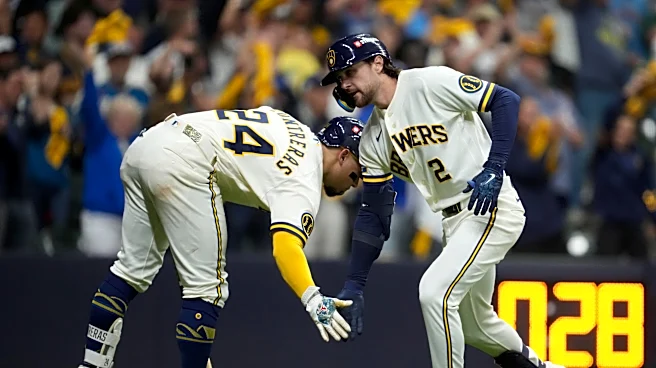
With Yamamoto at 61 pitches through 2 2/3 innings, Jake Bauers came to the plate and put together the best at-bat of the series, culminating in a 12-pitch walk. One batter later, Christian Yelich laced a single up the middle that forced Dodgers manager Dave Roberts to go to his bullpen in the third inning.
Let’s take a closer look at that moment.
Bauers’ at-bat was a perfect microcosm of the Brewers’ strategy against Yamamoto. Nobody in baseball is going to out-pitch Yamamoto over nine playoff innings, so the Brewers set out to make sure he never got the chance. Unlike last year’s NLCS, when they were uncharacteristically happy to chase (and miss) pitches out of the zone, this time they tried to make him beat them in the strike zone.
Of Yamamoto’s 75 pitches, 35 were in the strike zone and 40 were out of it. The Brewers swung and missed just four times, compared to 12 called strikes. They weren’t swinging through anything; they took pitches early and made contact late to try and drive up Yamamoto’s pitch count.
The box score credits Yamamoto with 46 strikes and 29 balls. Take away the 16 called and swinging strikes, and that leaves 30 strikes that were either fouled off or put in play. Yamamoto faced 14 batters, striking out one and walking two, so 11 balls were put in play.
That means 19 of his pitches ended in foul balls, almost exactly a quarter of his total pitches. Nine of those foul balls, across two at-bats, were courtesy of Bauers.
Somehow, the box score doesn’t quite capture how impressive Bauers’ second at-bat was. Yamamoto, who throws six different pitches, is one of the filthiest pitchers in baseball. Making it through 12 pitches against him is, quite literally, something nobody in Major League Baseball had ever done.
Here’s what you may have missed, pitch by pitch:
Pitch 1: 91.8-mph splitter (1-0)
This might look like an easier take on TV, but one reason Yamamoto is so effective is how his splitter and four-seamer play off each other. A fastball in that location would stay in the zone for a strike. The splitter looks like it might catch the bottom of the zone, then dives away from the left-handed Bauers and into the dirt. Bauers recognizes the spin and takes it for ball one.
Pitch 2: 91.3-mph splitter (1-1)
Yamamoto comes back with a perfectly located splitter that catches the outside corner. His fastball usually sits about five mph faster than his splitter, so if Bauers had mistaken this for a middle-out fastball, he’d have been out in front and on top of it, likely rolling over into a weak groundout two pitches into the at-bat. Instead, he takes it for strike one.
Pitch 3: 96.3-mph fastball (2-1)
After two straight splitters at 91, a high fastball can look like a mistake worth jumping on. But at five mph harder than the splitter, this one keeps riding up and out of the zone.
As mentioned, Yamamoto gets a lot of quick outs by letting his fastball play off his splitter. A more swing-happy hitter probably swings under this one for strike two, or worse, pops it up. Bauers clearly wants to swing, but he lays off for ball two.
Pitch 4: 76.9-mph curveball (2-2)
While Yamamoto’s splitter is his main change-of-speed weapon, he also has a big, loopy curveball in his back pocket. It sits in the mid-70s, so after a 96-mph fastball, it can almost look like it’s in slow motion.
Just like the previous fastball, Yamamoto starts it high. A hitter who’s geared up for velocity can easily get out in front of it and roll over, but Bauers doesn’t bite. The problem is that this time, the pitch doesn’t stay up — it drops into the zone, and for the first time in the at-bat, Yamamoto has the upper hand. Strike two.
Pitch 5: 91.6-mph splitter (3-2)
Yamamoto goes back to the splitter, similar to the second pitch. This one starts high, then breaks down and away from Bauers, but it doesn’t end up in the zone. With two strikes, plenty of hitters would protect the plate and chase it. Bauers takes it to run the count full.
Pitch 6: 97.0-mph fastball (3-2)
Yamamoto reaches back for a little extra and tries to blow a high-and-tight fastball by Bauers. Bauers catches up to it just enough to fight it off foul.
Pitch 7: 77.7-mph curveball (3-2)
Yamamoto tries to mess with Bauers’ timing again with a nasty curveball, about 20 mph slower than the fastball, that would have just caught the bottom inside corner. Bauers, out ahead of it, manages to slow himself down just enough to foul it off.
Pitch 8: 95.7-mph sinker (3-2)
Yamamoto throws his first sinker of the at-bat, and it almost gets Bauers, who swings defensively and pops it up into foul territory down the left-field line. Neither Max Muncy nor Teoscar Hernández can quite get to it, so Bauers lives to see another pitch.
Pitch 9: 97.4-mph fastball (3-2)
At this point, Bauers is just playing pepper. In an impressive display of bat control, he gets inside another high-and-tight fastball and fouls it off.
Pitch 10: 93.7-mph cutter (3-2)
Bauers looks to be sitting on this one and gets a good chunk of it, but the roughly four-mph change of speed between this cutter (the first of the plate appearance) and the previous fastball throws off his timing just enough. His line drive goes foul down the first-base line.
Pitch 11: 92.3-mph splitter (3-2)
Based on the way he gears up to swing, Bauers is probably thinking fastball or cutter again. But surprise, it’s a splitter! At the last second, it dives down and away, and Bauers — in full “protect the plate” mode — manages to foul it into the dirt with the very end of his bat.
Pitch 12: 79.2-mph curveball (walk)
Bauers has swung at the last six pitches, so Yamamoto goes back to his curveball, hoping Bauers will chase one more time. He starts it at the bottom of the zone and lets it dive below. Bauers recognizes the curveball and lays off for ball four.
Bauers faced five different pitches, fouled off at least one of each, and ended the at-bat with a 12-pitch walk, something no hitter had ever done against Yoshinobu Yamamoto. The Brewers didn’t beat one of the best pitchers in baseball by hitting him hard. They beat him by refusing to let him put them away, and no one refused harder than Jake Bauers.