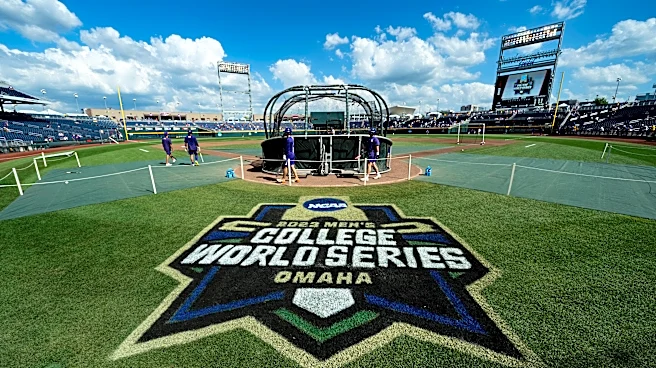

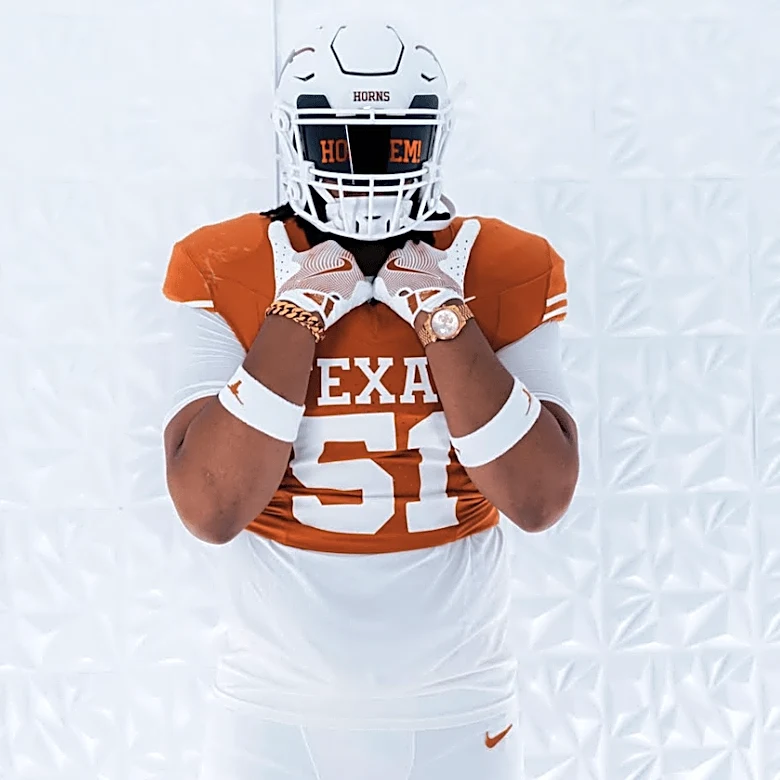






It’s College World Series time, and this year, there’s a chance that every draft eligible player involved might be there when the Diamondbacks pick 15th. As with last year, there will be tons of talent for subsequent drafts on the field; last year, top overall prospect for 2026 Roch Cholowsky was in Omaha. He’s home this year, along with a Georgia Tech squad that has the consensus third best prospect. But there are storylines galore and plenty of players to watch.
2026 has been dubbed the “year of
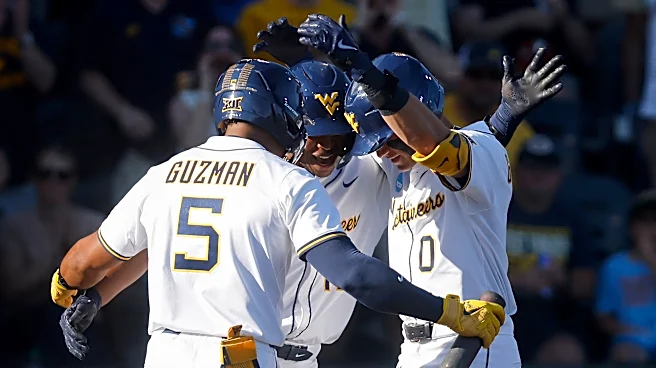
the catcher” by some, thanks to the plethora of catchers. There are so many good catchers that—despite the two highest rated catchers being eliminated in the regionals—every team in the tournament has a catcher on the prospect lists, although some will not be draft eligible this year. There are two teams (Troy and West Virginia) that have never been to Omaha before, two others (Alabama and North Carolina) that have never won it all, two more (Oklahoma and Georgia) that haven’t won in a long time, and two others (Ole Miss and Texas) who have won fairly recently. Texas is in Omaha for the 39th time (14 more than any other team) which is 19 more appearances than the entire left half of the bracket combined.
The College World Series isn’t all about the guys who might get drafted this year, either. Gavin Kelly of West Virginia is currently the highest rated college prospect for the 2027 draft. Justin Janicki of Troy is another highly rated prospect for next year.
But this will primarily look at prospects the Diamondbacks might be interested in. North Carolina has the greatest quantity, while the single best college prospect is likely with Alabama. Texas might have the best mix of high-end and quantity.
Justin Lebron, SS, Alabama (6’2”, 180)

A year ago, Lebron looked like he would be the first college bat taken in the 2026 draft, and there’s still a chance that might be the case if there’s mutual interest in cutting a deal, but as people have focused more on his game, his weaknesses have gotten more attention. But there’s really only one significant weakness: Lebron chases too many pitches outside the strike zone.
He’s got above-average power, he’s an excellent fielding shortstop with an above-average arm who should stay at shortstop in the pros. He runs extremely well (he’s stolen 40 bases and been caught once in 58 games this year).
Could Lebron make it all the way to the Diamondbacks at #15? There’s a chance. In Jim Callis’s latest mock, he slides all the way to the Astros at #17. He hasn’t been connected with the Diamondbacks and there are a lot of prospects with high upside who aren’t in Omaha. But it would be impossible to fault the front office for a Lebron pick.
Aiden Robbins, OF, Texas (6’2”, 195)
Robbins hit just 12 home runs in two years at Seton Hall but showcased a great hit tool. Then last summer he hit six home runs for Harwich in the Cape Cod League, and has carried that over to 23 for Texas. As a result, even though his averaged dropped (from .422 to a still-excellent .344) his OPS dropped just 40 points, all the way to 1.149. His speed and arm are average, but he’s stolen 42 bases and been caught just four times in his college career, so he knows how to pick his spots.
Because Robbins is almost certain to be relegated to a corner outfield spot in professional ball and because he lacks a truly standout tool, he’s mocked in the 25-35 range. He could be available at the Diamondbacks’ second pick.
Cade Townsend, RHP, Ole Miss (6’1”, 185)

Townsend is an all-around pitching prospect who has a high floor and middle of the rotation potential. He’s got five average to above-average pitches, and while none of them are true standout offerings, he’s also shown good control. But he’s also had a dismal ending to his season, and as a draft eligible sophomore, he might opt to go back to school to improve his draft stock. A good showing in Omaha would get him a bigger bonus and make him more likely to sign this year.
Because he has no incentive to cut a deal, there’s no reason for the Diamondbacks to pick him at #15. If he lasts until #31, there’s a chance, but at that draft position he could demand an above-slot bonus. I don’t see the Diamondbacks taking him, although if they did, he would likely become the top pitching prospect in the system. (That can also be said for several pitchers who are not at Omaha, both college and high school arms.)
Daniel Jackson, C, Georgia (6’2”, 200)
Jackson is Georgia’s top prospect and is arguably the best all-around player in college baseball this year. He’s hit 25 home runs and stolen 25 bases, the first college player ever to do so. Barring a rough time in Omaha, he’s going to win an SEC triple crown, something only done twice before. One of the previous two? Rafael Palmeiro, who only went on to get 3000 hits and mash 500 home runs in his (PED assisted) MLB career. And Jackson is a catcher. While he might not stay at catcher, he’s athletic enough to move to the outfield. His tenth inning home run in the second game of the Super Regional put Georgia in the College World Series.
His biggest defensive weakness is his receiving, and part of that may be that he uses a smaller glove than many catchers, giving him a smaller margin of error. His arm should be good enough to stick at catcher, so if he can improve his receiving skills, he’s a passable catcher with 30-30 upside, and corner outfield as a fall-back spot.
The highest I’ve seen Jackson in a mock draft is 28th, so there’s a good chance that he’s available at #31. He’s the last prospect on this list who almost certainly won’t be available at #53.
Joey Volchko, RHP, Georgia (6’4”, 210)
Volchko has the velocity and movement on his fastball, as well as a starter’s frame. He’s got a slider that at its best is a wipeout pitch. He’s got a fringy changeup and cutter. What he doesn’t have is much in the way of control. And his control hasn’t improved as he transferred from Stanford to Georgia. He’s got tremendous upside if someone can help him figure it out, but there’s a ton of reliever risk.
Volchko will be an option at #53, but given the Diamondbacks’ track record with pitcher development, I’m not sure he would be a good one.
Owen Hull, OF, North Carolina (6’4”, 215)
Hull is a name that should be of interest to the Diamondbacks. He’s an outfielder with a potential for a good power/speed combination. He’s got a below-average arm but we know that the Diamondbacks are willing to work with that. Unlike some other Diamondbacks’ outfield prospects, he’s big. He’ll need to hit the ball in the air more, but if he does, there’s 20-30 home run potential. There’s a lot of bust potential here though. Hull keyed the comeback to get the Tar Heels to Omaha, scoring a run in the eighth to cut the deficit to one run and then lining a double to the gap to walk things off in the ninth.
Opinions vary on where Hull might go. He’ll be there at #53 and probably at #88.
Ruger Riojas, RHP, Texas (6’, 195)

Riojas is probably the best senior starter, as a rough end to last season (caused primarily by illness, apparently) tanked his draft status. He has one of the better fastballs that will be seen in Omaha, comfortably reaching the upper 90s with carry. He also has a splitter and cutter that are average or above-average pitches, and boasts some of the best control out of the college arms. He’s struck out 106 against just 15 walks.
Because he’s a senior, he doesn’t have much bargaining power and definitely won’t go over slot. A team that really likes him could take him in the 30-50 range and hope they can cut a below-slot deal. He’s unlikely to last to #88, so if the Diamondbacks want him they’ll likely need to pick him at #53. They’ll have done their due diligence and know whether they can get any savings or not.
Ryan Lynch, RHP, North Carolina (6’3”, 210)
Lynch is a two-pitch pitcher who will definitely need to develop a third or fourth pitch to reach a rotation, but he has solid reliever floor thanks to a good fastball/slider combination. That could see him as a future late-inning reliever and gives him a solid floor.
Lynch is the first player here who has a good shot at reaching #88.
Camden Johnson, 3B, Oklahoma (6’, 176)

Johnson may be the fastest player in the draft class. He’s played third for Oklahoma but played shortstop for Wichita State previously, and was moved to third more because Oklahoma had Jaxon Willits at shortstop than because Johnson couldn’t handle the position. He stole 18 bases in summer ball last year. His power numbers have improved this year and his on-base skills didn’t drop despite moving to the SEC.
As a speedy left handed batter with a decent hit tool, Johnson certainly fits the profile of players the Diamondbacks have taken. #53 is probably too early, but if he’s around at #88 it would not surprise me to see him chosen.
Taylor Rabe, RHP, Ole Miss (6’5”, 200)
Rabe has the most velocity of anyone in this article (he’s been at 100) and he controls it well, so if a team thinks they can develop some secondary pitches and make him a starter, he could go in the top 50 picks. More likely, he winds up in the bullpen. And if that’s the route, he could be a very quick mover. He’s already had a Tommy John surgery, so teams might see him as a lower injury risk than some, and he has fewer college pitches on his arm than most high-end guys.
I really don’t like the idea of taking risky pitchers in the first 100 picks, and I don’t think Rabe lasts past the third round. And he has the option to return to school, so signability would be a concern. I think he’s only an option for the Diamondbacks if he lasts past the first ten rounds and they take him in a spot where they don’t have to worry about losing the bonus pool money.
I anticipate the remaining players covered here to go after the first three rounds, and they are presented in alphabetical order.
Jason DeCaro, RHP, North Carolina (6’5”, 225)
DeCaro has a lot of pitches, but none of them particularly stand out. He’s extremely young for the class (he just turned 20) but he has yet to develop big strikeout potential, which limits his ceiling. Still, he could develop into a solid pitcher that covers innings in a fourth starter role. The issue is that without a pitch to really carry him, he lacks much in the way of reliever upside, and might wind up a AAAA middle reliever.
Gavin Gallaher, 2B, North Carolina (6’1”, 191)
Gallaher is a high floor bat who makes good contact and has on-base skills, but lacks a defensive home. His arm is best for second base, but if he doesn’t make it there, he’s probably ticketed for a corner outfield spot, and it’s doubtful that the bat comes around enough to provide corner outfield-level value.
Jake Schaffner, SS, North Carolina (6’2”, 200)
Schaffner hits and runs well, but doesn’t have much in the way of home run power. But the bat is real; he transferred from North Dakota State and his offensive numbers improved against a tougher schedule. He might have the range to stick at shortstop, but he doesn’t have the arm, and between that and his lack of home run power, his ceiling is limited. If the Diamondbacks did wind up taking him, I’d expect that they would encourage some defensive flexibility and have him play all three outfield positions in addition to second base and maybe third base.
Carson Tinney, C, Texas (6’4”, 240)
Tinney is a big guy with the power to match. He hits big home runs and draws his share of walks. He’s far from a speedster but has managed 10 stolen bases this year. The issue is that his arm is his best defensive tool but unless he can substantially improve his catcher defense, he’ll be restricted to first base and DH. There’s still a lot of value there, but that is the kind of profile that can send players tumbling down draft boards.
I think Tinney would have to fall pretty far for the Diamondbacks to take him. They have had much more success with more athletic bats.
Finally, here’s some other draft eligible players I’m interested in seeing, organized by team. Many of these are late round guys, seniors, etc. They have skills or tools I think are intriguing, but not enough to focus on them heavily.
Alabama
- Hagan Banks, RHP
- Tyler Fay, RHP
- Bryce Fowler, OF
Georgia
- Caden Aoki, RHP
- Kolby Branch, SS
Oklahoma
- Brenden Brock, C/OF
- Deiten LaChance, C
- LJ Mercurius, RHP
Ole Miss
- Dom Decker, 2B
- Will Furniss, 1B
- Hunter Elliott, LHP
North Carolina
- Cooper Nicholson, OF
Texas
- Thomas Burns, RHP
- Haiden Leffew, LHP
Troy
- Zach Crotchfelt, LHP (yes, that’s a real name)
- Tommy Egan, RHP
- Aaron Piasecki, 2B
West Virginia
- Chansen Cole, RHP
- Paul Schoenfeld, OF
- Maxx Yehl, LHP (yes, another real name)