
If you’re reading this, it’s a given that you love sport – well, at least Sunderland AFC and football in general. I love all sports. I always have. It’s probably my Dad’s influence because, ‘back in the day’, the television was the magic box in the corner of the room.
There were no mobile phones, Xboxes, PlayStations, etc., to draw us away from family viewing. Any form of ‘play’ was done outside with mates, or, if we were confined to indoors, Subbuteo or Scalextric.

So my Dad would watch all sorts
of sport on television, including rugby league and union, cricket, athletics, golf, horse racing, snooker, boxing and even crown green bowls! For those of a similar age, this meant we grew up being fans of Sportsnight with Coleman, Floodlit Rugby League, Pot Black, Big Break, Test Match Special, Grandstand and, of course, Match of the Day.
I’ve continued to follow many sports throughout my life, even branching out to those that got very little coverage on TV. In my late teens and early twenties, I discovered Speedway and was a regular at Brough Park to watch Newcastle Diamonds with Ivan Mauger or Kenny Carter. Then there was the Whitley Warriors ice hockey team on a Sunday evening, with Kenny Matthews or Alfie Miller. Happy days.
Sport has always been there – none more so, of course, than my beloved Sunderland AFC. It all becomes part of who we are, and I guess dictates the friendships we have with people of similar tastes and passions.
Which leads me on to one of my ‘claims to fame’, in that a close friend of mine is Mr Ian Armiger. You may not have heard of him, as swimming is not as well followed by the press and TV as much as it should be. But everyone in the swimming world will have heard of Ian.
He served as Director of Swimming at Loughborough University for 15 years (The Pool of Dreams, as Ian describes it), has been the Great Britain Team Head Coach and Olympic coach across multiple Olympics, World Champs and Commonwealth Games – amongst many other accolades.
So he knows his swimming stuff, and although he pays an interest in other sports, nothing competes with his passion for swimming. So I love our conversations, usually about sport in general. There is a huge crossover point within sportsmen and women when it comes to motivation, psychology, inspiration and coaching, whatever the sport may be.
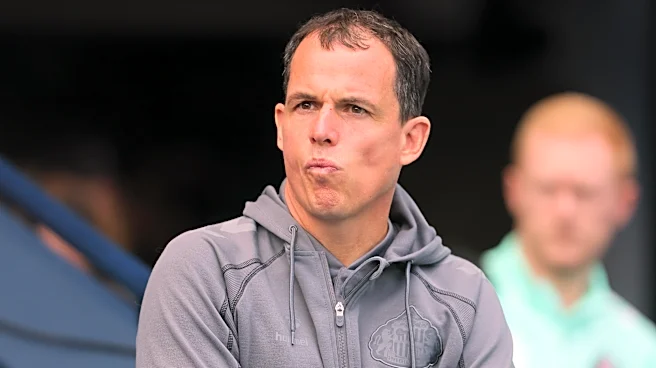
So, when Ian shows me his programmes for upcoming clinics, workshops or camps, I convert his thoughts to SAFC, and more specifically to Régis Le Bris.
Inspiration works in all sporting arenas. A good example of this happened at the end of our last Championship season. You know the one – that five-game losing streak. I wasn’t worried at all, and Ian backed this up.
In swimming, for example, the top swimmers are told NOT to push themselves or peak before an actual final or major event. A gradual progression is meticulously planned, so the athletes reach maximum capability at the perfect time. So it transpired before the Sheffield United game.
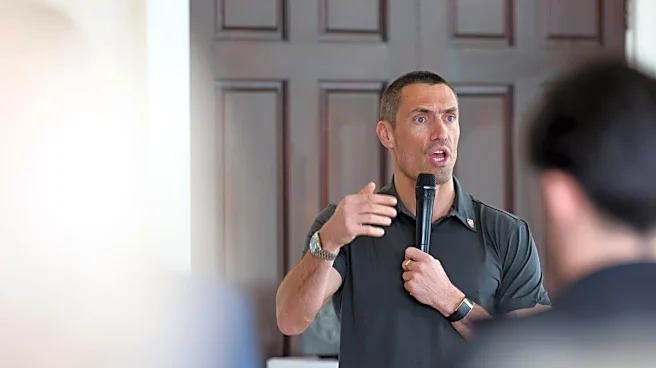
I wanted to share (with permission) some of Ian’s recent workshop material that he’s been delivering in Scotland, and see if you can align this very easily to Régis Le Bris and his methodology.
- A good coach can change a game, a great coach can change a life.
- (From Carlo Ancelotti) “Quiet Leadership” – “For me, the solution is never to sacrifice talent by diminishing it, but always to enable it to flourish, because this is always best for the team. So, the balance must be not lowering the talent to fit the team, but rather raising the team to fit the talent.”
- Training isn’t coaching. (There are a lot of coaches who are very good at training kids. They know the drills, they understand programming, they can run a great gym session – but that isn’t coaching. ‘Coaching is neck up – training is neck down!’ Training is the science – sets, reps, drills, programmes. Coaching is the art – inspiration, connection, belief – making someone believe that anything is possible. Most coaches are good at neck down. The great ones master neck up!)
- To be a successful coach, you’ve got to have your own ideas, and constantly be thinking about how you can push the boundaries, keep on improving and putting pressure on the teams that you play.
- Coach the person and recognise individual differences. Fully commit to a common shared goal. Have unwavering belief in their ability.
- Create an exciting, stimulating and enjoyable training environment.
- The biggest danger is not trying new things. (Being risk-averse is a terrible thing, as it puts the handbrake on things, and you don’t achieve the things that you can achieve.)
- When you think you’ve got it all and you’ve mastered it, that’s your biggest problem and your biggest challenge. (Constantly learning, constantly improving, constantly getting the athletes to take ownership and responsibility.) I think Régis often refers to this as ‘the pillars’.
- Coaches make excellence possible. Athletes make excellence happen.
- Don’t let the flames in the belly melt the ice in the head.
We don’t always have the answers ourselves. A good coach may have a vision of where he wants the club to be, and a strategy, but he must also have the humility to listen to other people. Remain open to changing your plans and strategy and thinking.
As I stated earlier, I get great satisfaction from being able to draw a direct line from Ian Armiger’s top clinics to things that our Little General is clearly already tuned into and achieving.
Long may it continue. Vive la Lads!