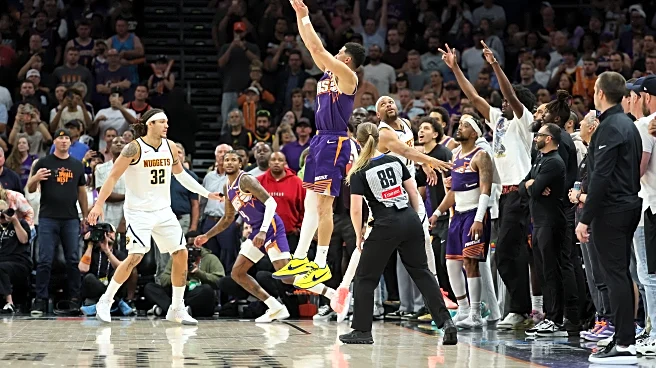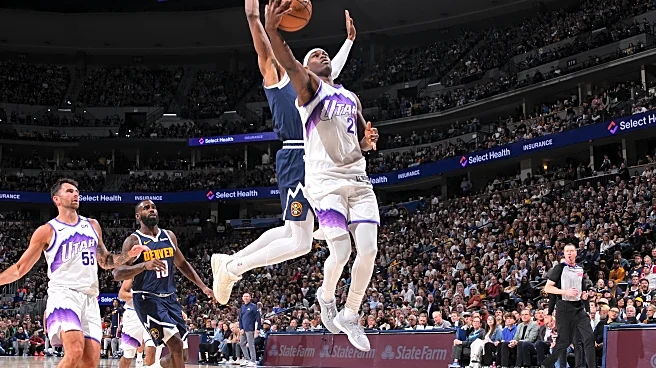


In what’s been the toughest stretch of the Suns’ season — a 4–6 record over the last 10 games, with several extremely frustrating losses where the team collapsed in the final minutes — I kept wondering who would step up to help us get through this dry spell (especially with all the injuries).
Booker and Green are doing what they can in the backcourt, even if the hot stretches are a bit harder to come by right now. The big rotation with Oso and Khaman is gaining experience and minutes. Collin Gillespie
is still playing the right way, even if you can feel a slight lack of freshness, and Goodwin seems to have rediscovered his impact on possessions.
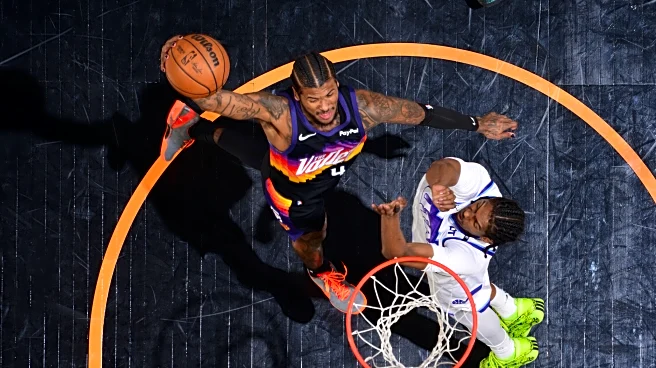
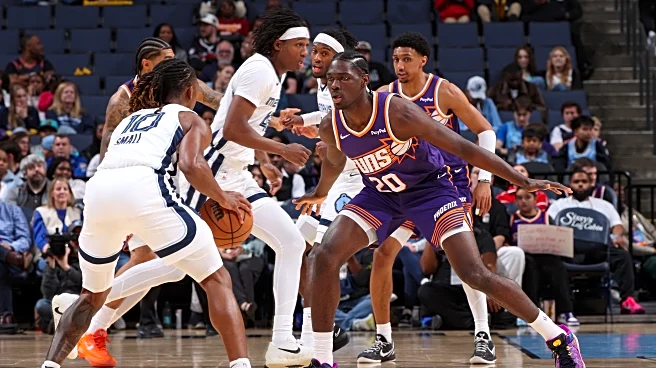
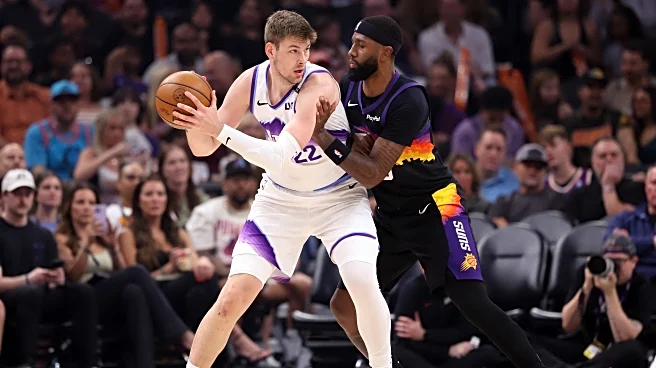
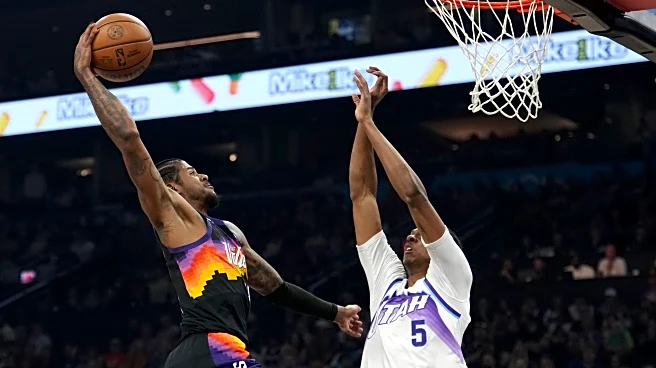
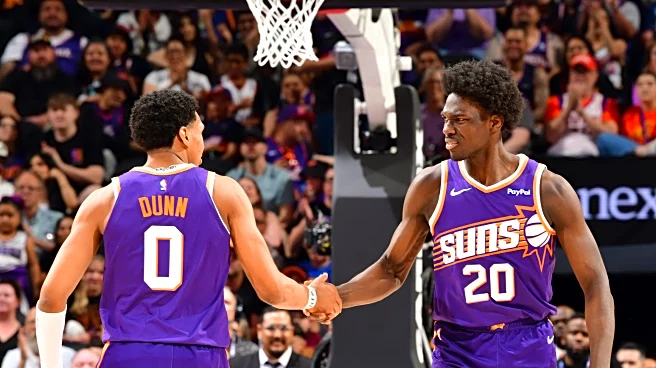
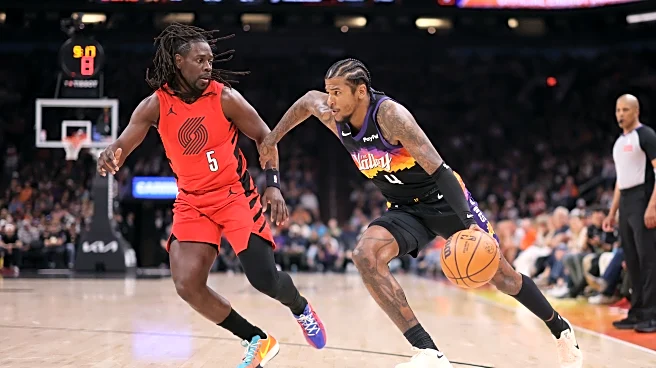
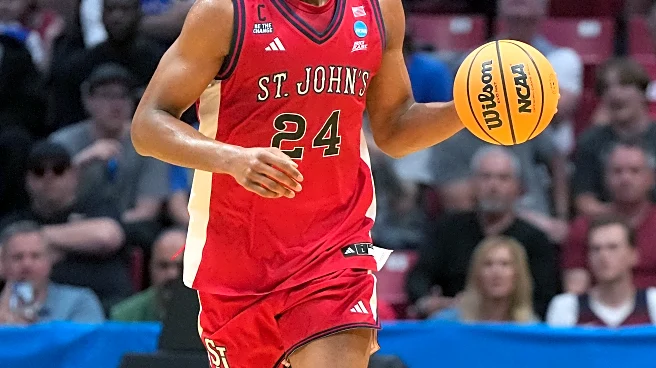
In the end, out of all this, it’s the wings, Rasheer Fleming and Ryan Dunn, who have impressed me the most lately with their efficiency and their energy on both ends of the floor.
Defensively, what stands out most is their precision and maturity for their young age. Dunn’s reputation on that end doesn’t need proving. The league already knows he’s an excellent wing defender. As for Rasheer Fleming, his reputation is taking a pretty unique trajectory; he’s really breaking out and turning heads, to the point where some people are comparing him to Kawhi Leonard (terrifying wingspan and a real ability to kill possessions with unexpected plays).
Statistically, it’s very satisfying for both players, who are now getting around twenty minutes in the rotation. Over the last five games, Ryan Dunn is at 8.2 points, 5 rebounds, and 1.8 stocks. And Rasheer Fleming is almost identical: 7.8 points, 3.8 rebounds, and 1.8 assists.
Even if the Condor’s efficiency has dipped slightly compared to his post‑All‑Star heater (51 TS%), Ryan Dunn is in full-on firestorm mode with a pretty 75 TS%. They complement each other extremely well, but what would really help now is for both of them to be at their best at the same time, every night until the end of the season.
Looking at the bigger picture, Fleming is establishing himself as one of the most disciplined and effective rim protectors in the league as a rookie, backed by a 40.8% DFG%, the best mark among rookies and already near the top of the NBA. His blend of lateral mobility, clean verticality, and low‑man reads allows him to limit drives, contest a ton of shots, and post a block rate around 4% without blowing up his foul volume (which is paradoxical for his role and age).
Offensively, he’s still an opportunistic but reliable finisher: low usage, TS% around 58%, frequent and productive cuts, a corner three that’s still inconsistent (38%) but stable enough not to be ignored. His overall impact is that of a premium defensive role player: very positive defense, neutral offense, and a profile that fits immediately into switchable or highly spaced lineups.

Dunn brings a more versatile and disruptive brand of defense, capable of guarding positions 1 through 4 with a rare mix of strength, instincts, and controlled aggression. He’s around 42 – 43% DFG%, with elite rim protection for a wing (≈51% at the rim), a steal rate above 2%, a block rate above 1% (90 and 80 percentiles), and a deflection volume worthy of the best perimeter stoppers.
His offense remains limited but functional: very low usage, a jumper that’s still too unstable (≈39% from the corner but 25% on the non-corner), but solid efficiency on cuts (1.33 PPP), and is a good engine in transition. Analytically, his impact is clear: All‑Defense‑level defense, but unfortunately, his negative offense keeps him from earning a bigger role.
In short, we’ve got two wings at 21 and 22 who can defend almost every position, every body type, and every role regardless of the opponent’s status. Fleming seems (to me) to have both a higher floor and a higher ceiling; his athleticism and length impress me night after night. Dunn impresses me with his footwork and power. Jordan Ott already has his future wing rotation for the next 5–10 years if the offensive talent confirms and stabilizes the way the defensive talent already has.