

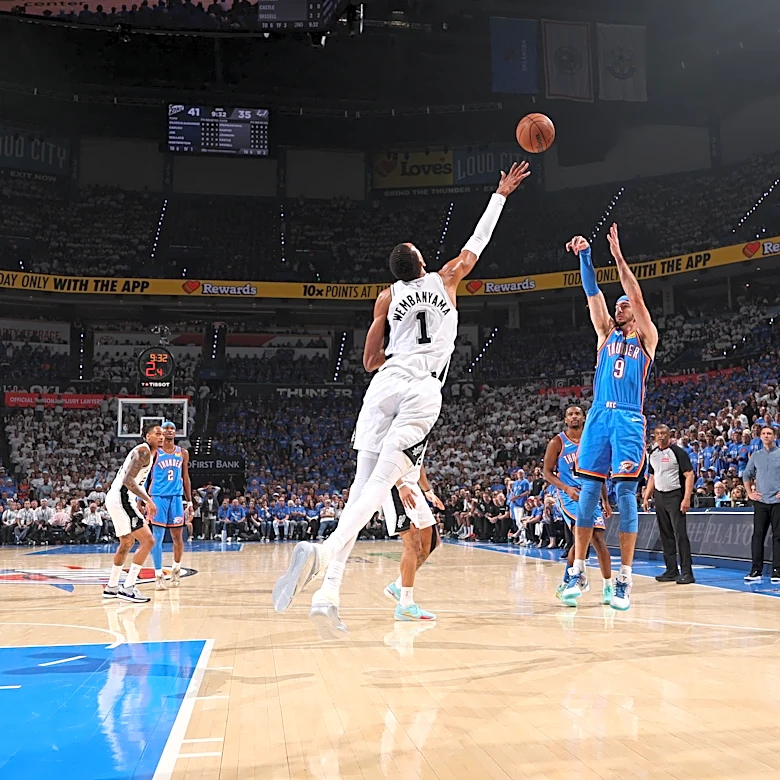
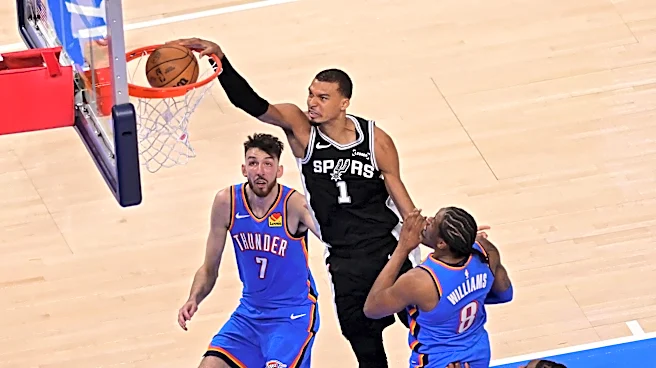
Through two games, the Western Conference Finals could not be any more evenly matched. The Thunder have outscored the Spurs by a mere two points, with both contests coming down to the wire. OKC made smart adjustments in Game 2, and now the onus is on Mitch Johnson and the Spurs to counter.
Ultimately, this series will be determined in two areas: the number of turnovers the Thunder force, and the matchup between the bigs down low. It’s a battle of strengths between the two teams, and whoever can impose
their will should emerge victorious.
Let’s start with the turnovers.
The ball is lava!
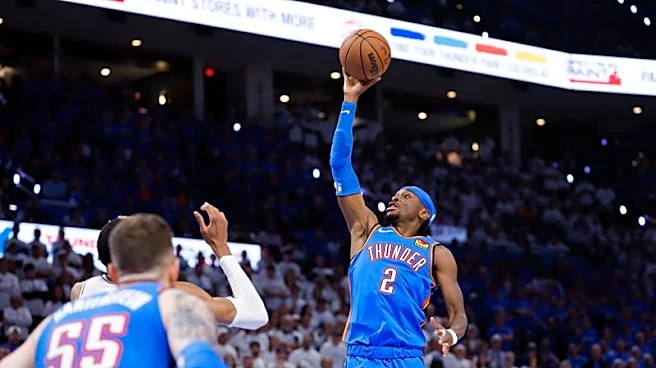
So far, OKC has forced 44 turnovers to just 25 for San Antonio, and the Thunder have outscored the Spurs 55-27 off those opportunities.
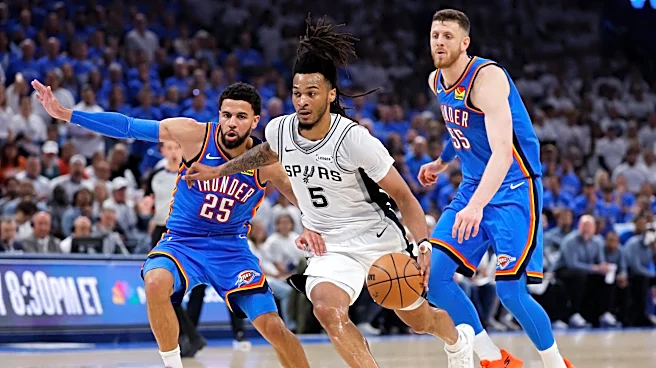
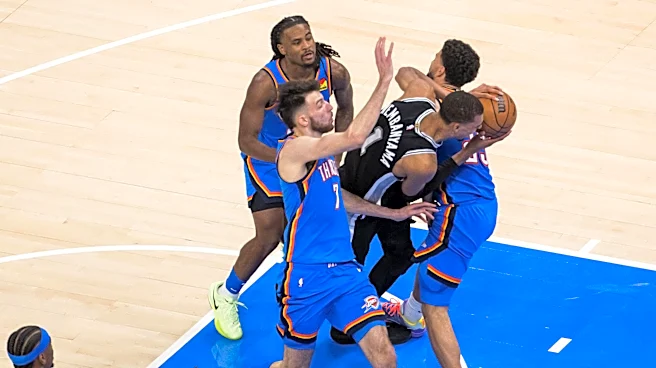
Stephon Castle has become the whipping boy for San Antonio’s turnover issues, and for good reason: he has thrown the ball away 20 times in the first two games, which accounts for over 45% of their total turnovers and is the most by any player in a two-game span in NBA history. It’s quite evident that his issues have been exacerbated by the Spurs’ depleted backcourt depth, as the sophomore guard has been overburdened by having to be the primary ballhandler with Fox injured and Harper missing at least half of Game 2. If one or both of them are out for Game 3 and beyond, San Antonio will need to put the ball in the hands of Jordan McLaughlin and their wings more often, while being very selective with the types of plays they’ll run in the halfcourt.
One option is to set high screens and attack with speed. This would force the Thunder’s point of attack defender to worry more about getting over screens or switching than going for steals, while also giving the ballhandler an open runway to the paint. Using Wemby as one of the screeners could force OKC’s bigs out of the paint, and even if one of Chet/Hartenstein is still roaming down low, they’ll be forced to rotate and make it easier to throw the Alien a lob.
The following drive from Harper is a perfect example. San Antonio needs to create advantages using simple plays that get the defense scrambling, thus minimizing the potential opportunities for a turnover to occur.
The Spurs also need to get their wings more involved. Even with Julian Champagnie’s shooting prowess, OKC has been comfortable having Chet Holmgren roam off of him because they know he’s the least involved in San Antonio’s offense. They’ve been right so far, and the Spurs need to counter by using him as a screener who can flare out for threes, which could cause confusion for OKC’s defense and create open driving lanes, or force Chet to guard out in space.
San Antonio could put the ball in Devin Vassell’s hands more too, but only in specific spots. He’s not a great playmaker and shouldn’t be relied on to bring the ball up, but he’s one of the Spurs’ best players at attacking advantages. For example, San Antonio needs to hunt Jared McCain and any of OKC’s “bad” defenders whenever the opportunity arises, like what Vassell did below. Involving the Thunder’s bigs should be prioritized since they always play a drop, and any daylight for an open shot is a win for the Spurs offense.
Goliath vs. … goliath?
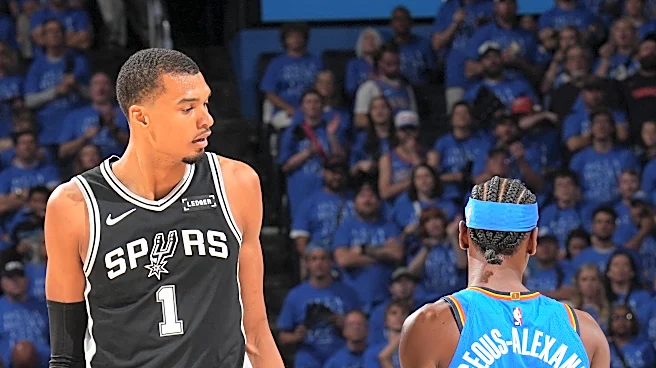
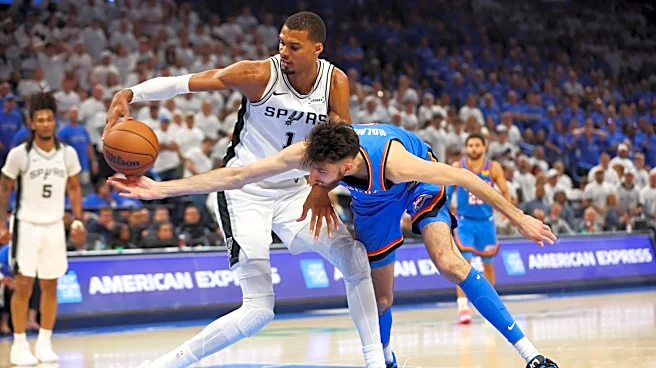
San Antonio has shot 43-68 at the rim to just 28-47 for OKC — a similar percentage, but the discrepancy in attempts is the bigger story. As usual, Wemby’s presence alone has made the Thunder hesitant to shoot, while his gravity on offense creates easy rim attempts for his teammates. However, his own offensive game has been made harder, especially in Game 2.
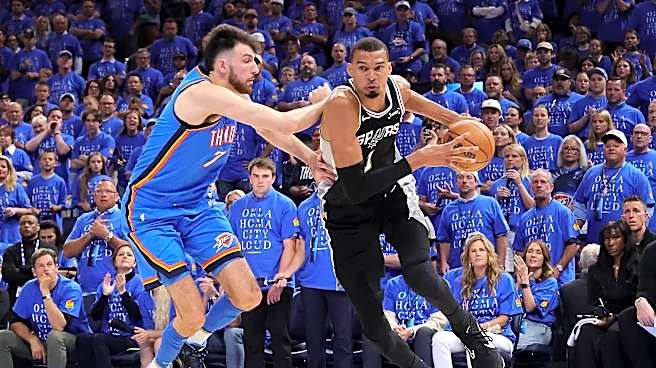
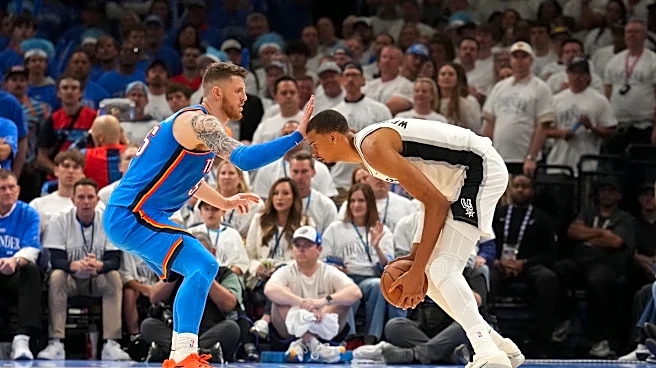
Playing Wemby using a traditional big like Hartenstein made it difficult for the Alien to get to his spots in the paint, which wasn’t an issue in Game 1 since he was defended by smaller guards. Even so, San Antonio took advantage by utilizing Wemby on the perimeter to open up the paint. Mitch Johnson used the Alien as a decoy on multiple possessions, with the play below being the best example of some innovative play calling from the Spurs coach.
However, this also resulted in tougher shots for Wemby, as he attempted seven threes and only two free throws as opposed to two threes and 13 free throws in Game 1. There were fewer lob attempts because Isaiah Hartenstein pushed him out of his usual spots, and being on the perimeter made it easier for The Extender Tony Brothers and company to swallow their whistles too. OKC has shown that their game plan to defend pick-and-rolls involving Wemby is to have their bigs show and recover, which gives the Spurs a fraction of a second to throw a bounce pass or lob.
You can see this in the play below, where both Dort and Hartenstein briefly flashed at Castle before the big man recovered back to Wemby.
The Spurs could counter by running double drags, or using off-ball actions that start in the corner. They did just that to open game three in the Wolves series, by utilizing Vassell’s threat as a shooter to get Gobert to commit, putting Wemby in position for a lob. On the very next possession, San Antonio then used Wemby as the screener and immediately threw the lob, and the defense couldn’t help since they needed to be glued to shooters in both corners.
It’s easier said than done given that this Thunder team is elite at picking off passes, but the Spurs should have enough tape to know exactly when and how they can thread the needle to get Wemby on the roll.
Defensively, OKC used some big-big action to get easier looks at the rim. Chet and Hartenstein connected on multiple lobs, and the Thunder used ball movement and screens to get one going downhill, putting Wemby in no man’s land.
More importantly, playing Hartenstein diminished the Spurs’ dominance on the glass. San Antonio outrebounded the Thunder 61-40 in game 1, and the difference was cut down to just 45-41 in game 2. Hartenstein grabbed eight offensive boards alone, almost singlehandedly raising OKC’s offensive rebounding percentage from 19.7% in game one to 36.7% in game two. Given the Spurs’ injury concerns and their lack of frontcourt size besides Wemby, Harrison Barnes and Carter Bryant should get more minutes to mitigate some of San Antonio’s rebounding issues, and they would likely be matched up with one of the Thunder’s bigs if they decide to go with a twin towers lineup.
Another adjustment the Spurs could make is to have Wemby roam off of Chet in the corners as opposed to Caruso or one of OKC’s guards on the perimeter. This would keep Wemby closer to the rim, and although Chet is shooting 37.8% on almost four attempts a game, he’s a much more hesitant outside shooter than any of the Thunder’s guards and has a slower release too. The other Spurs should sag off Chet and dare him to shoot as well, so that they’re not caught flat-footed if OKC makes him a driver like in the play above.
Lastly, the health of San Antonio’s guards and Jalen Williams plays a huge role in the X’s and O’s. Having Dylan Harper would help the Spurs’ point of attack defense and prevent easy drives for the Thunder, which would allow Wemby to stay in the paint more often. JDub would give OKC another body to throw at the Alien, and Fox’s speed on offense would create more room for San Antonio and relieve some playmaking burden from everyone else.
Let’s pray that they all return from injuries soon, as it will only add to the intrigue.