


Giving credit where it’s due, the ever-hopeful viewpoint of RockMNation co-founder Bill Connelly was the key to the beginning of Count the Ifs. Nate Edwards revived it, but the crux was to look at the season from a hopeful standpoint. Missouri has long been a program participating out of the spotlight in both major sports. And it’s difficult to break through.
The last few years, NIL has flattened the top of the sport a bit. But the Tigers have still found themselves just outside of the broader view,
and they’ve been unable to play their way into mainstream conversations.
But what if?
Every season starts off with a level of hope, no matter what sport you’re cheering for. And the rule for nearly everyone is that something will inevitably go wrong. I say nearly because there are perfect seasons out there, but they’re so rare it’s almost not worth it to talk about. The ultimate goal for every team is a national championship, but just one team achieves that dream each season.
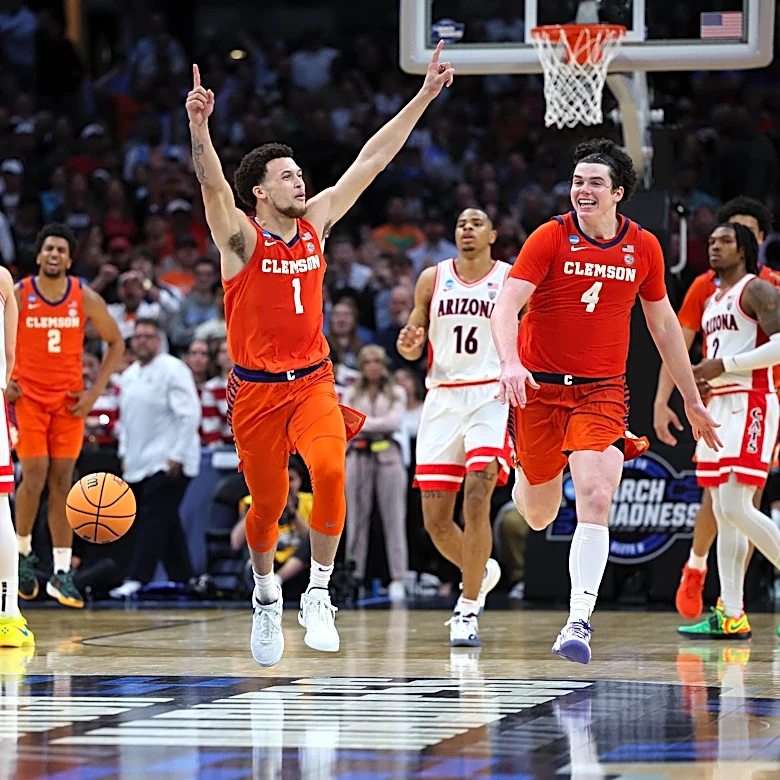
I think most Missouri fans would stop short of saying the goal this season is a national championship. Here are the recent national champs preseason KenPom rating for some context:
- Michigan: 11
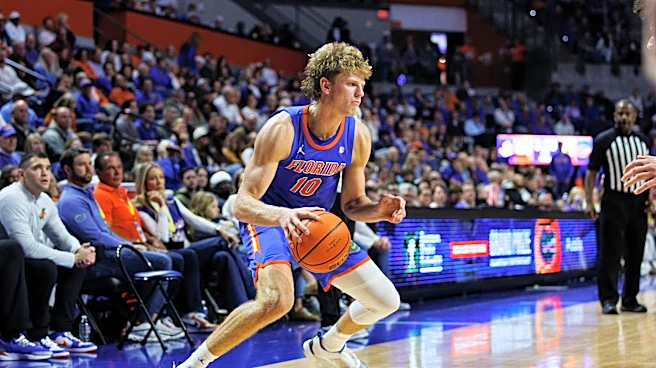
- Florida: 26
- UConn: 4
- UConn: 27
- Kansas: 6
- Baylor: 3
- Virginia: 2
- Villanova: 1
- North Carolina: 5
- Villanova: 5
- Duke: 1
- UConn: 11
The last time a real outlier won the title was Jim Calhoun’s 2011 UConn Huskies, which began the season 49th in KenPom. Since NIL has been introduced, there’s been more variance, with both Florida and UConn being inside the top 30. But if KenPom isn’t your perfect predictor for the season, the AP Poll is still considered a pretty solid preview, but that drops Florida from the ‘outliers’ list as they were a top 25 team.
Then the list is just UConn from 2023 and 2011, Florida in 2006, and Syracuse in 2003.
Just one of those teams was led by a potential one and done freshmen leading the team in scoring. The 2003 Syracuse Orangemen. The ‘Cuse finished the regular season 23-4, led by Carmelo Anthony in scoring with 22.2 points per game. So I’m not talking a natty with this Missouri team, but there is a major Jason Crowe, Jr. element to it.
So what if everyone is healthy, and eligible, what’s the baseline?
Make the NCAA Tournament

That’s the least this team could do. Barring injuries, of course. They should be dancing for the 4th time in Dennis Gates five years.
Even if there are eligibility issues with Mark Mitchell and CJ Gunn, there’s enough on the roster to be around .500 in the SEC Conference, and win enough games in the non-conference slate to see an at large bid.
I’m going to take a bit of a different approach with this count this ifs, and make it more player based, than team based. With one exception. But I expect Mark Mitchell to be really good. Because he is really good. If he’s eligible to play, he’s going to be good again this year. So very little of our ‘if’ counting will be dependent on Mitchell.
With that said, simply ‘making’ the tournament for this team. If they get 15-18 points per game from Crowe, and 13-15 from Mitchell, there’s enough talent there to be an 8-9 seed. Win half your games in conference and that’s the likely scenario.
But if Crowe is special, rather than just really good?
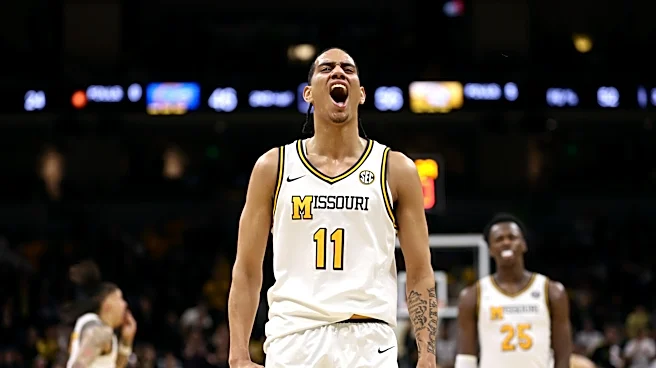
The Jason Crowe, Jr. factor

If you tell me the kind of season Jason Crowe, Jr. will have, I can tell you the kind of season Missouri will have.
Crowe is the most important player on the roster for a variety of reasons. First, he’s one of a very limited group of ball handlers. Second, he’s the most likely player on the team to end up a lottery pick in next year’s NBA Draft. And third, he’s likely to be the leading scorer, whether that means 30 shots a night or 15.
If Jason Crowe, Jr. is an average 5-star combo guard, he’s likely to be somewhere between 12-15 points per game, 3-4 assists, and probably more turnovers than you want, and an offensive rating around 106-108. Or 1.06 points per possession. If he’s the baseline here, Mizzou is going to be just fine.
But what if Crowe, Jr. is better than that?
I’m targeting three statistics for Crowe:
- Turnover Rate: +20%? not good, 15-20%? I’m happy. Sub-15%? Elite
- Efficiency: 100-110 rating? Fine. 110-118? Ok we’re in good territory. 118+? Elite
- Assist Rate: 15-20%? This should be the baseline, 20-30%? This is very good. 30%+? Elite
Basically with Crowe, if he’s scoring 20 points but taking 19 shots, while dishing out three assists, that’s not really what you want. If he’s scoring 18 points while taking 15 shots and dishing out 4-5 assists, that’s better. But if he’s hitting 18-20+ points while taking 13-15 shots and hitting 6 assists or more, this is getting into Darius Acuff territory.
That’s All American levels of good. Crowe doing that means Missouri is no longer just a tournament team, but a second weekend team.
A Wildcard, Trent Pierce

I’m taking a little bit of a different approach with this version and focusing more on a few key players. And I really think Trent Pierce is important. He’s a veteran, and he’s one of the best shooters on the roster. He’s also a versatile defender, and he’s capable of making this Mizzou basketball team elite.
Pierce’s usage rate went down from 18.5% as a sophomore to 15.2% last year. So he’s not a guy who is out there to take a lot of shots, but maybe he should be taking a few more?
Pierce’s three point shooting in his first two years looked like it should be a strength, and last year it became one. His shooting increased to 38.4% from outside the arc, and he even looked more comfortable shooting off movement.
But his production has been uneven. All through his college career. From 6.7 points as a sophomore to 10.4 points last year. That number should go up to 12 or 13 points this season. But his rebounding only went up to 3.8 per game, and his defensive rebounding rate was just 11% last year.
If Pierce is who is was last season, 10 points and 3-4 rebounds, again… that’s the baseline.
If Pierce is better, say 12 points per game while keeping his low usage and 120ish efficiency rating, but he’s able to get his rebounding rate up to 5 boards, or around 15-18%. That’s giving the Tigers a legitimate, consistent shooting threat, a versatile defender, and better rebounding. A player like this makes Mizzou a real threat.
The best version of Pierce finds consistency game in and a game out. His efficiency blooms to over 130 as his outside shooting tips over 40%, think guys like Jayden Stone, Caleb Grill, or D’Moi Hodge.
This version of Pierce is the player that can elevate this team to a second weekend team, or more.
Last player, if CJ Gunn is eligible to play

Maybe less important than the first three, but still a major floor raiser, is the CJ Gunn scenario.
Gunn is similar to Mark Mitchell, in that he’s been in college long enough that you know what you’re going to get. He was the leading scorer on a mediocre DePaul team. But if Gunn is able to play all or most of the year, I think adding him to the rotation means Mizzou has another playmaker, and another late shot clock creator.
While at DePaul, Gunn averaged 13.1 points per game. But his efficiency was poor. Actually under one point per possession.
At Missouri he would go from option number one on the scout, to at best the third option. If Gunn is able to be an afterthought on offense, and take his efficiency to over 1.10 points per possession, suddenly the Tigers have a real high quality third option.
And not just a third option, but a third creator.
Gunn’s usage went up to 26.4% last season, and if Gates and the Tigers can draw that down to around 18%, get him taking better shots, and push his efficiency up then it means very good things.
If CJ Gunn is the third or fourth leading scorer on the season, then the Tigers can be a dark horse Final Four team.
But what if they had a defense?

I’ve said this in the Missouri team preview from Monday, but there are real questions about team defense under Dennis Gates. But it’s not strictly a Gates problem, as Missouri hasn’t had a top 50 defense since 2010 under Mike Anderson.
The clarity here is that it’s really difficult to make a Final Four if you don’t get stops defensively. You need to score points with efficiency, but the defensive ratings of the last 10 champions are:
- 1st
- 6th
- 4th
- 7th
- 17th
- 22nd
- 5th
- 11th
- 11th
- 5th
The lowest defensive efficiency of a National Champion in the KenPom era has been 22nd. To make a Final Four, without being an extreme outlier, you want to be inside the top 30.
Under Leonard Hamilton, Florida State finished top 50 in defense seven times while Gates was an assistant there. So the blueprint exists. In that time the Seminoles made two Sweet 16s and an Elite 8, the Elite 8 was as a 9 seed (ahem, they beat Missouri in 2018).
This roster is the most like a Florida State roster Gates has had. He’s got size at every position, not a ton of ball handling, but maybe enough, and they’re deep. Maybe too deep. But the frontline is formidable. This could be a team that defends at a high level.
If… Missouri has a top 50 defense, they should be a second weekend team.
If… Missouri has a top 30 defense, they can threaten further.
But the hopes and dreams and actions behind the words of a national championship stop short if they can’t field a top 20 defense.
The games start this week. The journey starts on Tuesday. I’ll return to some football commentary next week. I’m happy they beat the Hogs.