
I have made my bones in these parts by taking a more dispassionate look at things. That is what the labs are for and that is why I always label these as commentaries. I want to keep the bulk of my work
separate from narratives as much as possible. We can split sports journalists into three buckets. It used to be two primary buckets, but recent times have changed the sports journalism business.
The oldest form of journalists are the beat writers. They follow the team and report on the news of the games and what is going on around the team. They have access to players, coaches, and executives and they use that access to bring us information we would not be privy to otherwise. They serve an invaluable role and we could not do our jobs without them.
The second group of people are analysts. That is the pool I swim in. I am billed as an analytics expert. The general idea is that I look at player performance through an analytical lens. That will naturally involve some level of commentary, but we try to keep that to a minimum. That is why these additional features are labeled as commentary.
The third category are a cross between all of them. They are more on the entertainment side of things. They are in it for the clicks so they practice what we call “hot takes.” The idea is attention and not necessarily accuracy. As there are more and more of these guys and gals coming out the line between journalism, analysis, and entertainment can get blurred.
This brings us to the curious case of Chandler Rome. I usually detest criticizing fellow media members. There are any number of reasons for that. We swim in the same swamp so to speak, so there is no telling what the future might hold. In one year you are a competitor and the next you could be a colleague. I seriously doubt Rome and I would be colleagues as I do not know him personally, but you never know. Additionally, when I criticize them then it invites our own criticism. I generally try to stay above the fray.
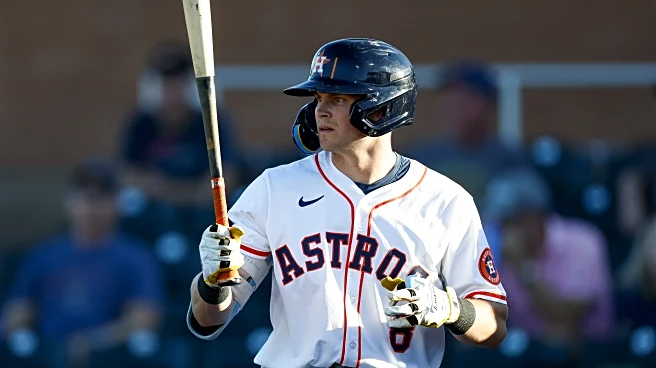
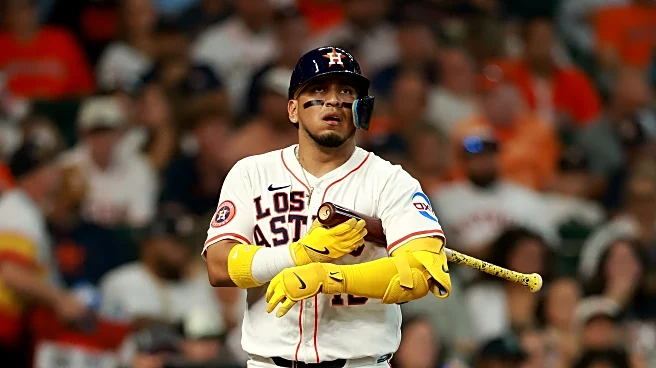
All that being said, the handling of the Isaac Paredes situation from the team and the media has been baffling. On the media side, Rome has led the charge and in doing so has blurred the lines between beat reporting and hot taking. He has painted a picture of the situation as untenable. Without hearing that from voices inside the organization, that characterization goes beyond offering opinion to potentially shaping future events.
It is probably beyond count the number of times it has been leaked that the Astros are shopping Paredes. Are they shopping him? That’s a semantic argument. Have the Red Sox and Astros had discussions about Paredes and other players? That’s almost a certainty. Yet, how many conversations about players have the Astros had with the other 29 teams? So, the fact that we are emphasizing these particular discussions is an editorial choice that has implications.
Add in the “reporting” that the infield situation is untenable and suddenly you have a situation where one did not occur before. We have no idea how the Astros have handled this situation behind closed doors. We don’t know if they told Paredes and/or Christian Walker they were being shopped. We don’t know if they have communicated how they foresee breaking down playing time. We don’t know how those players really feel about the situation.
Calling the situation untenable is an editorial comment. There is nothing wrong with editorializing based on available information. I might be inclined to agree. The problem comes when we start truncating sound bytes or leaving out context from news reports that would counteract that opinion. That is using selective information to argue a specific point of view and that becomes a problem for someone that ostensibly a beat reporter.
This could end up leaking into Spring Training and the way the club does business. Will they dump Paredes in order to create more clubhouse harmony? We don’t even know that there is disharmony. That is idle speculation that could be true. It could also not be true. Again, the problem is when those outside the clubhouse start impacting things in the clubhouse by pushing a narrative. Is Rome right? Would the Astros be better off a left handed hitting outfielder? I suppose there is a lot to say for that.
The problem comes in that said left-handed hitting outfielder might not be as good as Paredes is to the Astros. Desperate teams have to take less to solve their problems. When a reporter spends the whole offseason highlighting the “problem” then more teams will believe it is a problem for the Astros and offer less. Then if you fail to deal him will he become disenchanted? There is a difference between reporting news and making news.