

Less than eight weeks ago Manchester United were sixth in the Premier League table. They were four points away from being 14th and 11 points off the top three with matches against the league’s top two sides looming.
Fast forward to the first week of March and Manchester United are now third in the league – six points clear of sixth and the drop to the Europa League. Michael Carrick’s three point collectors have won six of seven matches beating teams home and away from up and down the table.
The last
three matches have not been the prettiest but the underlying numbers tell the story of a very healthy club. Under Ruben Amorim this season boasted a non-penalty goal difference of +0.33 per game. That number has increased to +0.60 under Carrick, the best in the league over that time span. FotMob has United as third best in the league on expected points.
While it may not always be pretty, United’s run of form under Carrick has not been an accident. It’s down to the way Carrick set his team up, and platformed his players.
Football coaching in 2026 has become all about control. It’s the thing that managers crave the most. They want to be as prepared as they can in all facets of the game. Risk has to be balanced out by the ability to defend against a counter attack if the risk doesn’t work. The attack has to be structured so the defense is not made vulnerable. Rest defense is a term that has dominated the lexicon the last two years as teams make sure to they’re set up to defend prior to launching attacks.
All these things have merits but they also lead to a slippery slope of turning your players into robots. Things like the not moving up the pitch quick enough to platform your attackers because you’re waiting to set up your rest defense make it much harder to attack. The Premier League has taken this to extreme levels this season as teams have become even more risk averse and look to do all their damage via set pieces.
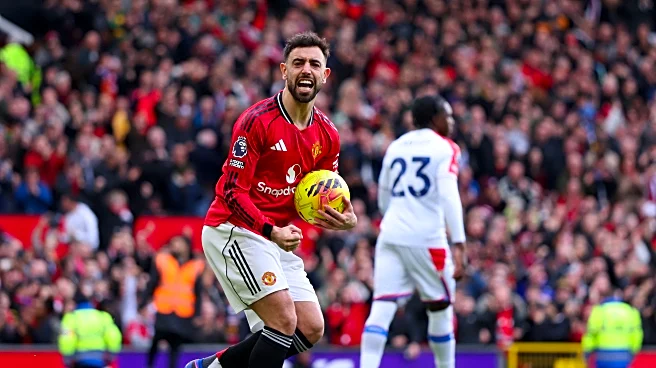
In that regard Michael Carrick has been a breath of fresh air. It turns out, when you have a team with very talented attacking players, you should let them use their talent. Following the club’s 2-0 win over Tottenham Hotspur Bruno Fernandes praised the freedom Carrick has given the team.
“I think Michael came in with the right ideas of giving the players the responsibility, but also some freedom to take the responsibility on the pitch during the decisions that are needed,”
It would be naive and flat out wrong to say that Carrick has simply let the players play. You cannot give your attacking players freedom to figure things out on the fly and expect to win games, if you don’t have structure elsewhere in the team.
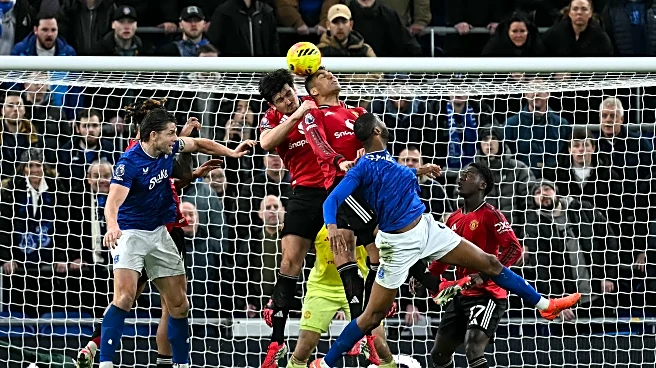
Carrick has come in and turned this team into a defensive juggernaut. Gone are the man-marking tactics showed under Erik Ten Hag and Ruben Amorim. United now defend as a team and do it very well. United are holding opponents to 9.86 shots per game under Carrick (11.3 under Amorim) and their opponents xG has dropped from 1.27 to 0.79 per game. The quality of those shots has gone from 0.11 – among the bottom quartile of the league – to 0.08 – among the best in the league.
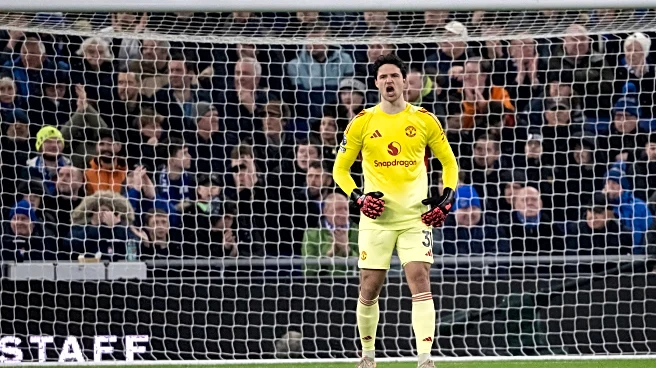
Under Carrick United are conceding 0.48 xG per game from open play, also the best in the league. In seven games United have conceded just three times from open play: one was an own goal, one was a goalazo, one only happened because of a series of individual mistakes by Luke Shaw, Lisandro Martinez, and Kobbie Mainoo. It takes a lot to score a goal against United these days.
This rock solid defense has contributed to, let’s call it, “watchability” of United’s recent matches. The first halves have been quite cagey (that’s a euphemism, a better word is probably boring) as United figure things out and get their feet wet in the match, before turning the dials up in the second half. It’s reminiscent of the work smarter not harder approach the 2020-21 team took when Carrick was an assistant coach. For some, the first half looks like a lack of tactical discipline, or even a lack of a tactical approach, when in reality it’s more of an assessment period where the players are trying to figure out where they’re opponents weaknesses are. In the second half, United have turned up the pressure quite significantly.

This approach has dulled the attack a bit – especially in the first half. United are essentially betting that once they figure out where the opponents weaknesses are, 45 minutes will be more than enough time to exploit it.
You can’t take this approach without having a really good defense. In seven games under Carrick United have conceded a total xG of 2.06 in the first half of matches. That’s a per 90 rate of just 0.59 or just 0.29 per 45 minutes. They’re confident they won’t concede in the first half, and in a season where goal scoring is down across the league, it’s far more likely that one or two goals will hold up for a win this year.
While United have been locking opponents up, we shouldn’t post all the blame for first half dullness on them. After all, it takes two to tango.
United opened the Michael Carrick era with wins over Manchester City and Arsenal where they were able to sit off the ball and hit them on the counter attack. The tests were always going to come with the next part of their schedule when they faced teams that may not be a possession dominant as the top two clubs in the league. When United passed those tests as well, the rest of the league has naturally reacted.
We typically expect “smaller” clubs to approach playing Manchester United by letting United have most of the ball while they focus on keeping their defense compact, and hitting United on a counter. That stopped being the case under Ruben Amorim though. Teams realized that United were very easy to attack, if you went at them, you could have a lot of success. Team after team would attack the gaps behind the wing backs, if you got a lead several clubs realized you could just leave United’s wide center backs open and the team would essentially beat themselves.
That was the result of United being predictable. Ruben Amorim had a way he wanted United to play and he didn’t deviate from it. Since clubs knew what they were trying to do, they knew how to attack it.
United have stopped being predictable and as a result clubs have had to shift. They don’t know where the weakness is going to be on a typical day, so they’ve adjusted to putting in all their efforts to stopping United. Nuno Espirito Santo set up his West Ham team to clog the middle of the pitch, forcing United out wide. David Moyes did the same.
The set up forced United to play out wide – where they’re at their weakest given the fullbacks available to them. But they also didn’t send anyone forward. When they tried to counter attack they were using just one or two players – resulting in a grand total of four shots for the two teams in the first half. Crystal Palace were similar though they managed four shots themselves. This meant that the game never had a chance to open up. United would easily snuff out the counter attacks but then had to get back to work breaking down compact blocks.
When United were chasing a goal against Everton earlier this season, or trying to extend their lead against West Ham, their attacks were easily turned aside due to how repetitive they were. Carrick has put in a much more dynamic attack, and by giving the players freedom it keeps new ideas coming in. When something doesn’t work they try something else, and they keep trying until they find a breakthrough.
It’s not perfect. At times it can look too dynamic. In the first half against Palace the players were often bunching up far too much. There can be some kinks as players aren’t completely sure of where their teammate will be. That might mean it takes them a bit longer to settle into a rhythm, and then even when they get time and space, the passing is justtt lacking that crispness to make an attack sharp.

Under Ten Hag and Amorim this team had a tendency to allow one mistake or rough patch to spiral into a series of mistakes that would sink a match. That trait is no longer there. The team plays with a confidence that their defensive structure will clean up any mistake. That gives them the freedom to make a mistake, learn from it, and then try again.
As the game goes the players start working out where the spaces are. They start to understand which defender is vulnerable. The coaches can see it too and at halftime they can get on the same page.
They have that freedom to drop deeper, the freedom, to cut inside, the freedom to run at defenders. Against Palace Amad’s omission from the team and Luke Shaw’s injury lead to the team playing far too narrow. In the second half Matheus Cunha moved wider, getting more chalk on his boots and providing United with some width. But he still had the freedom to move inside when the situation called for it, like when he takes up an advantageous position Maxence Lacroix following a corner kick.

Not many people would play a pass this audacious, but Bruno Fernandes isn’t many people, and this United team has been given the freedom to try shit, even if the likelihood of this pass succeeding isn’t all that high.
Bruno gets the pass right, which immediately puts Lacroix in a vulnerable situation. He gets beat and tries to pull Cunha down. 99.99 percent of the foul may have occurred out of the box but Cunha drags it out long enough to win a penalty.

It’s a lucky break for United that they’re given a penalty and Palace are reduced to 10 men, but good teams make their own luck. You don’t win penalties by playing passively. You win penalties by going at defenders, forcing them onto their heels and putting them into vulnerable situations.
The Ruben Amorim era was characterized by United playing close games right on the margins but consistently ending up on the wrong side of things. Players abilities were sacrificed for “the system,” limiting their ability to impact those margins. Given the flaws in the system, United often found ways to lose.
It happened so often that blowing a lead started to feel inevitable. Spurs didn’t look good for 80 minutes against United, but suddenly had a 2-1 lead. West Ham came to Old Trafford and looked just as bad as their awful form suggested they would be, and yet as the match progressed to it’s later stages it started to feel more and more inevitable that an equalizer was coming, and it ultimately did.
These days the inevitability has shifted back to what United fans are used to – that Manchester United is inevitable. The first half might have been painful, but United are going to figure it out in the second half. Sesko will come on and score. These players will get a moment and make it count.
The discourse has gotten so outrageous recently that it’s no longer enough that United are finding ways to win tough matches, it’s a problem that they’re not winning them easily. Winning games in the Premier League is tough – especially when your opponents plan isn’t for them to get a win but simply to not let you win. In a season that’s been so competitive and tight preventing almost anyone from finding consistency, the fact that United can consistently be good enough speaks volumes.
This is still a flawed squad. The fullbacks don’t provide much width in the attack. They have only two senior central midfielders that can be trusted. One of them hardly played for half a season, the other can only barely make it through 90 minutes of a match. These flaws limit the ceiling of how good this team can really be.
Yet here they are, finding ways to win each week. They’ve done it by becoming rock solid defensively and trusting their attackers to create just enough, maybe not to dazzle, but to deliver. With that defensive foundation in place, they don’t need much. Even a single moment of quality up front can be enough to take three points.