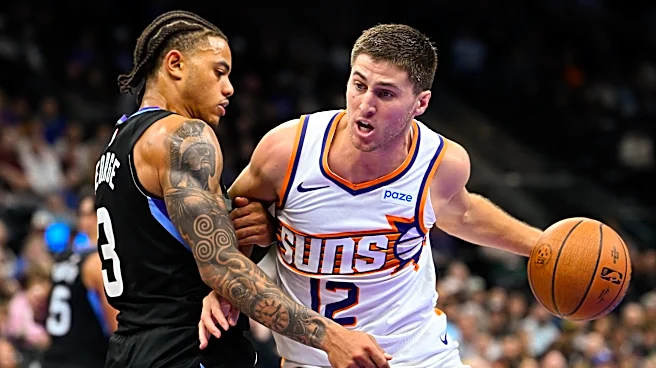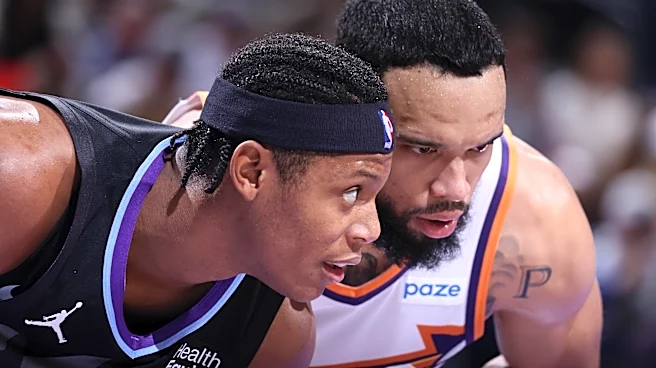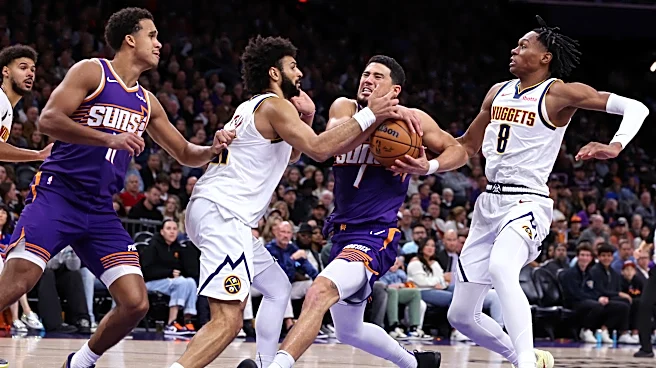


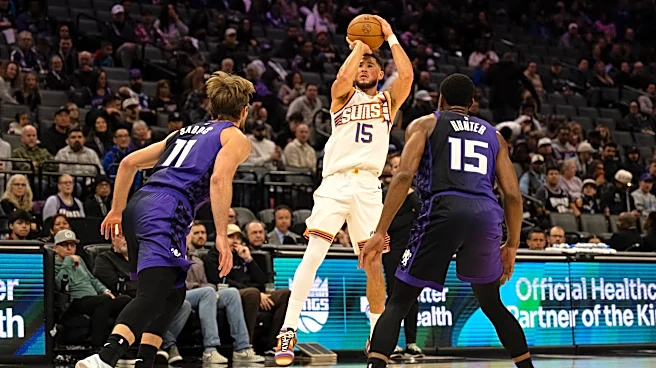
Stabilization. Now that we’re 15 games into the season, we’re starting to see some of that happen for the Phoenix Suns. They sit at 8-7, albeit as the 9th seed in the Western Conference, with plenty of basketball still to be played. We’re beginning to see the vision Brian Gregory had this past offseason manifest itself on the court on a nightly basis.
And we’re starting to see fewer people running to the trade machine in an attempt to fix the Phoenix Suns.
Naturally, that’s part of being a fan. We
recognize deficiencies and attempt to find solutions, however wild or unlikely those solutions might be. Given the tools at our disposal these days (I heart you Fanspo), it’s become increasingly easy to explore potential trades. We all do it, and it’s part of the fun of following a team. It’s also part of the frustration, because many of the proposed solutions are completely illogical. We blindly assume another organization would gladly accept whatever trade proposal we’ve concocted within the confines of a trade machine.
The same could be said about a recent proposal from Fadeaway World’s Siddhant Gupta. In his latest column, he made three suggestions that would send Dillon Brooks to the San Antonio Spurs. One was for Tobias Harris, with the addition of two first-round picks. The second was to send Keldon Johnson and a first-round pick to Phoenix for the Villain. The third? Exchange Brooks for Harrison Barnes, Luke Kornet, and a protected first-round pick.
What was your initial reaction to that one? Disgust? An immediate, “I’m not gonna do it”? My reaction was one I didn’t expect to have. It had less to do with the proposed trade itself and more to do with the player involved. It raised a simple question: Is Dillon Brooks the Phoenix Suns’ most desirable asset?
Before I dive into this whole thought exercise, I want to make one thing clear right off the bat. I have no desire for the Phoenix Suns to trade Dillon Brooks at this point in time.
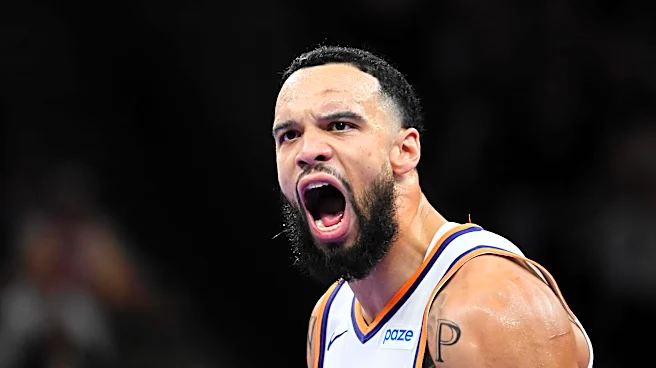
He’s the heartbeat of this team, the culture setter. And while he can be an inefficient shooter at times and make some poorly timed decisions, his presence is ultimately a net positive that extends well beyond the stat sheet. He helps define who this team is, and when we get an engaged version of Dillon Brooks, he lifts everyone around him. He brings out the energy and identity that make this team competitive and an absolute annoyance for the opposition.
For all those reasons, especially when you factor in his $21 million salary this season, Brooks becomes a highly desirable asset.
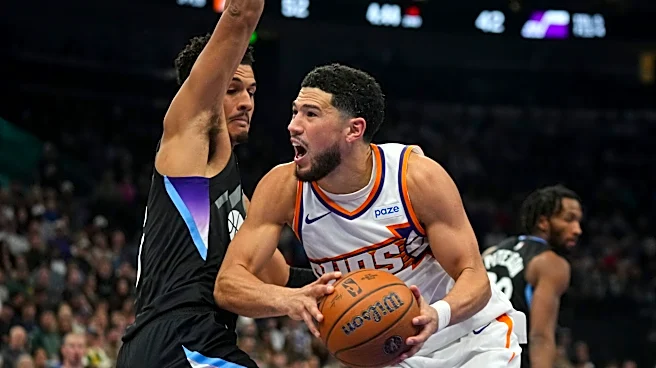
Look at Devin Booker. His contract is simply too much for most teams to absorb. At $57.1 million, acquiring him would require quite the haul from an opposing organization. And truth be told, as we’ve experienced here in Phoenix, having Devin Booker as your Batman doesn’t necessarily mean you’re going to take over Gotham.
Jalen Green? We’ve been so focused on different trade scenarios and potential returns that we’ve perhaps overlooked the reality of his value. Despite his elite athleticism and potential upside at 24 years old, he hasn’t demonstrated that he’s worth the $36.3 million he’s being paid this season.
But Brooks? If you’re an organization looking for a culture setter, someone who brings toughness and establishes an identity, Dillon Brooks can provide exactly that. And he does so on a contract that makes him an incredibly desirable asset.
Let’s expand on this thought exercise a little further and take a longer view of what a potential Dillon Brooks trade could mean for the Phoenix Suns, without factoring in anything they might receive in return, shall we?
Brooks signed a three-year, $73 million extension this past offseason, keeping him on the books through the 2029-30 season, when he’ll be making $26.1 million. As we know, the salary cap will continue to rise over the next three seasons, potentially by as much as 10% annually, with each increase compounding on the previous one. A more realistic projection is somewhere around 6%. Using that figure, the salary cap would be roughly $185 million in the final year of Brooks’ contract.
The Suns are currently projected to have $145.3 million committed to salaries that season, which also happens to be the final year of Devin Booker’s extension. That leaves Phoenix with approximately $40 million in cap space and five players under contract. Booker, Brooks, Collin Gillespie, Koa Peat, and Oso Ighodaro.

There’s one significant factor missing from the graphic above, however. A Miles Bridges extension. Because, like it or not, it’s coming. You don’t surrender an unprotected 2033 first-round pick to acquire a player you ultimately have no intention of bringing back. And given Bridges’ production thus far this season, I believe there’s enough to justify an extension, albeit at what I would project to be a manageable number based on how this front office has operated recently.
So let’s add a sixth player to the equation and hypothetically assign Bridges a $30 million salary for the 2029-30 season. And there you have it. Six players under contract and approximately $10 million in cap space.
Brooks will be 33 entering that season, which by no means suggests he’ll have one foot in the grave as a basketball player. However, aging players tend to become less effective and less desirable when you factor in the money they’re making relative to their production, along with the increased injury risk that comes with age.
When you look at this from a bigger-picture perspective, knowing that Brooks and Bridges are somewhat duplicative in what they provide on the court, you can begin to talk yourself into the idea that the Suns’ most desirable asset could help address some of their immediate deficiencies, most notably size, while also providing long-term relief on the salary cap sheet. It would create financial flexibility, open opportunities that have yet to present themselves, and make those future salary commitments easier to manage.
If you trade Brooks now for someone with only one or two years remaining on their contract, you’ve potentially cleared $26 million from the books in 2029-30. That gives Phoenix some financial flexibility as it prepares to enter the final season before Bradley Beal’s dead money finally disappears. (Dear Lord, it still won’t be off the books by then?! Nope. Not until the summer of 2031!)
In short, you’re cleaning up the books in preparation for a time when the Suns will finally have money available to make some moves. You’re positioning yourself to strike when the right opportunity presents itself.
And who could be available in free agency that summer? Luka Doncic. Anthony Edwards. Mikal Bridges. Pretty much anyone drafted in 2025 who hasn’t signed an extension with their respective team.
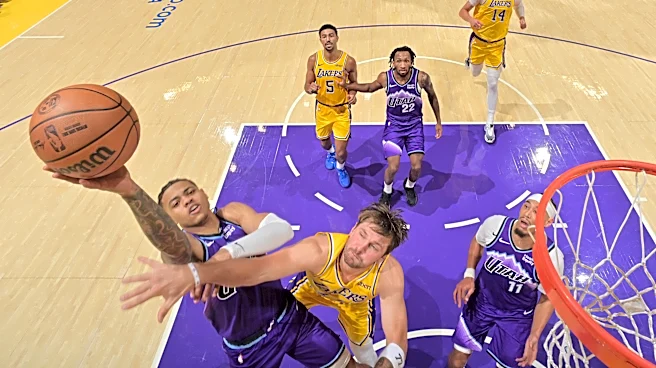
Look at a team like the Utah Jazz, who the Phoenix Suns played last night. That’s a team with an abundance of size. They were without Jusuf Nurkic, Jaren Jackson Jr., Lauri Markkanen, and Kyle Filipowski, yet still had Jaxson Hayes and Mo Bamba providing quality minutes as big men who could rebound and be an annoyance on the glass. I’m not suggesting you ship Dillon Brooks off to Utah, but that’s certainly a team that could use a culture setter right now. They looked like a collection of individuals rather than a cohesive unit, although what else can you expect from a team dealing with that many injuries?
But who knows? Who knows where the Phoenix Suns will be on February 8? After all, that’s when Brooks becomes trade-eligible after signing his extension this past offseason, only three days before the February 11 trade deadline.
At that time, they’ll be closer to getting Mark Williams back, certainly, but how much do we realistically expect him to provide in terms of rim protection when he returns? He’ll be coming off a significant injury and will likely be on a minutes restriction as the organization eases him back into the rotation. They recently committed to him with an extension, and the last thing they want is to risk any long-term consequences to his health.
So as we continue playing with our trade machines, and while disappointment may exist with the production of Jalen Green, I believe Dillon Brooks is the Suns’ most desirable asset.
Again, I have no desire to trade him at this point. There’s plenty of basketball left to be played, and we still have a lot to learn about this team. But if you’re a fan looking for ways to improve the Phoenix Suns, putting Dillon Brooks into the trade machine might be the most logical place to start. His contract, production, and presence make it much easier to understand why another organization would be interested in acquiring him. Because every team that plays the Phoenix Suns finds Dillon Brooks annoying as hell. And every one of those teams would love to have a player like him. He’s the kind of guy you despise when he’s wearing the opposing jersey and absolutely love when he’s wearing yours.
I love Dillon Brooks about as much as I love cheesy cauliflower on Thanksgiving. And if you’ve never had it, you’re missing out. Make it with Cheez Whiz. It’s delicious. Of course, you should also know that it’s one of those dishes that’ll have you farting for a week. Which, come to think of it, is pretty much how I felt about that proposed trade sending Dillon Brooks to the San Antonio Spurs. Ferrrrrrrt.