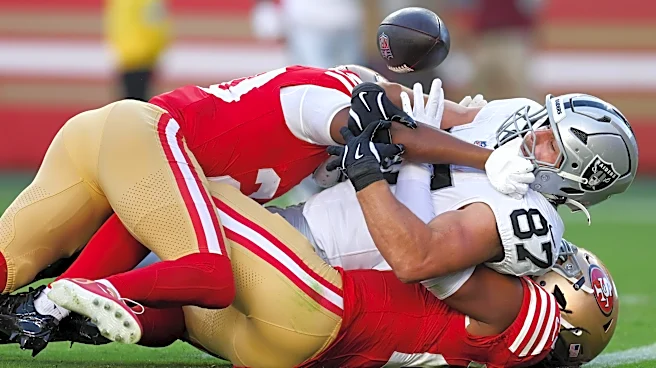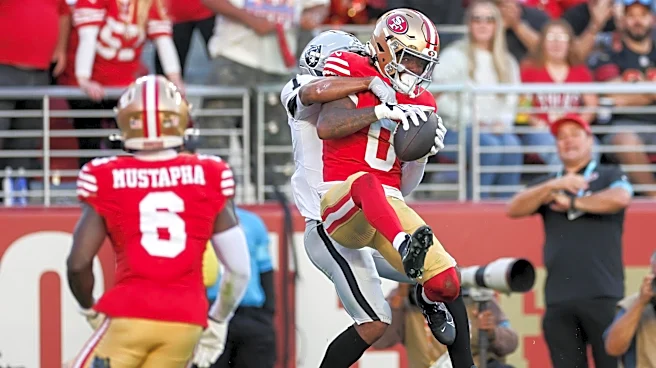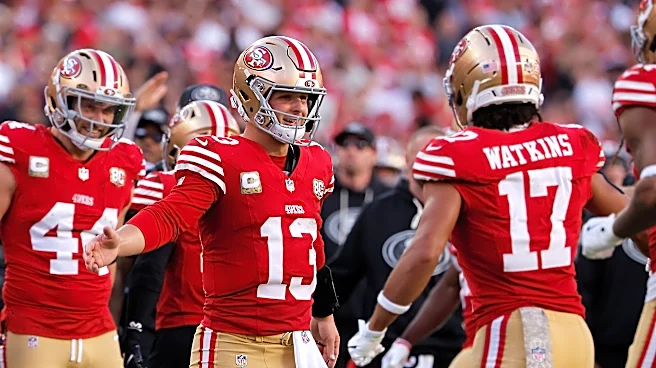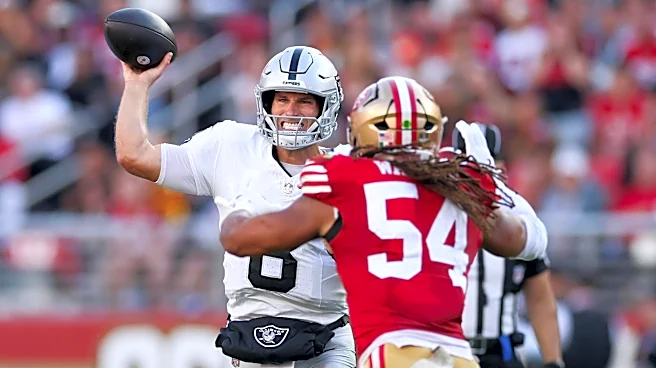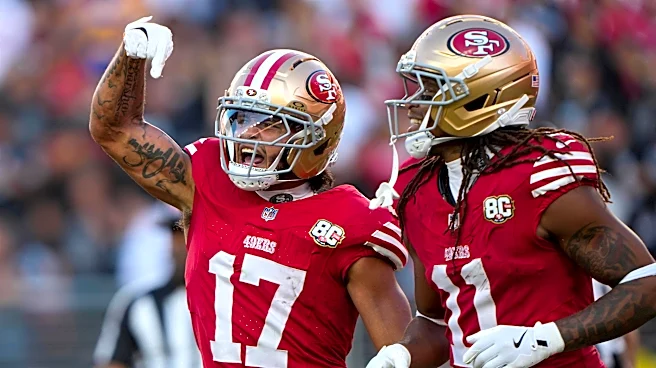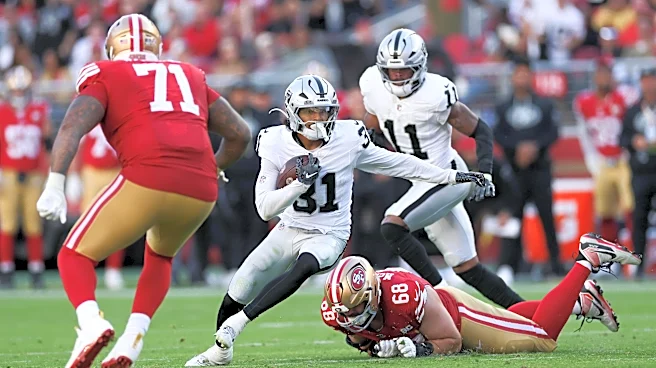

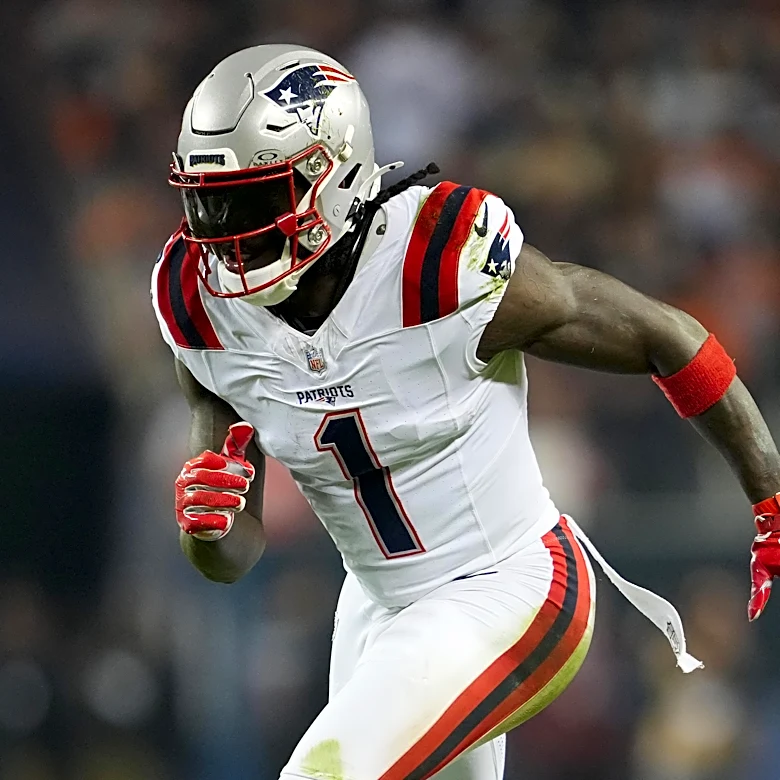

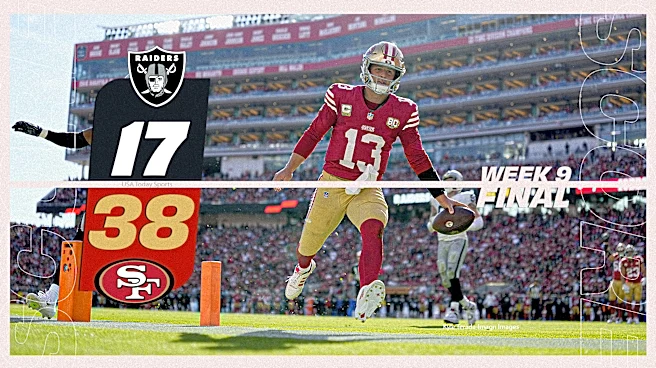
The Las Vegas Raiders’ defense is searching for answers after giving up 30 or more points for the sixth consecutive game in the Week 9 loss to the San Francisco 49ers. However, the Raiders might have found at least one solution with rookie safety Treydan Stukes.
Stukes has been playing well and getting better just about every week, and last Sunday in San Francisco was his best performance to date. The former Arizona Wildcat nabbed his second career interception (first since the season opener) and yielded
just 19 yards on five targets (four catches) while coming up with a couple of ‘defensive stops’ in coverage, according to Pro Football Focus. That was good enough to earn PFF’s fifth-highest coverage grade (85.8) among safeties for the week.
While there’s plenty to be negative about when it comes to the Raiders’ defense, let’s focus on one of the few positives and break down the second-round pick’s outing.
As the numbers above indicate, Stukes’ impact was primarily in coverage against the 49ers. But the clip against the run above caught my eye.
San Francisco comes out in 22 personnel with fullback Kyle Juszczyk as one of three strong-side tight ends initially. That’s how Kyle Shanahan likes to run 13 personnel plays/formations while keeping Juszczyk on the field. Meanwhile, the Raiders had the rookie safety cover George Kittle frequently throughout the game, so he’s on the line of scrimmage and on the strong side of the formation.
When Juszczyk motions to the weak-side pre-snap, linebacker Quay Walker signals for Stukes to stay inside so that Stukes can cover Kittle with inside leverage if it’s a pass play. The problem with that is it puts a defensive back in the C-gap, where he’s in future Hall of Fame left tackle Trent Williams’ path if the 49ers run outside zone, which is exactly what Shanahan dials up.
That’s a mismatch in the offense’s favor since a safety is taking on a block from one of (if not the) best offensive tackles in the game. However, the rookie doesn’t back down.
Stukes eyes Kittle initially, and once he reads run, he redirects to take on Williams’ block and ends up resetting the line of scrimmage by winning at the point of attack. That helps force running back Christian McCaffrey to cut upfield and right into linebacker Tommy Eichenberg for a short gain.
While Stukes doesn’t make the tackle here, he makes the play by beating a high-quality opponent in a disadvantageous matchup to force the running back to redirect into an unblocked defender. That’s pretty impressive run support from a defensive back.
But again, the safety’s impact was felt the most in the passing game. While the interception was undoubtedly the best play he made on the afternoon (don’t worry, that play is coming later), Stukes made a handful of quality tackles that kept San Francisco behind the sticks.
Here, it’s second and 20, and the Raiders line up in a two-high look pre-snap before rolling a safety down into the curl-to-flat area and running Cover 3 post-snap. Stukes is the safety spinning into the second level, and he shows some situational awareness by staying deep in his area. That does two things: it makes it more difficult to throw a pass over his head and influences the quarterback to make a short throw.
Thus, Brock Purdy throws the quick out route to the slot receiver, which is what the Raiders want him to do in this situation. That’s where Stukes’ closing speed comes in, as he rallies to the football and makes a nice open-field tackle to limit the yards after the catch. Now, San Francisco faces 3rd and 15. Just don’t ask what happens on the next play…(Purdy scrambles for 18 yards).
This time, Las Vegas starts in a one-high look and rotates into Cover 2. Stukes, playing nickelback, lines up over Kittle and is responsible for the hook-to-curl area of the coverage. Initially, the safety reads the tight end and sees the tight end chip block before releasing into a flat route, taking Kittle out of Stukes’ area/assignment. So, the rookie shifts his eyes to the backfield and starts looking for a crossing route from the other side of the field.
Meanwhile, the 49ers have their outside receiver in the trips formation at the bottom of the screen run a drag route into Stukes’ area. He sees that, parks himself at the sticks and pounces once Purdy lets the ball go. That’s where the closing speed comes in, again, as he makes the tackle just short of the sticks to put the offense in a fourth-and-short situation. That set up one of the Raiders’ few stops last Sunday.
Technically, this play is still a positive result for the offense since San Francisco gets five yards on first and 10 to stay on schedule. But considering the rookie safety’s assignment, this is still an impressive rep.
He lines up as a deep safety in a two-high look pre-snap but is in man coverage with the tight end, Kittle. Meanwhile, the 49ers run an RPO where Kittle is on a flat route against not just off coverage, but a safety playing over 10 yards off the ball. That makes Purdy’s decision easy, as he aborts the run play and just dumps the ball into the flat.
In theory, the tight end should have enough room to pick up the first down or at least set up the offense in a second-and-short situation. However, Stukes’ closing speed allows him to make contact right at the line of scrimmage despite how deep he was playing.
Now, the tackle can be better since he does allow too many yards after contact. But Kittle is one of the hardest tight ends in the NFL to bring down, so there’s no shame in that. Plus, the defense still has a decent chance to get off the field in a second-and-five situation.
Now, the moment you all have been waiting for: the aforementioned interception! What really makes this rep impressive is that the first-year pro makes a play where he shows the awareness or football IQ of a well-tenured veteran.
As we’ve seen on a handful of occasions already, Stukes starts in two-high and spins down into a Cover 3 look. Granted, the play call is a little different, where Taron Johnson blitzes off the edge for a three-deep, three-under fire zone. That means the safety essentially takes over the nickel’s coverage assignment by picking up the slot receiver, who is running a return route (out and then in).
Stukes’ eyes are the big key here. He’s staring in the backfield throughout the rep, using his peripheral vision to read the receiver’s route and match the receiver’s movement patterns step for step. So when Purdy rears back to throw, the rookie safety is able to read the quarterback’s eyes, come off his man and sink on the drag route from the other side of the field to climb the ladder and pick the pass off.
This is what happens when instincts meet athleticism, as that was one hell of a catch too. Well done, rook, well done!