

Thanks to the nflFastR project, Pro Football Focus for the timely sources of data.
For those of you new to this, I will publish key QB stats each week judging how well the Colts’ QB performed. Yes, O-Line, receivers, and play-calling impact these numbers but they are primarily QB measures. I will probably modify the charts throughout the season. Commentary will be brief but feel free to let me know in the comments that stats aren’t everything. (click charts for larger view)
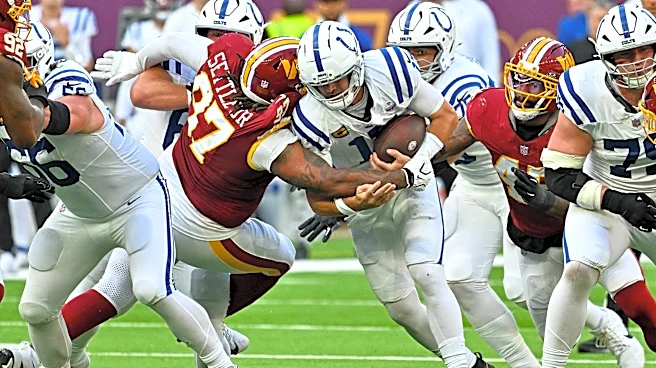
That first quarter—and most
of the second—may very well have been the worst performance I’ve ever seen from a starting quarterback. Jones improved as the game went on, but not nearly enough to climb out of the bottom tier of quarterbacks in Week 4.
HOW WELL?
mouseover definitions: arsr, edp, sg%, oz%, pr%, tip, ttt, adot, ay/c, yac, yacoe, yd/c, ac%, cpoe, aypa, drp, scr%, ta%, sck%, aa%, ny/d, ny/p, 1st%, td%, to%, qbsr, epa/p, adj/p
- Indianapolis got excellent production from its running game while leaning towards the pass on early downs. (2nd ARSR; 13th EDP)
- Jones faced about an average amount of pressure, but only because he got the ball out very quickly, which means the O-line really let him down this week. (17th PR%; 30th TIP; 29th TTT)
- He had the shortest attempts in the league (3.8 yards), and even his completions produced very little yardage either through the air or after the catch. (32nd ADOT; 28th AY/C; 22nd YAC; 32nd YD/C)
- His 67.9% adjusted completion rate may sound good but given the depth of throws it was lower than expected. Combine that with the poor yards after the catch and he was near the bottom of the league in production per attempt. (20th AC%; 26th CPOE; 30th AYPA)
- Jones didn’t scramble at all, but he had to throw the ball away five times so maybe we should be glad he only had an average sack rate ( 28th SCR%; 1st TA%; 16th SCK%)
- Once all of those abandoned plays were incorporated, the passing game produced almost nothing on a play-by-play basis. (31st NY/D; 31st NY/P)
- Jones could not move the chains so its no surprise that he ended with just a single touchdown (29th 1ST%; 20th TD%)
- Turnovers were again another major problem. Jones threw an interception and lost a fumble off a sack giving him one of the highest turnover rates this week. (4th TO%)
- Overall, this wasn’t just a couple of disastrous plays dragging down an otherwise decent game. Jones produced a successful play on only 34% of his QB plays, while the sack-fumble and interception added two particularly costly negatives. He finished near the bottom of the league in both consistency and overall value. (29th QBSR; 28th EPA/P)

Jones simply didn’t generate enough through the air. The short passing game produced very little yardage, and below-average completion production pushed the offense even farther down. The only way to make that situation work is to boost first downs by avoiding sacks and turnovers, but that didn’t happen happen.

Jones had a brutal start, producing only one positive value play in the first fourteen, including two turnovers. It was near the end of the 2nd quarter before he started digging himself out of the hole and if we only look at that point forward, then he had a decent game. But the first half counts and his numbers never recovered from how poorly he started the game.

Jones’ season is moving in the wrong direction. After a poor Week 1, he rebounded in Week 2, but that improvement didn’t last—falling sharply since then. All four measures are now trending downward, with both his consistency and overall production deteriorating.
HOW FAR?

The slow start really stands out here as well. Jones completed some passes early, but almost everything was underneath and produced very little. He eventually found a little more downfield production, but never established a long sustained rhythm that might have saved an overall ineffective passing day.

Jones went extremely short in Week 4, with both his target depth and the depth of his completions falling off a cliff. More importantly, this wasn’t just a one-week blip—the recent trend has been steadily toward a shorter passing game.

I’m going to leave the same comment I did last week: Jones passing short is fine, but not making up for it with YAC and a high completion rate is not.
TO WHO?

Laquon Treadwell led Indianapolis with 42 receiving yards (if you can call that leading), with Tyler Warren right behind him at 41 receiving yards.

Downs leads the team in receiving yards, with Warren and Treadwell fairly close behind. Warren has generated much of his production after the catch, while Treadwell’s yardage has come more from deeper completions.

Most of Jones’ receivers produced below-average value per target in Week 4, and most of that production also came on shorter throws—clustering them in the quadrant I like to call, “the worst quadrant”.

Season-wise, the numbers spread out about how you would expect although I would really like the Colts to get more high value passes to Warren.
HOW ACCURATE?

Jones posted an average completion rate, but with such a short average depth of target, he should have been completing passes at a much higher rate—indicating another below-average week for accuracy.
HOW FAST?

Jones’ time to throw was the quickest it’s been over the last 18 weeks, largely because the pressure forced him to get the ball out quickly. Even with an extremely short passing game, he is still releasing the ball much faster than expected for the depth of his throws. I’d like to say that is because he is processing the game quickly, but its more because he is forced to.
TO WHERE?

Jones struggled on both the short throws under 10 yards and the deep passes beyond 20, but he found some success in the intermediate 10-to-20-yard range.

Maybe by the end of the year, there will be more green.