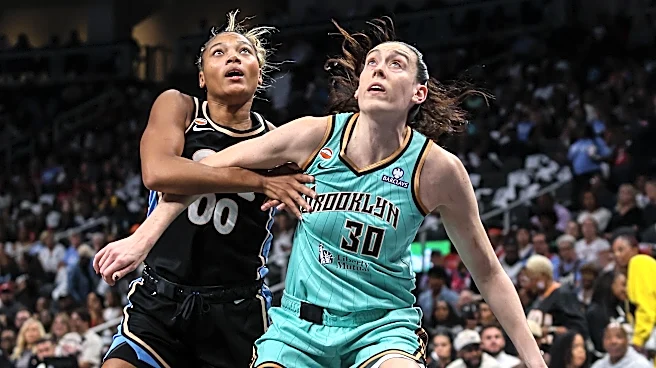



The New York Liberty’s 2024 WNBA season was an unqualified success, as the franchise finally won it’s long-sought first championship.
The repeat bid in the 2025 season was deemed a failure, as an up-and-down regular season led to a fifth-place finish and first-round exit.
What about the 2026 season?
New York extended their postseason stay beyond the first round, sweeping the No. 1-seed Minnesota Lynx to improve upon last season. They also won the Commissioner’s Cup, going undefeated in group play before
besting the Las Vegas Aces to become the first two-time Cup champions in WNBA history.
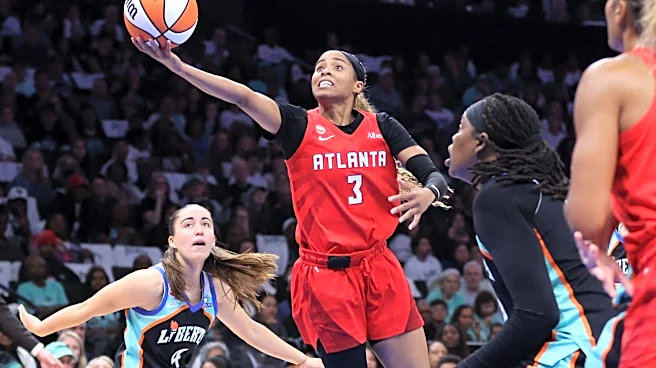
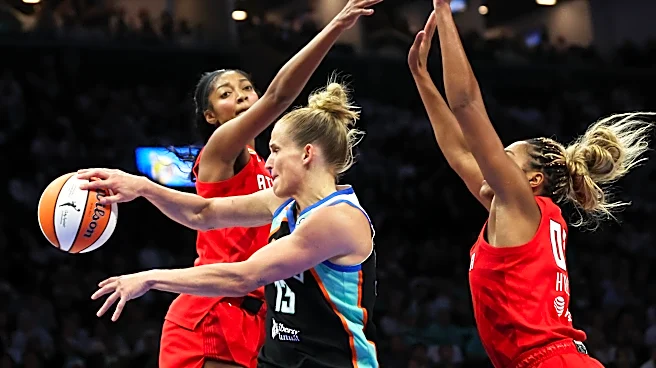
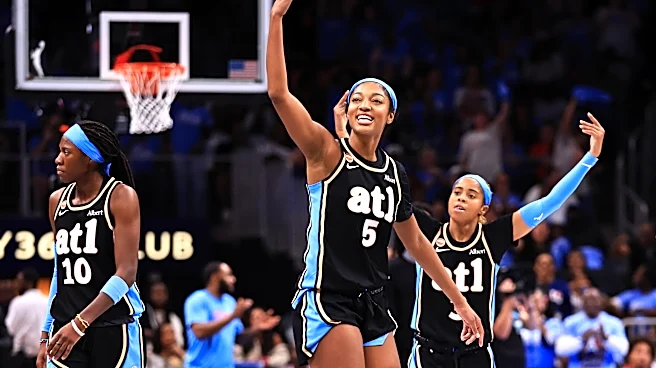
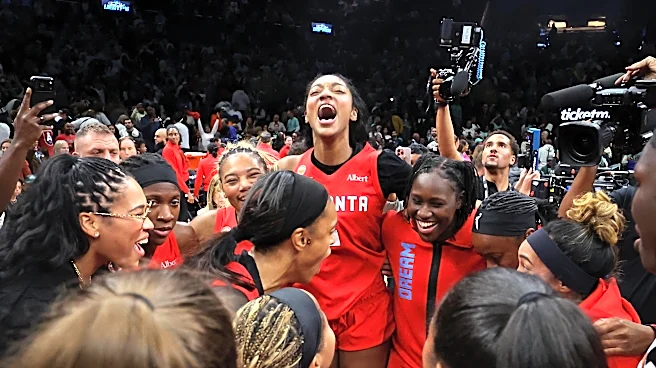
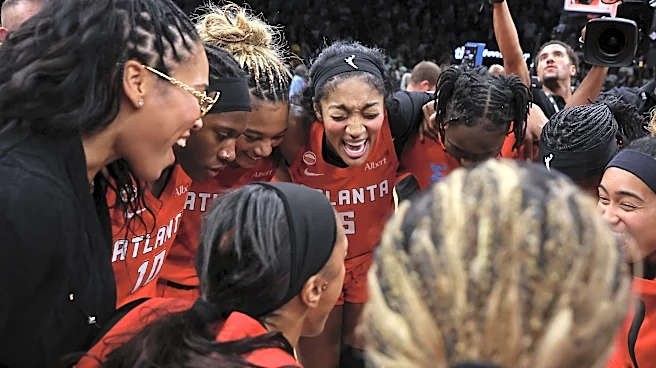
And yet, the Liberty’s first-round victory was history-making because they were the No. 8 seed, bedeviled by an injury-plagued an inconsistent regular season. Then, they were swept out of the second round, ousted in three games by the Atlanta Dream.
How will general manager Jonathan Kolb evaluate his team’s season?
After last season’s playoff disappointment, he dismissed championship-winning head coach Sandy Brondello, insisting the decision was “rooted in being proactive” because he had determined “evolution and innovation is what is needed.”
Did the 2026 Liberty fulfill his vision, evolving in a way that is innovative, bold and forward-looking? Or, did attempts at innovation instead result in stagnation or, worse, regression?
Kolb and the other Liberty decision makers could convince themselves of either assessment.
He could endorse the decision he made last offseason, insisting that making sure New York remains a sustainable winner is not a single-season project, especially when that season is marred by injuries. In particular, the continued concussion issues experienced by key free agent addition Satou Sabally prevented New York from ever being the team that was built.
Alternatively, even among all that did not go right for the Liberty, did things still trend sharply enough in the wrong direction to suggest that another offseason renovation is required?
Based on Kolb’s priors and preconditions, I think the latter perspective—no, the Liberty were never whole, but the mostly incomplete version provided more than enough evidence that more change is needed—has to be understanding with which he approaches the offseason.
And while there are plenty of things that should, could and can change in order for the Liberty to re-establish themselves at the top of the league, Kolb’s process, again, should begin with his head coach.
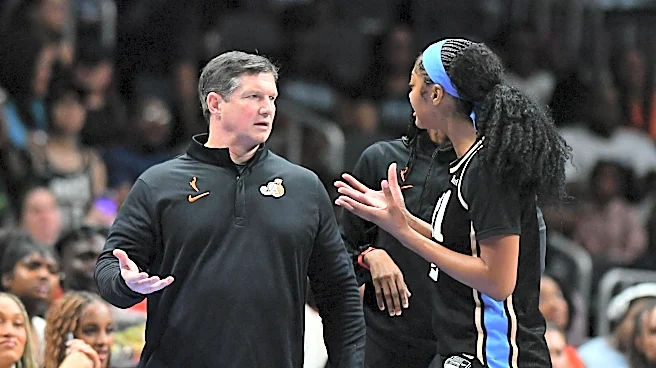
Does Chris DeMarco have what it takes to re-establish the Liberty as championship contenders?
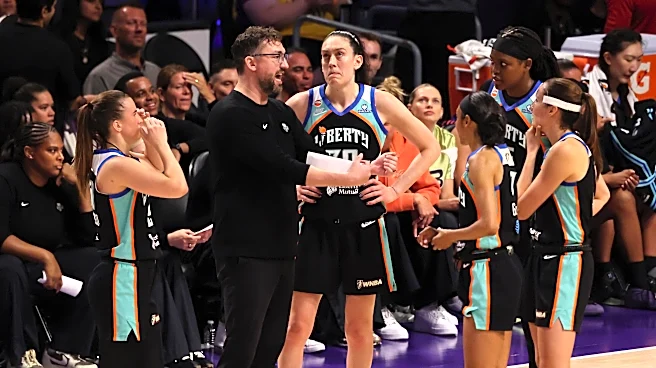
After the Dream eliminated the Liberty on Friday night, head coach Chris DeMarco was asked if he expected to return next season, succinctly asserting, “Yes.”
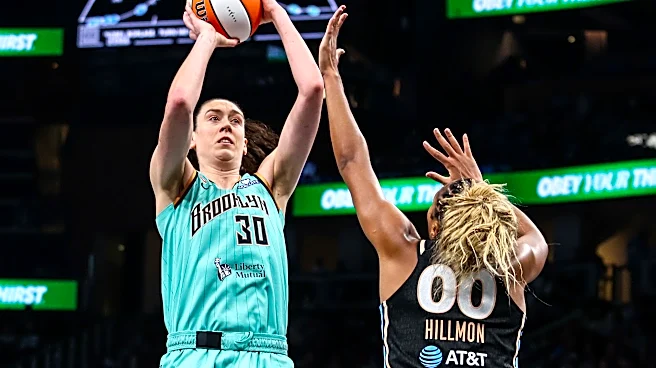
The three pillars of the franchise—Breanna Stewart, Jonquel Jones and Sabrina Ionescu—also were asked to evaluate their coach, and the endorsements were not ringing.
Ionescu suggested it was “a really tough question to answer right now,” while Jones noted “that’s not our say.” Stewart echoed her teammates, saying that it was “tough to talk about that,” and that “those decisions aren’t ours.”
Those perfunctory responses, of course, represent a sharp contrast to the strong support the players issued for Brondello after the end of last season.
Stewart, expressing shock that Brondello’s future was even being questioned, insisted, “She has our back and we have hers,” as Ionescu likewise indicated her irritation at the question.
As noted above, the Liberty team DeMarco was hired to coach never came to fruition due to things beyond his control. A preseason injury derailed the start of Ionescu’s season, Leonie Fiebich was sidelined for a significant time with a foot injury and, most critcally, Sabally essentially experienced a lost season. Not only was she limited to 13 games, but she started only five games, playing more than 20 minutes in just three of them.
Yet, the Liberty entered the season as title favorites not just because they had signed Sabally, but because they were perceived to be the deepest, most complete team in the league.
Injuries and absences required DeMarco to rely on his whole roster, which could have been opportunity to turn the team’s misfortunes into advantages, equipping the Liberty with an understanding of all the options that could be deployed to meet the demands of tightly-contested games, especially in the playoffs.
Yet, DeMarco seemed manage his rotations and lineups in ways that were random, reactive and contingent. The fluctuation of minutes and opportunities were not experiments that facilitated a better understanding the strengths, weaknesses and potential of different combinations, but an aimless search for something.
This searching continued into the playoffs, most illustrated by Marine Fauthoux’s sudden emergence as a seemingly essential player in the semifinal series against Atlanta.
During the regular season Fauthoux, a 25-year-old rookie who began the season on a development contract and was elevated to a standard contract in early August, featured in 21 games and played 260 minutes, playing around 12 minutes per game in her appearances. She averaged less than five points, just under two assists and two boards per game as she shot 41 percent overall and 30 percent from 3.
After playing two minutes in the first-round sweep of Minnesota, she saw 12 minutes in the Liberty’s Game 1 semifinal loss to the Dream, not committing a turnover for a New York team that had been struggling with ball security.
Her steady hand then earned her over 30 minutes in Games 2 and 3, all but officially usurping Pauline Asiter, the team’s other rookie point guard from France who had put together an All-Rookie-worthy regular season and outplayed Rookie of the Year Olivia Miles in the first round.
Sure, coaches must be willing to adapt, responding to the pressing situations of short playoff series. But becoming suddenly dependent on a player who spent most of the season on the bench? That’s a bit extreme, and kind of insane.
Meanwhile, Marine Johannès, Han Xu and Rebekah Gardner, all of whom played in 40 or more regular-season games, were winnowed from the playoff rotation. Additionally, the now-retired Rebecca Allen, who was featured for almost 20 minutes per game when healthy, likewise was left on the sidelines.
Based on how the series with Atlanta played out, it’s difficult to imagine any of those players would have been a difference-making solution; heavily relying on Fauthoux might have been the best option.
The issue, however, is that the DeMarco and the Liberty appeared unprepared to combat the challenges the Dream presented—something more concerning than the reset timeout misunderstanding at the end of Game 2. (To be fair, the reset timeout is a still new and probably not addressed in all the books DeMarco read about the WNBA.)
The solution, instead, was the “Stewie, save us!” button.
And after the fact, Stewie, nor Jones or Ionescu, seemed particularly inclined to save DeMarco.
That’s up to Kolb. Last year, he did not agree with the players’ perspective of Brondello and, in turn, they’ve made clear that DeMarco’s status is his decision.
DeMarco’s first season did little to inspire confidence in the idea that he is the head coach who can fulfill Kolb’s stated goal of “pushing the New York Liberty to new heights.” But if he were to move on from DeMarco after just one season, Kolb would have to be willing to implicate himself.
Can Kolb admit he was wrong in order to get the Liberty back on the right track?