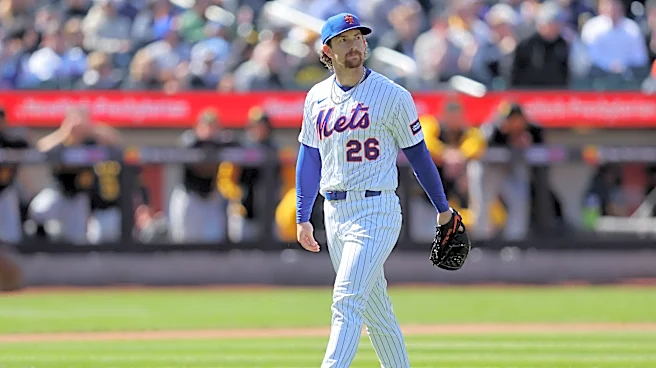





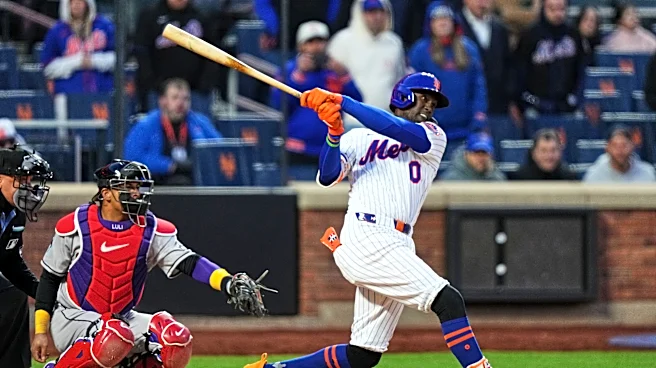
After a less-than-encouraging series to start the homestand, the Mets (7-6) will try to conclude on a higher note as they welcome the Oakland Sacramento Athletics (5-7) to Citi Field. The two teams squared off in California last April, with New York besting the A’s in two out of the three games.
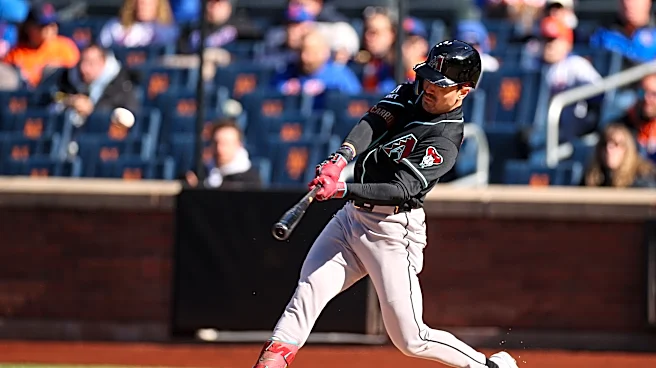
The weather was cold, and the Mets’ bats were colder in a series loss to the Diamondbacks in which they won the first game 4-3 in walk-off fashion but fell 7-2 on Wednesday and 7-1 on Thursday. Tuesday’s win
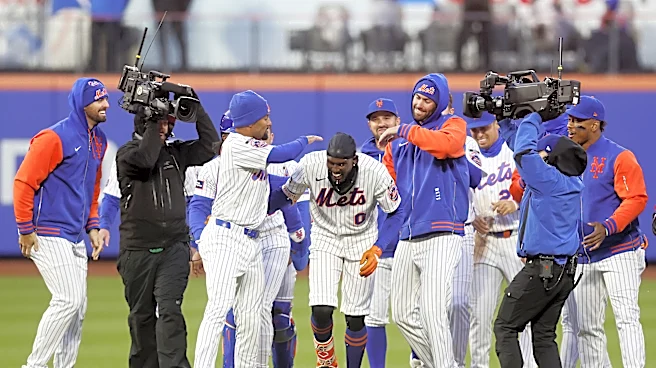
saw the Mets jump out 2-0 by the second inning before their bats disappeared until the eighth. Arizona put up a three-spot—aided by an ABS challenge overturn that directly led to the three runs—in the fifth, but the Mets scratched out a run on a sacrifice fly in the eighth to knot up the game. That set the stage for Ronny Mauricio to play hero, as Juan Soto’s roster replacement lined a single in the tenth in his first at-bat of the year to give New York the win.
The good vibes were shortlived, as the team appeared lifeless in their loss on Wednesday afternoon—like on Tuesday, this game was moved up to 4:10pm to deal with cold conditions, in front of a sparse and bundled-up crowd at Citi Field. David Peterson allowed five runs through the first two frames, and New York really could not recover. Sean Manaea was mostly solid in relief, but gave up two runs on a ball that Luis Robert Jr. dropped in the ninth. Nolan McLean took the mound on Thursday and was dominant, allowing just one hit through five and pitching into the seventh. However, with a 1-0 lead and two runners on, he was removed in favor of Luke Weaver, who had his first rough outing as a Met as he blew the lead and allowed four runs—two charged to McLean, and two charged to his ledger. Luis García allowed three in the eighth to put the game well out of New York’s reach.
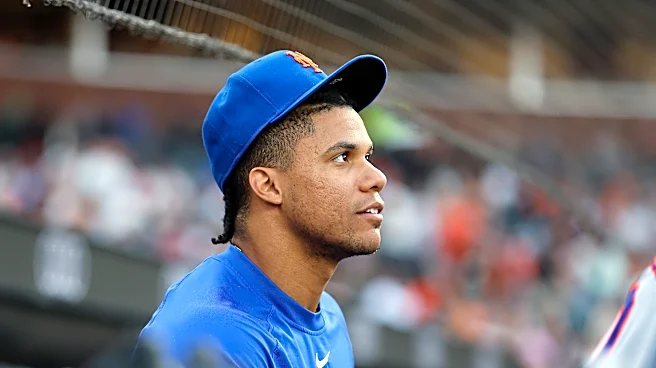
The returns so far in Soto’s absence has been mixed. After an offensive outburst in the 2 8/9 games he missed in San Francisco, the Mets’ lineup looked listless. Some of it could likely be attributed to cold conditions and a lack of enthusiasm from the crowd, but it’s also hard to deny that the lineup generally looks a lot emptier without Soto’s bat in the lineup. With guys like Francisco Lindor continuing to struggle, and Jorge Polanco missing some time due to his achilles, it’s putting a lot of pressure on newcomers like Robert and Bo Bichette to pick up the slack, and an added burden on youngers like Mark Vientos, Brett Baty, and Francisco Alvarez to become impact bats in the lineup.
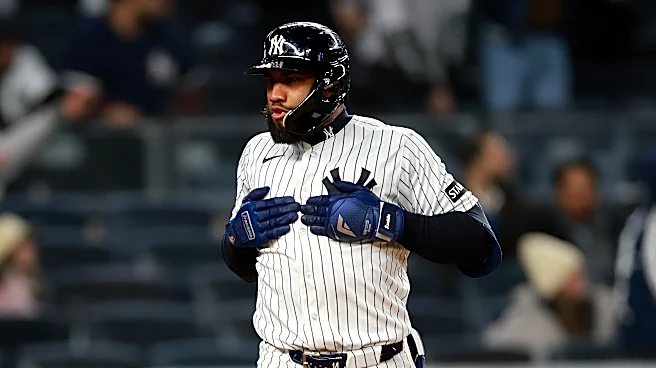
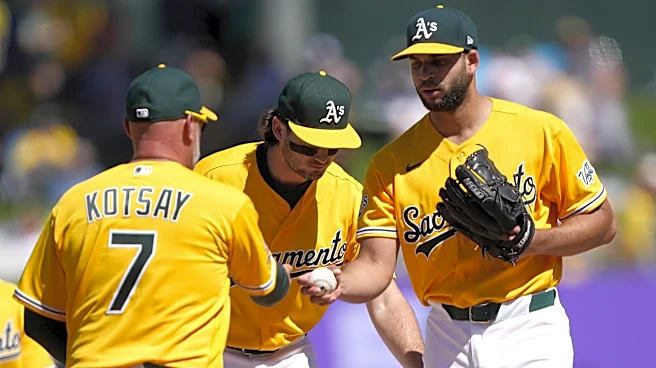
The A’s are coming off a series win in the Bronx, as they took two out of three from the Yankees. This follows a series in which they took two of three at home from the Astros. They did so in vastly different ways: They used offense to topple Houston, winning by scores of 11-4 and 12-0 (while losing the middle game 12-0), while their pitching excelled at Yankee Stadium, with 3-2 and 1-0 wins after losing the first game 5-3. The former should be no surprise, given how offense-friendly their temporary home ballpark has proven to be.
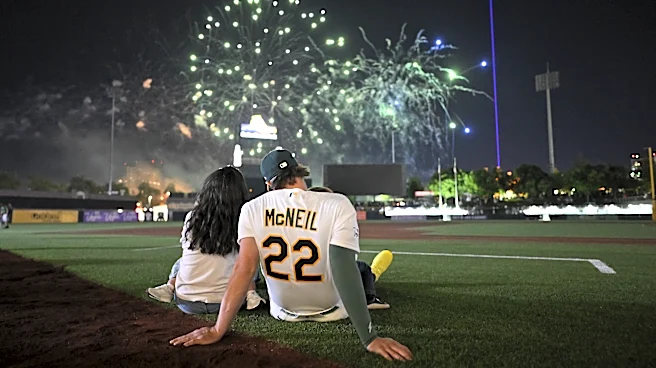
Shea Langaliers has gotten off to a torrid start this season for the A’s, slashing .289/.333/.644 with a 182 wRC+ and a 0.6 fWAR in 48 plate appearances. Among qualified American League bats, he’s 11th in wRC+ and tied for 15th in fWAR. Meanwhile, his five home runs are tied for the league lead, while his .978 OPS is 11th in the league, just ahead of teammate Max Muncy. Speaking of Muncy, he has a 161 wRC+ and a 0.4 fWAR in the same number of plate appearances, with two home runs and a team-leading 11 runs scored. Checking in on old friend Jeff McNeil, he has a 92 WRC+ and 0.1 fWAR in 35 plate appearances so far in his new home, and has a .258/.343/.290 slash line so far.
Friday, April 10: Clay Holmes vs. J.T. Ginn, 7:10 PM EDT on WPIX
Holmes (2026): 12.2 IP, 9 K, 5 BB, 1 HR, 1.42 ERA, 3.98 FIP, 39 ERA-
Holmes hurled seven shutout frames in his last outing as he earned his second win in as many starts this season. He was efficient with his pitches, throwing 90 across the seven frames, with 61 of them (68%) going for strikes. He issued two walks and struck our four, and he limited San Francisco to just three hits in the win. Holmes continues to excel as a starter, and he’s once again been one of the anchors to the team’s rotation early on in the season.
Ginn (2026): 7.0 IP, 4 K, 2 BB, 1 HR, 5.14 ERA, 4.76 FIP, 120 ERA-
Ahead of the 2022 MLB season, J.T. Ginn was ranked as the team’s No. 6 prospect on Amazin’ Avenue’s prospect rankings. Then the Mets traded him during that spring training in a package for Chris Bassitt, and Ginn has been in the Athletics’ system ever since, breaking through with the team in 2024. He spent much of the last two seasons oscillating between reliever and starter but he’s made all three of his appearances as a reliever this year before his spot start on Friday. He did make his first start of 2025 against the Mets as well and earned the victory (the second of his career), as he hurled 5 1/3 inning of one-run ball with six strikeouts and two walks.
Saturday, April 11: Kodai Senga vs. Jacob Lopez, 4:10 PM EDT on SNY
Senga (2026): 11.2 IP, 16 K, 5 BB, 0 HR, 3.09 ERA, 1.73 FIP, 85 ERA-
Senga returning to form has been one of the highlights of the early season, and a much welcome sight for a team that was debating trading the right-hander over the offseason. The right-hander threw five shutout innings his last start and was prime to finish up six shutout frames before running out of gas during his last two batters. He finished up with 5 2/3 pitches, allowing two earned runs on five hits, with two walks and seven strikeouts. It’s still early, but signs have been very positive, dating back to spring, that Senga is back to his old self, and if he can stay healthy, he should continue to find success the way he’s been throwing.
Lopez (2026): 8.1 IP, 6 K, 10 BB, 1 HR, 6.48 ERA, 6.90 FIP, 151 ERA-
Lopez is coming off the best year of his young career, finishing with a career-best 1.1 bWAR and finishing 2025 with a 4.08 ERA in 21 games (17 starts). However, he’s gotten off to a rough start this year, and it’s easy to point to the main culprit. Lopez has walked six batters against just six strikeouts in his two outings. In fact, in his first start, he walked five without striking out a batter, and then followed up that up with five more walks. Across the two starts, he’s thrown just 53% of his pitches (97 out of 183) for strikes. He will need to improve his control if he wants to get his season back on track.
Sunday, April 12: Freddy Peralta vs. Aaron Civale, 1:40 PM EDT on SNY
Peralta (2026): 15.0 IP, 19 K, 5 BB, 2 HR, 4.80 ERA, 3.59 FIP, 133 ERA-
Peralta’s final line his last time out wasn’t as bad as it looked (4 2/3, three earned runs, three hits, three walks, five strikeouts) as he pitched four scoreless frames before tiring out in the fifth and failing to record the third and final out of the fifth. His ledger may have remained clean—he exited having allowed no earned runs with two outs in the frame—but a successful ABS challenge overturned an inning-ending strikeout and immediately led to the three runs scoring. Peralta also was less than efficient, needing 101 pitches to get through the outing and struggling with a high pitch count and deep counts from the first inning, which did not help his cause.
Civale (2026): 10.0 IP, 9 K, 5 BB, 2 HR, 2.70 ERA, 5.49 FIP, 63 ERA-
Civale has gone five innings in each of his two outings so far and has had mostly strong results. His first time out, he earned the win against the Braves, allowing two earned runs on four hits, with one walk and three strikeouts. He followed that up by allowing one earned run on two hits in a no decision against the Yankees. However, in that start, he walked four which was less than ideal, though he did also strike out three batters.