







Amid college athletics scramble for money to pay top football and basketball players, others have paid the price. Arkansas cut their men’s and women’s tennis programs, UTEP cut their women’s tennis program, and Cal Poly cut their men’s and women’s swimming programs. The reason is obvious. Those sports lose money — money that can be used to help win in the sports that drive fan interest and thus revenue.
This a trend, not just a few cherry-picked examples. A lot of sports programs that bleed money
have been eliminated.
While many may decry this, it is the natural realignment after years of price controls artificially taking money from those who generate revenue and giving it to those who do not. College athletics have been shielded from reality for years as amateurism prevented massive household names like Deshaun Watson, Jameis Winston, and Derrick Henry from getting paid fairly.
Conversely, over in Columbia, Women’s Basketball Coach Dawn Staley wants more than 5% of the rev-share:
“I don’t know what it’s going to be. I’m hearing 75%, 15%, 5%, 5%. I’m hearing that. I don’t know what it’s going to be, but I think we need to be a little more generous than 5%. That’s my feel on it. I’m going to scream to the top of my lungs because of who we are.”
Which brings us to our real question.
What’s the Point?
College athletics are in part charity, but in larger part a sports entertainment product. They’re a charity to the extent that they mold young men and women into productive adults by teaching them lessons that go beyond sports. This has long been a motif of Coach Swinney’s Clemson football program and is laudable. It is also a charity to the extent that donations and football revenue pay for scholarships for athletes playing sports that lose money — like Gamecocks Women’s Basketball.
It is more so a pro sports entertainment product though. And to that I ask you, when is the last time you bragged that the Braves (or insert your favorite pro team here) made a bigger profit than their rival? Did you brag when the Carolina Panthers got a $5.7 billion valuation? No, you don’t care. You care about winning. It’s with that in mind that I posit WOI or “Wins on Investment” is the ultimate metric for college sports programs.
Wins on Investment
Obviously, athletic departments need to remain financially viable and thus raw profit matters to an extent. They can’t simply spend $50 million they don’t have, win a title, and go bankrupt, but beyond that, donors, fans, and alumni care about winning. Now, donors can pour their money into rosters to help coaches build winners.
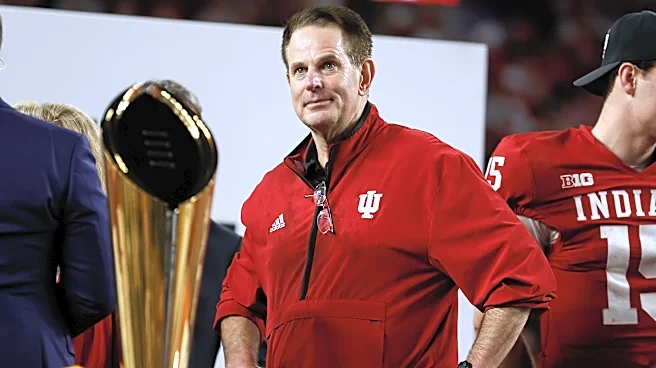
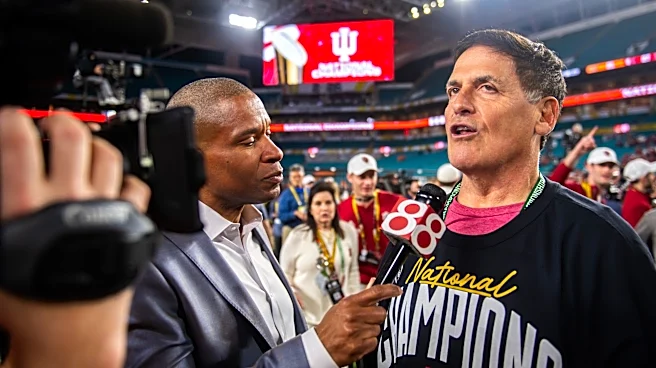
Funding by billionaire alumni Mark Cuban (net worth of ~$6 billion) played a major role in Indiana landing key pieces from the transfer portal and winning a National Title. Not only did the roster investment deliver wins. I don’t presume Mark Cuban saw a penny of ROI on his investment; however he was surely thrilled with the WOI.
Texas Tech found similar success thanks to the investments of former TTU O-linemen Cody Campbell. On3’s Pete Nakos reported that Texas Tech spent $28 million in NIL money in 2025. They went 12-2, earning double-digit wins for the first time since 2008 under Coach Leach, won the Big 12 and made the 12-team playoff. They were fortunate to get an influx of money, and importantly, they spent it well. Cody Campbell was likely pleased with the WOI even though he didn’t get a penny of ROI from it.
On the flipside, Kentucky basketball spent a reported $20 million and only won 19 regular season games. That’s over a million dollars in roster investment per regular season win. They wound up with a 7-seed finishing their season in the Round of 32. So not all roster investments deliver a good WOI.
Here’s where things get funky. Not only are roster investments unpredictable, but the subjective value of winning a football game or a women’s basketball game varies from one fan and donor to the next. If South Carolina wants to invest millions into their women’s basketball roster and make a run to the national championship, they may say it delivered memorable experiences and amazing moments for their fan base. At the same time, if someone says they’d rather take all that money and put it into their football program so they can beat Clemson, they’re not wrong either.
This awesome graphic from Sarah on X speaks to the dilemma (look closely at the signs).
From the best accounts I can cobble together, Clemson spent likely over $20 million on their football roster last season. Clemson basketball was closer to $6 million. The football team went 7-5 (regular season only) with 5 wins over P4 competition. Clemson basketball finished 22-9 with 17 wins over top 200 competition. Some quick math will show that it cost the football roster $4 million dollars per P4 win while it only cost $350,000 for each top 200 win by the basketball team.
How much do you value those wins? There are fewer football games and more eyeballs on each one so they surely mean more than basketball wins, but 10x more? Many Clemson grads only follow football so for them the answer would be an obvious yes. While my heart wants to say that’s sillyand wrong, I’m not so different.
I’m on a text thread with other writers for this site and they celebrate Clemson softball and lacrosse wins with genuine vigor. To me, a basketball win is easily worth 10x a win in a sport I don’t follow. So how can I judge?
In the end though, proper evaluation of coaches and programs should look at how efficient they were with their resources which is Wins on Investment (WOI). Of course, those wins will be valued wildly differently by everyone, but it’s up to the administration to determine how to value those wins and then how to maximize their WOI for each program.
Kentucky basketball may have been a 7-seed who won a tournament game, but Clemson delivered a vastly superior WOI by earning an 8-seed and Round of 64 appearance with a roster that cost 30% of what Kentucky spent. This is the name of the game and the metric for which coaches and programs must be judged.
Clemson football has resources to do big things. Now it is time we see some WOI on that big investment.