




For Sunderland, Alan Brown kept faith with Nic Sharkey up front, despite calling expensive mid-season signing Andy Kerr (along with Cec Irwin) down from Sunderland to link up with the team that played so well at Swansea two days earlier. Colin Nelson continued at right-back despite Irwin’s presence in the squad. The team retained a settled look to it despite the hectic three-games-in-seven-days schedule.
Sunderland went into this game in second position in Division Two on fifty points. Stoke were
top on fifty-one points but having played one game less. Chelsea and Huddersfield were tied in third and fourth position on forty-eight points, but the Terriers had a home game with lower-table Portsmouth this same evening. If they won and Sunderland lost they would go up to second place.
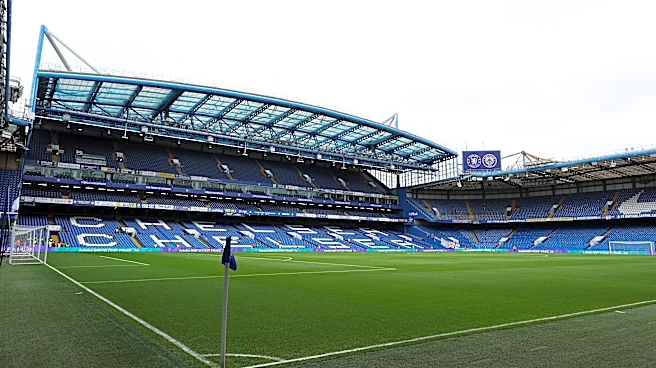
Chelsea were not playing and, after playing Sunderland at Roker Park the following Saturday, would then play Portsmouth at Stamford Bridge in what looked like a promotion decider. It was extremely tight at the top.
Sunderland arrived at this game unbeaten in four games with two wins and two draws. Johnny Crossan was in rich goal-scoring form with six goals in the previous three games.

Luton were fighting for their Second Division lives alongside Charlton and Walsall and needed the win to at least take their fight into the last game of the season.
In young striker Ron Davies, Luton had a forward of great potential and profound heading ability. The Welsh youngster would go on to be top goalscorer in Division One for Southampton from 1966 to 1968 and, despite Luton’s eventual relegation this season, he scored twenty-one goals in thirty-two games!
There was a healthy 16,000-plus crowd at Kenilworth Road, augmented by Chelsea manager Tommy Docherty and his Chelsea team.
Any doubts Alan Brown and his team had about the tactics of Luton manager Bill Harvey and his side were quickly put to bed in the opening five minutes of the game, with Montgomery, Sharkey, Herd and Anderson all sent crashing to the turf as Luton attempted to muscle Sunderland out of the game. This tactic had worked in the past against Sunderland for Luton and they had handed out some rough beatings in recent years, but this Sunderland team had grown into a hard-fighting unit with no small amount of skill to complement their pugnaciousness under Alan Brown and would not be bullied out of the game on this evening.
Sunderland’s defence, with Hurley and McNab in particular, played a hard, decisive match and restricted Luton’s forwards to an occasional long-distance shot or two.
Stan Anderson, arguably player of the match, provided the link between defence and attack and a stream of well-placed inviting passes for his forwards, despite some targeted rough treatment from the Hatters.

Sunderland’s front five were eager for action in this game, with Sharkey, Crossan and Mulhall in grand fettle for the fight.
The game had seen Sunderland cause ructions in the Luton box with several corners and free-kicks aimed at “back-post Charlie” (Hurley) and though none had led to a goal, it seemed only a matter of time before the deadlock was broken.
A goal did come on twenty-one minutes but not from where watching fans and the Luton defence might have thought.
Another corner-kick saw Hurley racing into the back-post area and dragging a number of defenders with him. Young winger Jimmy Davison, spotting the melee, dropped his kick short to Nic Sharkey about twelve yards out at the front post. The little Scot connected with a ferocious header that, even though Luton goalkeeper Baynham got a hand to the ball, he could not keep from billowing the back of the net.
Sunderland continued to dominate the game, playing sharp, fast football despite the effort and grunt of the overworked Luton defence.
If there was a concern for Alan Brown going in at half-time, he might have wished for another goal given all the Black Cats’ dominance.
Luton came out with real purpose in the second half and within thirty seconds of the restart found themselves two goals down!
From the kick-off Anderson lobbed a dangerous-looking ball down the centre of the park. Sharkey, belying his height, climbed well to challenge half-back Kelly and the ball spun awkwardly to Luton full-back Daniel. He took a swipe at the ball but did not get a clean connection and it flew to George Mulhall moving menacingly into the box. Daniel dropped off attempting to cover the run of the winger with one of the hardest shots in the division. Mulhall spotted this and, using the full-back as a shield, glided a shot goalwards that Baynham saw late. The ball bounced underneath him as he dived and Sunderland went two goals in front.

Luton continued their roughhouse tactics but Sunderland were coping well and dominating possession.
Six minutes from the final whistle the Lads got a third goal their play deserved – and a cheeky goal it was!
Having beaten off another Sunderland attack and with the ball up the other end of the park, half-back Kelly bent down to tie his bootlace. Spotting this, Nic Sharkey delayed his retreat and was lurking with intent when spotted by Anderson, who placed a forty-yard pass into the space between Kelly and his keeper. Sharkey swooped onto this and blasted a right-foot shot past the ex-England keeper Baynham for Sunderland’s third goal of the game to put the seal on a very good performance.
The watching Chelsea team and manager had just witnessed a very different side to the one they had beaten at Stamford Bridge back in September and they must have left Kenilworth Road wondering how they were going to stop Sunderland in front of a full house at Roker Park.
This result moved Sunderland up to first position and with Huddersfield fluffing their opportunity in a three – one defeat at home to Portsmouth, it left a three-team race for the two promotion places between Stoke, Chelsea and Sunderland going into the last weekend of the season.
Argus, writing in the Hartlepool Northern Daily Mail, reported: “Sunderland are not there yet. They need at least one point out of Chelsea on Saturday to make sure. But the manner in which they stormed to a clear-cut triumph over Luton Town at Kenilworth Road last night after their great performance at Swansea (4 – 3 win) offers the assurance that they are in the right frame of mind.”
It was all to play for the following Saturday at a packed Roker Park against Docherty’s Chelsea.
Division Two
Date – 13.05.1963
Venue – Kenilworth Road
Attendance – 16,419Luton 0 – 3 Sunderland
Goal scorers – Sharkey 21 & 84 minutes; Mulhall 46 mins.
Luton – Baynham; Daniel; McNally; Morton; Kelly; Bramwell; Clapton; Turner; Davies; McGuffie; McKechnie.
Sunderland – Montgomery; Nelson; Ashurst; Anderson; Hurley; McNab; Davison; Herd; Sharkey; Crossan; Mulhall.