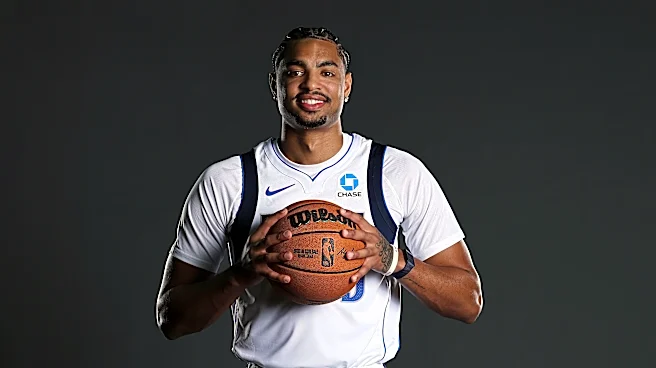


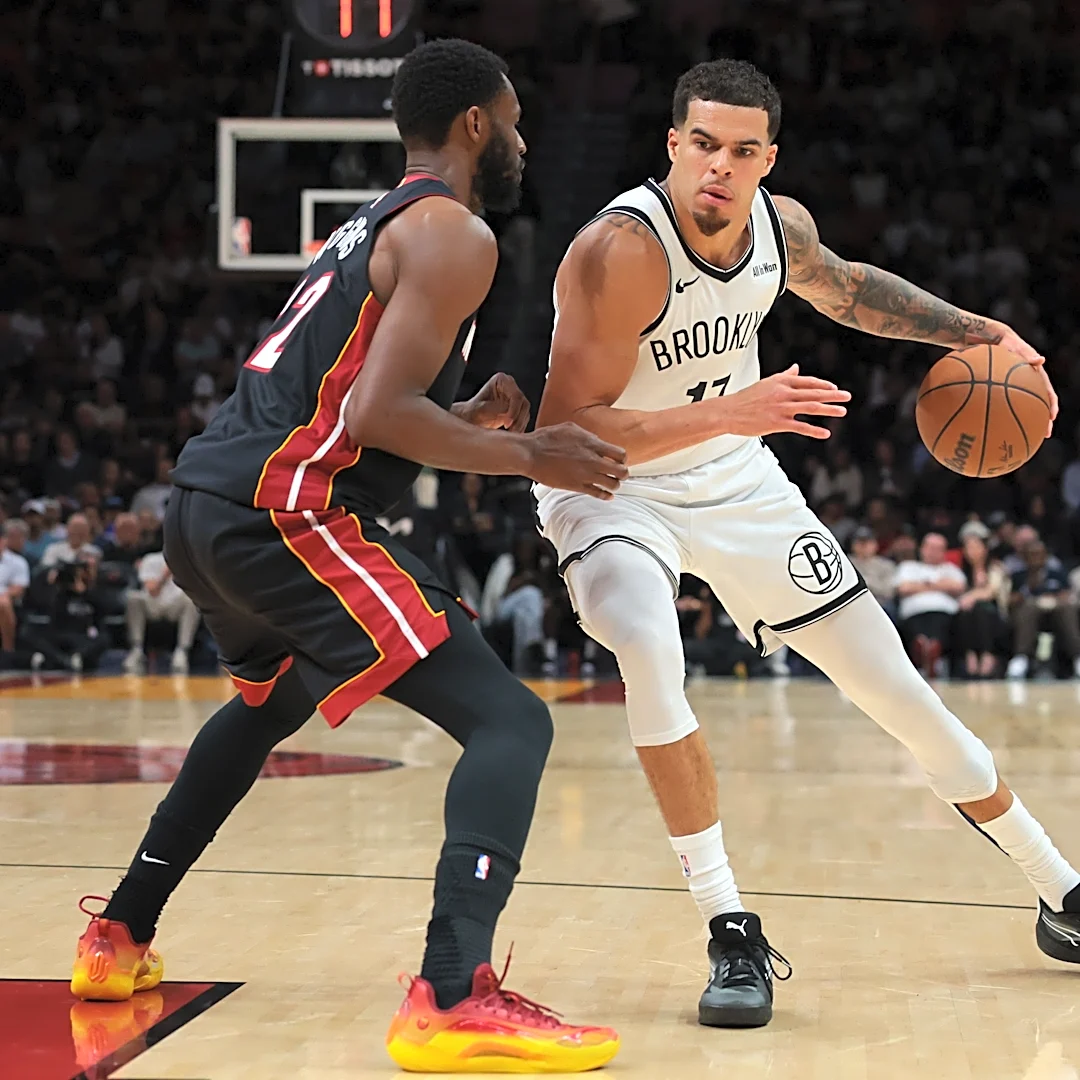

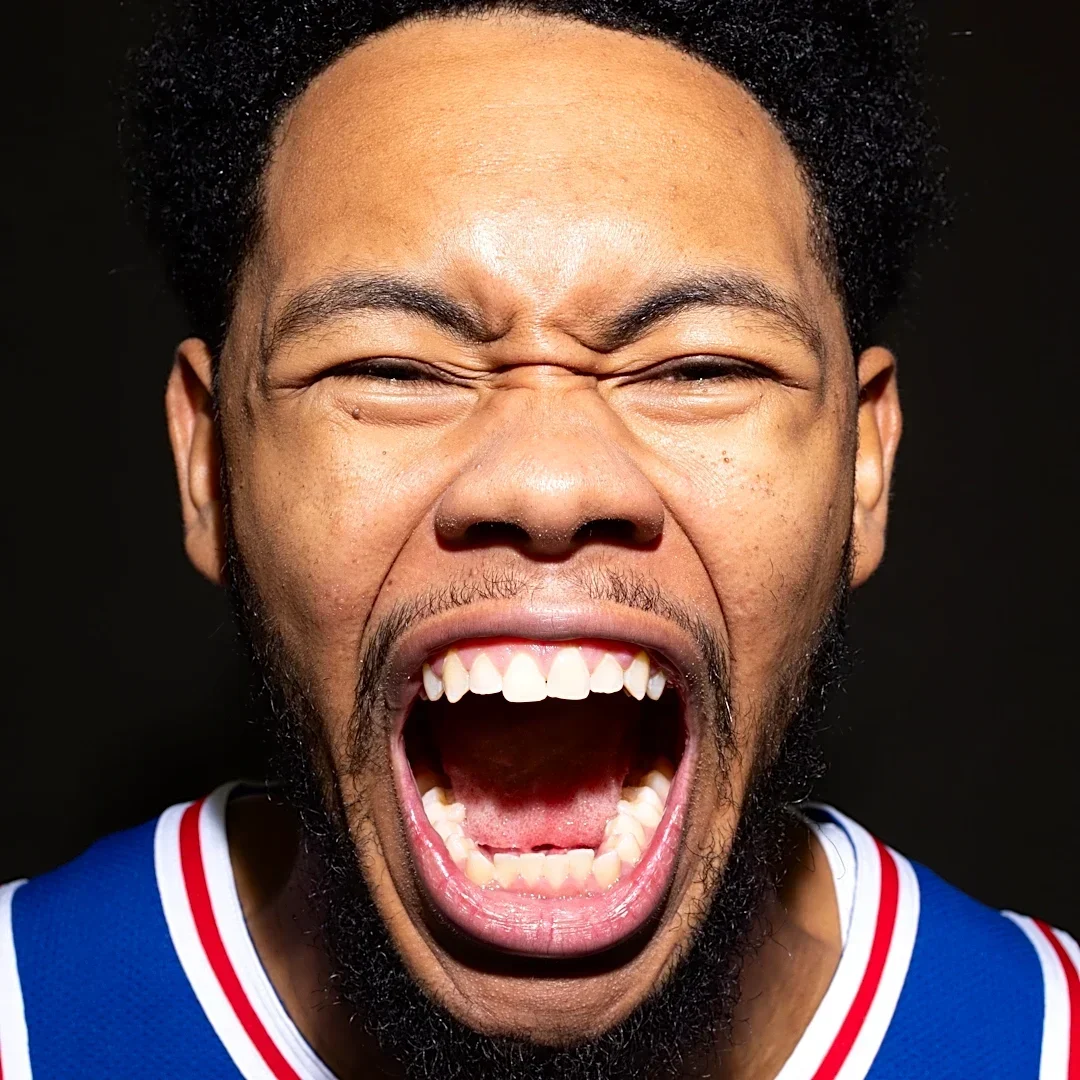
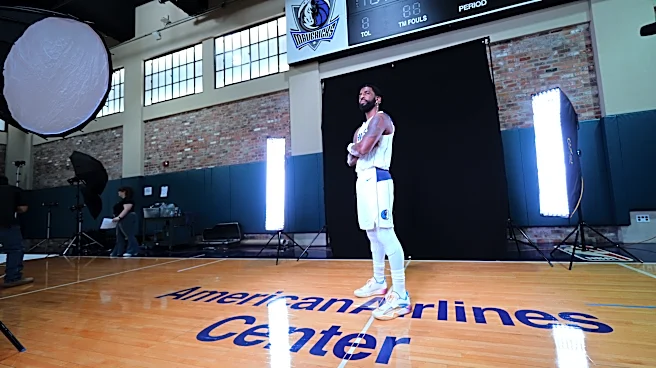
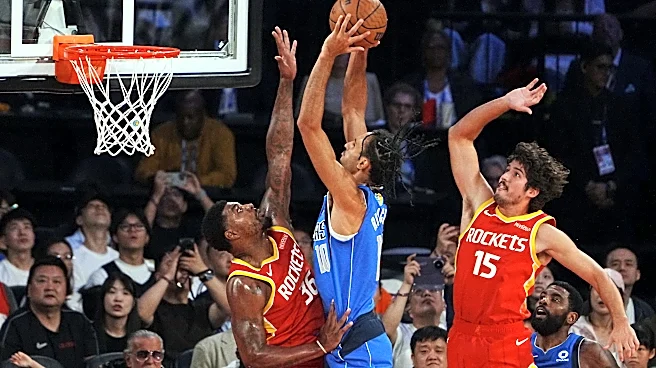
Jett Howard probably wasn’t a name you had penciled in as a Maverick before the offseason began, but here we are. The Mavericks signed the former 11th overall pick in the 2023 draft to a two-way contract this summer after three seasons in Orlando. The 6-foot-8 wing never quite found his footing with the Magic, but his role grew last season, when he averaged a career-high 5.5 points in 12.6 minutes per game while shooting 37.2% from three and 94.9% from the free-throw line. Those aren’t numbers that
pop off the page, especially for a lottery pick. But Orlando drafted him 11th for a reason, and Dallas brought him in for a pretty obvious one: The guy can shoot. On a Mavericks roster that needs players who can space the floor around Cooper Flagg and Kyrie Irving, that skill alone gives Howard a path to minutes. The question is whether he can do other things well enough to stay on the floor.
Big question
Can Jett Howard become more than a shooter? It’s that simple. The Mavericks don’t need him to come in and average 15 points a night. Dallas has plenty of players who will have the ball more than him. What they need is someone who can punish defenses when they decide to load up on Flagg, Irving, or another primary creator. Howard shot 37.2% from three last season on 2.6 attempts per game. Those numbers aren’t spectacular, but they’re respectable enough to force defenses to think about him.
Dallas doesn’t need him to be a star, but be a guy Dusty May can rely on to get a bucket when you need one. It also wouldn’t hurt to do other little things. Run around screens. Make the extra pass. Attack a hard closeout. Move without the ball. Compete defensively. If Howard can do those things consistently, a two-way contract will start looking like a pretty useful piece. If he can’t, he won’t log many minutes.
Best case scenario
Howard shoots the lights out and makes his way into the rotation. The Mavericks have several young, athletic players, but they also desperately need shooting. Dallas’ 2026-27 roster is packed with players 25 or younger, and Howard fits the team’s broader youth movement almost perfectly.
The best version of Howard isn’t a high-volume scorer. It’s a 6-foot-8 wing who can come into a game, immediately provide spacing, and knock down three or four shots without needing the offense designed around him. And there is something intriguing about putting a player like that next to Cooper Flagg. If Flagg develops into the offensive engine Dallas expects, defenses will collapse on him on plenty of possessions.
Howard’s job would be simple: find an open spot and make them pay. If he can also become a competent defender, things get really interesting. That’s the path to Howard playing 10 to 15 minutes a night instead of spending most of the season in the G-League. And considering he was the 11th pick just three years ago, I’m not ready to completely give up on the idea that there’s more here than what Orlando showed.
Worst case scenario
Howard becomes a shooting specialist who doesn’t shoot enough. A 37.2% three-point shooter sounds good until you remember that Howard only attempted 2.6 threes per game last season. His career three-point percentage is just 32.6%, so it’s fair to wonder whether last year’s improvement was a real step forward or simply a small sample.
And if the shot isn’t falling, what else is he giving you? He’s not a creator. He’s also not going to overwhelm opponents physically, even for his size. That leaves very little margin for error. The Mavericks already have plenty of players fighting for wing minutes. Max Christie, Zaccharie Risacher, Naji Marshall, Santi Aldama, Morez Johnson Jr., and others are ahead of Howard on the depth chart in some capacity. If Howard wants real minutes, he’ll have to separate himself from the rest of the pack with his shooting stroke. If he doesn’t, onto the G League he goes.
Season goal
Become too good for the two-way contract. Be the shooter you were last season, but with more volume when you’re in. I don’t expect him to become a regular part of the rotation immediately. But 10-15 games where Howard consistently looks like a rotation NBA player could make him a useful weapon. A simple stretch where he’s knocking down open threes, making smart cuts, and holding his own defensively should keep him on the floor. If he can do that, the Mavericks will have to figure out a way to keep him around. And honestly, that’s a pretty good season for a 23-year-old who is trying to revive his NBA career.
Overall
I like this gamble. Howard is exactly the type of player Dallas should be taking a chance on right now. He was once a lottery pick; he’s still only 23, and he has one skill that will always have value in the NBA: shooting. The Mavericks officially signed him to a two-way contract in July after his best statistical season in Orlando. Now he gets a fresh start. A little new scenery can go a long way.
He appeared in 133 games over three seasons, but only averaged 11 minutes per game for his career and never started a game. Dallas probably won’t hand him a ton of minutes either. But the opportunity is different. The Mavericks are trying to build around Cooper Flagg, and that means finding players who complement him.
Shooting matters. Size matters. And if Howard can put those things together, there’s a role for him. No one expects Howard to suddenly become the second coming of Klay Thompson, but there’s a reasonable chance Dallas gets more out of him than Orlando did. And if he can turn 37% three-point shooting into something closer to 40% while becoming a reliable team defender, the Mavericks may have found a very useful rotation piece hiding on a two-way contract. That’s worth taking a swing on.