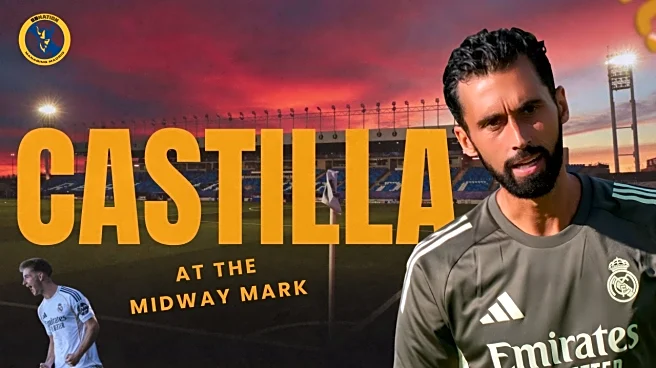


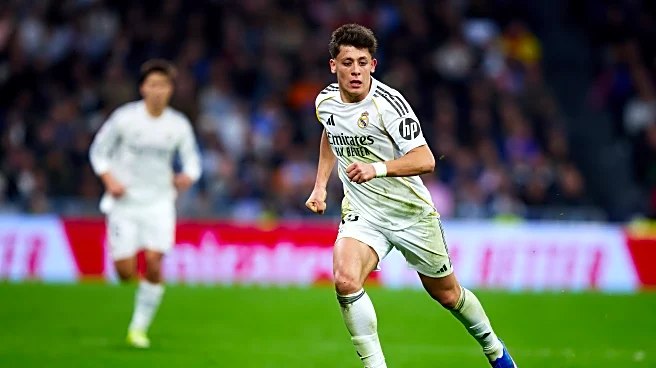
Castilla have reached the half-way mark of nineteen league games played so far this season. The Álvaro Arbeloa era is now well underway, and has largely left the fanbase torn between cautious optimism and eerily familiar concerns. Despite a 4-1 trouncing in their latest outing, the team finds itself in a genuine play-off race, albeit with some lingering doubts beneath the surface. Join me as we break down the season so far and look ahead to how it may pan out.

The table paints a positive picture.
Castilla head into the second half of the season in fourth place, constituting both a play-off spot and a successful finish at the half-way mark, but these standings alone don’t tell the full story. Not with this team, and certainly not under this manager. Only six teams have conceded more goals, and many of the sides around them are outscoring them. The key for Castilla will be in the details. Three teams sit just one point behind them, and the gap to 9th place is a mere four points. The relegation zone is currently just 11 points away. On the flip side, they are five more points away from being in the clear. A single bad month could see them tumble down the table. However, I predicted Castilla to finish 6th before a ball was kicked, partly due to poor squad planning and lack of experience, so to be in 4th place, one point ahead of that prediction is a strong positive. They remain in control of their fate, but that’s largely because of the poor standard of the league around them.
Performance-wise, it has been a bumpy ride consisting of early crisis, mid-season revival, and now a sharp reminder that nothing is guaranteed in the notoriously unpredictable Primera Federación. Castilla have improved, there’s no doubt. But with mounting injuries, a thin squad and no Plan B, it’s beginning to feel like they’re walking a tightrope at times, and perhaps are sitting in the play-offs not entirely on their own merit. Considering the way this season began (four losses in five, with no good performances in the first ten), it’s still an impressive turnaround, and the team has played well for the majority of the campaign. When they do play well, they can beat anyone. When they don’t, they get torn apart. What might keep them in the hunt? Frankly: the underperformance of everyone else. Outside of Tenerife and Celta Vigo B, this division is alarmingly poor. Sure, the best teams and players naturally progress and leave the division every summer – but no team has really stood out, many are tactically naïve, poorly assembled, or simply lack any resources or identity. It is probably the worst standard I have seen it during my time watching the reserve side. This could well be Castilla’s lifeline. For an inexperienced Castilla squad that’s thin and ravaged by key injuries, that mediocrity may be the difference between finishing 5th and finishing 11th.
Still Figuring It Out
The campaign has been marked by stark contrasts. Castilla opened the season with a scrappy win over Lugo, before plunging into a concerning run of four defeats in five, and a dozen bad performances. Arbeloa’s new-look side looked disjointed and far too fragile to challenge. Even the victories felt more like lucky escapes than tactical triumphs and Castilla were unable to control games. Injuries, call-ups and squad imbalances made life difficult, granted. But this is Castilla. That’s part of the job, and everybody knows it. Arbeloa’s side hovered dangerously close to the bottom of the table.
Then came the gradual resurgence. Victories over Pontevedra, Ourense, Avilés, and Talavera brought the team into the top three. Performances were solid, if unspectacular, but the warning signs never fully disappeared. Form did really start to pick up though, and a high of five league wins in a row, combined with the good cup form saw some strong performances (albeit heavily reliant on the form of César Palacios), and cemented Castilla’s place in the playoffs. Castilla have mostly looked like a functioning football team with a clear identity that emulates that of the first team, for the first time in years. It’s not been sparkling (far from it), but there’s a clear system that works well for the most part, and results have slowly followed. Still, cracks remain. Two defeats in their last three league games – including the 4-1 collapse at Arenas de Getxo – have served as a reminder of how fragile this team still is.
Álvaro Arbeloa
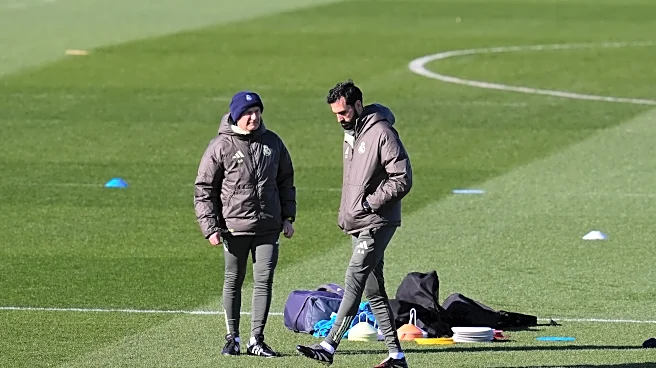
Let’s talk about him. Álvaro Arbeloa’s influence is unmistakable, and he has done a largely commendable job since taking over. He’s implemented a clear tactical structure, largely in line with the first team’s shape (but arguably more effective, as Xabi has often abandoned his philosophy). The 4-3-3 (often morphing into a 4-2-3-1) emphasises narrow play, short passing, aggressive high pressing, and full-backs who live in the opposition half. Castilla now pass with more risk and take a front-foot approach to matches. It’s bolder than previous regimes, and in many ways, more entertaining. I have seen eight managers during my time following Castilla – mostly good, a couple bad. Arbeloa is close to cracking the top five after just half a season, and if he makes the play-offs, will stroll into that category. He has the fans, and the media on his side – and has definitely created a stronger link between the academy, Castilla and the first team in a short space of time. Many players have made improvements this season, with no real regressions in personal performance, but despite all this progression, there is a cost: when things go wrong, they really go wrong. He has even been heavily linked with the Real Madrid first team role should Xabi Alonso’s dire situation further worsen, but is this too far?
Even with all of his good work, Arbeloa and his time at Castilla has demonstrated some concerningly similar traits. It is almost like holding up a mini mirror to both of their season’s so far. Both managers think and play in the same way, have a clear identity and structure, but both have question marks above their heads that will not go away. One of the two biggest concerns when his promotion was confirmed is causing some of these doubts: there is no Plan B. No pragmatism. Castilla’s defeats often look eerily similar. Sterile possession, exposed transitions, passive work ethic and a lack of attacking threat. Sound familiar? When Castilla are figured out, they lose. It’s that simple, and Arbeloa has shown no willingness or ability to adapt mid-game. His squad planning (although perhaps not entirely under his control) may cost Castilla the play-offs, and after waiting for the Castilla job for years instead of taking the risk to thrive and develop elsewhere, his ambitions are still questionable. Whilst he may eventually become a top-tier coach, and I like him as a manager, now is far too soon. If Real Madrid are to part ways with Xabi, why bring in his less experienced tactical clone, with similar flaws and no tactical flexibility? It would be like hiring a trainee because the master got expensive, and would likely turn out just as disastrous. If the players don’t respect Xabi Alonso, then they aren’t going to respect Álvaro Arbeloa. On paper, the parallels are obvious. In practice? It would be an unearned promotion.

If Real Madrid truly wanted to look internally, and find a manager built for the chaos of the modern era and current situation (not just to preserve identity, but to win and command respect), then Raúl González is the perfect answer. The media may have given this man a bad rep, but what a coach. The best I’ve seen on that Castilla list of eight. Even across a long six-year tenure, Raúl thrived in adversity: juggling weak squads, big name talents, and constant scrutiny with calm authority. He’s a better manager than Arbeloa, available, more adaptable, and unafraid to bend the “Real Madrid way” if it means progress or results. He’s also one of the only figures alive who has taken the media pressure, the fan expectation, and the egos – and still walk into Valdebebas like he owns the place. Arbeloa is showing real potential and may well end up as one of the best Castilla coaches we’ve seen, but promoting him to the Bernabéu bench would be a mistake, and in all truth: he may never be ready (despite his top league potential).
Castilla’s Catalysts
The other argument against Álvaro Arbeloa for the first team job is César Palacios. Back from a long-term injury that put his Real Madrid future in jeopardy, there’s no debate when it comes to the best player of the first half of the season. He has begun to carry the team, stepping up in key moments and dragging Castilla to results they probably didn’t deserve. César has been the only consistent attacking threat across the campaign and without him, it is worrying to ponder where this side would be. Arbeloa does deserve the credit for making him the talisman however, and giving him the opportunity after his lengthy injury. He is the top scorer (eight goals) and joint top assister (three assists) in all competitions, and if he can stay fit, he alone gives Castilla a shot at the play-offs. There always seems to be a golden boy at Castilla to rely on, and Palacios is that figure now

The next best player has been a revelation out of nowhere. Jorge Cestero was set to be another rotational cog in a long production line of average academy promotions. He has been so much more than that, becoming one of the first names on the team sheet with his commanding play – and even making his Real Madrid debut in the Copa del Rey. Other key players include David Jiménez (joint top assister) who continues to defy all odds and progress at right-back, even earning two first team appearances as a reward. Víctor Valdepeñas has been one of the standout defenders (again being recognised by the first team), alongside Joan Martínez. Fran González has also been on hand to save the day on multiple occasions, but still doesn’t look likely to break the decade-long curse surrounding the goalkeeper position at the academy.
There have also been several underwhelming performers, who despite early promise, have shown little tangible progress so far. Jesús Fortea has no notable contributions, which is disappointing for a player of that hype. At times he looks too lightweight in duels, and so far has minimal end product. Lamini Fati looked promising in both the academy, and at pre-season for Castilla but is yet to win a starting place in the team. Pol Fortuny was hugely effective under Raúl, but under Arbeloa he is nowhere to be seen. The same could be said for Hugo de Llanos. Manu Serrano never looked good enough at left-back, and his inclusion in the squad remains a mystery half-way into the season.
There is a third category (and fourth if you count injured players who cannot play) of players merely coasting their way through the season (Loren Zúñiga, Thiago Pitarch, Diego Aguado, Manuel Ángel and many more). These players have been fine (Zúñiga is just about on course for double figures this year), but haven’t stood out as often as they perhaps should, and have yet to make the improvements that both the club and fans will be hoping that they one day go on to make. The injuries to Rachad Fettal (a huge loss) and Bruno Iglesias (and previous injuries to Thiago Pitarch and many more), plus the lack of depth in key positions are actually yet to take their toll. However, the remains only one natural left-back, one winger, and a midfield group that relies heavily on two names. Add in a striker situation where nobody truly convinces as of yet, and Castilla will need near-perfect fitness from here on out before tiny squad availability does finally come back to bite them. And yet… they’re still well in the play-off picture.
Premier League International Cup: Quiet Success
With four matches played, Castilla sit top of their group and unbeaten:
- Wolves U21 0-1 Castilla – Poor performance, rescued by a brilliant Iglesias free-kick.
- Southampton U21 1-1 Castilla – Much better. Solid display despite Southampton fielding first-team players.
- Everton U21 0-2 Castilla – Dominant. First game where Castilla looked in control throughout.
- Man City U21 1-1 Castilla – Less convincing, but yet to lose in this competition.
The competition is flawed, poorly scheduled and barely publicised, but it’s still valuable, something different, and fun to watch. Castilla should be amongst the favourites, considering that many under-21 sides in England and Europe and youth teams. However, it is clear that many of these youth teams contain fringe first team players, or those coming back from injury – and Castilla are yet to pay another senior B-team from another country like Germany. Still, different styles, technical opponents, world-class stadiums and English weather all bring useful experience to these young players. The performances have ranged from scrappy to slick, but they’ve adapted well to the challenge of unfamiliar opposition. These games have been invaluable in building resilience, and will likely help the squad during the final stretch of the season. Looking likely to make the next phase of the competition, can Castilla go on to lift a trophy? That would spell huge success for Álvaro Arbeloa and his players. huge success for Álvaro Arbeloa and his players.

What Comes Next?
At the midway point, Castilla are well-positioned but far from comfortable. As previously stated, the deciding factor for Castilla’s play-off hopes may well come down to the lack of quality around them in the division. The standard has been poor, and none of their rivals look capable of putting together long winning streaks. This means that if Arbeloa’s Castilla can maintain even a moderate level of form (let alone a repeat of the first half of the season), they could sneak into the top five by default. But if they continue to drop points to teams like Unionistas and Arenas de Getxo (or any teams around them), that door could close quickly. The squad is still visibly lacking in areas, and it doesn’t take a genius to predict that no player recruitment will occur during January, so Arbeloa will have to make do with what he has. Defensive consistency is a work in progress, and it’s hard to see Castilla cruising to a top-two finish with the current squad balance. But can they make the play-offs? Absolutely. The key may be Palacios. If he stays fit, they’ll always have a chance. The big positive? Relegation will hardly have been a worry throughout the entire season.
Final Thoughts
Halfway through, this season feels both promising and precarious. Castilla have improved under Arbeloa, and the likes of Palacios and Cestero have carried the load. But cracks remain, and they’re growing increasingly visible. Arbeloa’s side is exciting, maddening, promising and incomplete all at once. The questions now are not whether this team has promise or can play good football, but whether they can do it consistently enough to survive a brutal second half of the season with limited options and no safety net.
Inside Castilla will be tracking every twist and turn, from the X feed to the podcast studio, and if this squad can deliver ten more good performances, they just might do the impossible. As for Álvaro Arbeloa, it is looking good (for the most part). Just don’t go giving him the Real Madrid job.