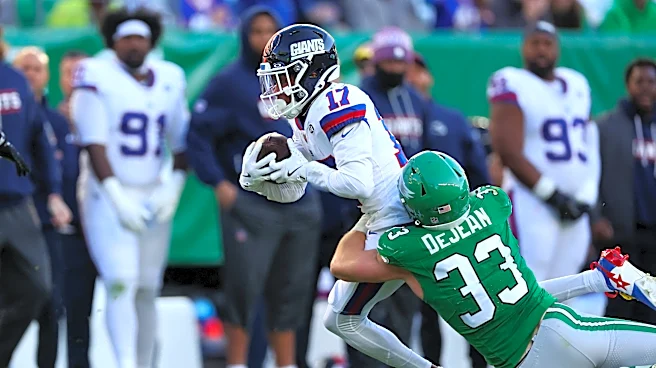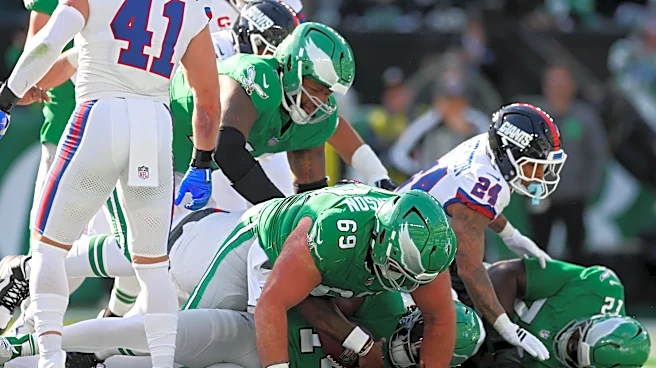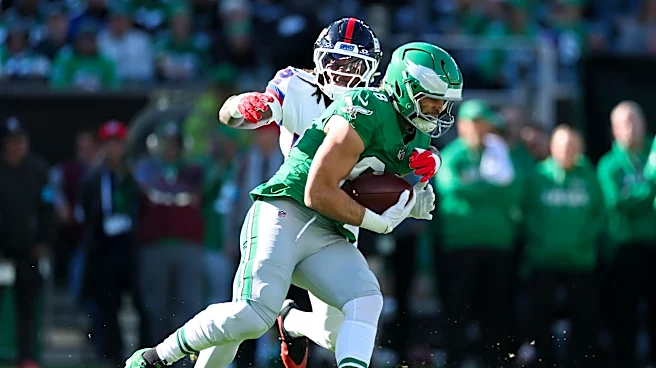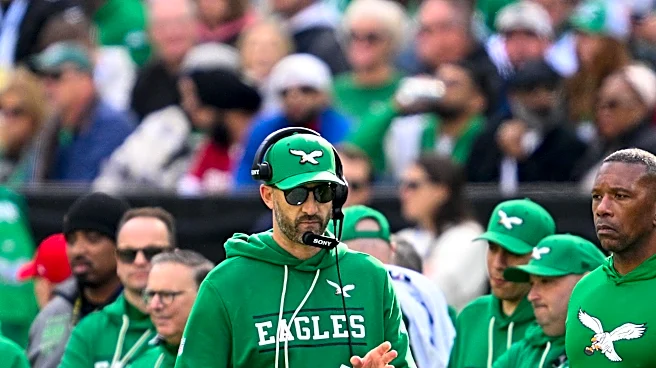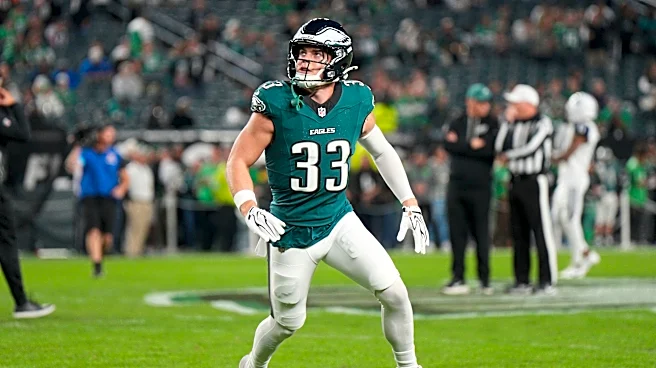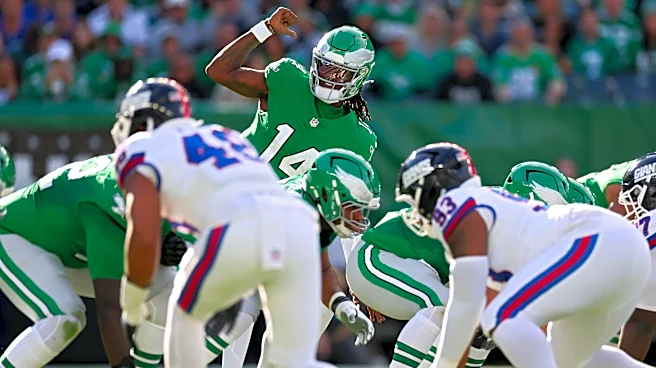


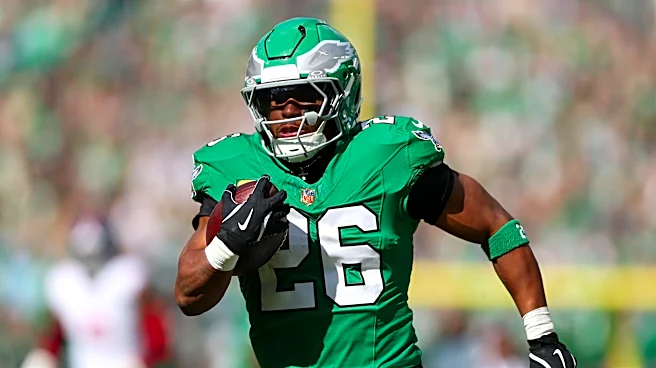
What else is there to say about this offense? I keep sitting down to write these reviews hoping that the film will give me something different to discuss. Instead, the Eagles ended up with 220 yards of offense, 13 first downs, and an average of 3.3 yards per play. They had the ball for nine and a half fewer minutes than the Giants. Another week, another miserable offensive performance. Hooray!
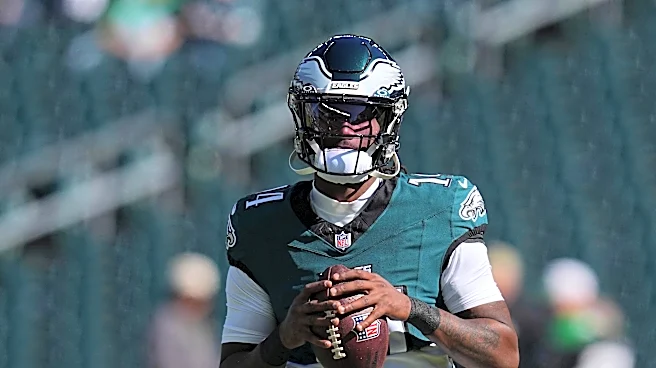
Joe Milton gave us a few things to enjoy. His mobility prevented an already awful performance from looking
even worse, and there were a couple of throws that showed why his arm talent is intriguing. But changing the quarterback hasn’t changed how I feel watching this offense. It is still boring, disjointed, and far too difficult. At this point, I want this staff to move on so I can start looking forward to a new season. It’s November! I’d like to feel excited about the Eagles’ offense again.
Anyway, there are still individual players to evaluate and specific problems to explain. Let’s get into it.
Offense
Welcome to the Eagles’ offense, Joe Milton! No surprise, but play action under center doesn’t work as the pressure arrives before he has a reasonable opportunity to do anything. We have seen versions of this all season. Putting a different quarterback behind it doesn’t make the protection work.
The Eagles use a four-man slide to the left, leaving Markel Bell isolated on the right. That gives the edge defender a two-way go against a rookie tackle who has struggled. Meanwhile, the tight end helps on Jordan Mailata’s side. I understand that protection calls have rules, but surely those rules should help you account for your personnel? If I am going to spend a tight end on a chip, I would rather have him help the rookie right tackle than my franchise left tackle. Bell still has to execute his assignment, but the staff could make that assignment more manageable.
Milton’s scrambling was one of the few reasons this game remained watchable. On this play, there isn’t a great option unless you expect him to fire the quick out into a tiny window from the opposite hash. He creates something with his legs, which is a useful skill when the passing concept gives him so little. I struggle to imagine what the offense would have looked like without those quarterback scrambles.
The rushing numbers show how much he was covering up. Remove all quarterback runs, including scrambles, and the Eagles’ running backs finished with 16 carries for 28 yards. 1.75 yards per carry. The 92-yard team rushing total makes the run game look considerably more functional than it was because the quarterback could move.
I rarely criticize a quarterback simply because a screenshot shows somebody open. Route concepts have progressions, and a receiver looking open doesn’t automatically mean the quarterback should have been looking at him. Even so, it is pretty remarkable that Milton doesn’t spot Makai Lemon completely uncovered in the slot here. There is nobody there! That is an opportunity you would want your quarterback to recognize.
The Eagles ultimately benefit from defensive pass interference on the throw to Darius Cooper, so the result is successful. The process still frustrates me. Once again, an answer to pressure is to give an outside receiver a one-on-one opportunity and ask him to win. I can live with that more easily when the receiver is prime A.J. Brown. Especially with a new quarterback, I would like the offense to provide a more accessible answer than repeatedly asking for a difficult individual win on a deep shot.
Hey, an actual creative run call! The touchdown uses Willie Lampkin as a fullback, with Tyler Steen pulling on power. Fred Johnson is also out there. So the Eagles use 7 offensive linemen! Lampkin does a good job leading the way; Steen does a great job pulling. This was a nice example of using the players available to create a different picture for the defense. More of this would have been welcome.
What frustrates me is how rarely that creativity travels beyond the goal line. Why can’t Lampkin get some opportunities at fullback elsewhere? They don’t need every run to look like this. But when the usual approach produces almost nothing, trying more of what worked seems reasonable. What exactly have they got to lose? Who doesn’t want to see more Lampkin right now?
The extra-lineman Jumbo packages were probably my favorite part (the only part I enjoyed) of the offensive plan. They didn’t work on every snap, but they provided a minor spark to an offense with nothing else. Fred Johnson gives the Eagles a better blocker than the tight ends they keep asking to handle difficult assignments. Outside of Dallas Goedert, those tight ends rarely feature in the passing game anyway. If the additional eligible receiver isn’t threatening the defense as a receiver or helping enough as a blocker, what is the benefit of keeping him out there?
The Eagles ran four designed runs with Fred Johnson as an extra lineman. Those gained 12 yards and included the touchdown above with Lampkin also eligible. There was enough here to justify exploring it further, because as you will see later, it helped the pass game. I would rather see the Eagles give Johnson more work than keep asking Johnny Mundt, Grant Calcaterra, and Eli Stowers to make a run game function through blocking assignments they aren’t winning.
We talk about the details every week because the details keep being poor. Here is mesh, a concept designed to create traffic through crossing routes and make it hard for defenders to track receivers crossing the formation. Except the Eagles appear unsure about who is supposed to create that traffic for the cornerback covering Lemon. Nobody does it.
The protection doesn’t give the play much chance anyway. Landon Dickerson loses immediately, which has become a serious problem. I thought he showed some better things in the run game against the Cowboys, but his pass protection remains a major concern. He was bad. We can acknowledge his injury issues and still recognize that what is happening on the field is not good enough.
The blitz operation remains a mess. My best guess is that Milton is supposed to be hot here, meaning he has to get the ball out to account for a defender the protection cannot block. But I don’t know the Eagles’ exact rules. What we can see is an offense that still doesn’t look coordinated when the defense brings pressure. That has been happening long before Milton got here.
The condensed alignments make this harder. This is so obvious to me, but the team keeps doing it. Bringing the receivers close to the formation also brings their defenders closer to the quarterback and gives a cornerback a much shorter path when he blitzes. That can be worth the tradeoff if the offense uses the alignment well and has clear answers. Too often, the Eagles appear to invite pressure without making the defense pay for it. Spread the formation occasionally. Make the corner show his intentions or travel farther. Give the new quarterback a picture he can manage. Something has to become easier.
For all that, Milton did produce a couple of throws I enjoyed. This is a dime. He subtly shifts left in the pocket and delivers the ball with excellent placement. Lemon does his part, settling into the available zone and catching the ball away from his frame. Good stuff! I would have liked to spend considerably more of this review discussing plays like this.
Milton finished 18 of 34 for 169 yards, with no touchdowns or interceptions, so this wasn’t a good overall passing performance. But individual moments still matter when evaluating someone making his first start for the team. He showed the ability to move and deliver a quality ball. Markel Bell’s get-off is also worth watching on this clip. He frequently leaves his stance slowly, and it looks like there may be a snap-count issue. Whatever is causing it, he needs to get moving sooner. Starting late makes difficult pass-blocking assignments even harder.
This game was death by 2×2 passing concepts. Two receivers on each side isn’t inherently a problem, obviously. The problem is what the Eagles kept doing with it: too many hitches, too little downfield stress, and very little combination of horizontal and vertical stretch. The defense wasn’t consistently being forced to cover enough space or make difficult choices. So many of the concepts felt like variations of this.
The numbers fit what I saw. The Eagles used 2×2 on 25 dropbacks, their most-used passing formation. Those plays included 20 attempts, two sacks, and three scrambles. Milton completed 12 passes for 117 yards, but the EPA per dropback was minus-0.233, and the success rate was only 24%. Roughly one in four dropbacks generated positive EPA. That’s rough.
Drew Kendall also needs to handle this rep better. He doesn’t look prepared for the linebacker coming and gets driven straight back into the quarterback. I have liked aspects of Kendall’s development, but this wasn’t his best game, and Bell struggled again too. For a team that needs young offensive linemen to become part of the solution, that is worrying. Outside of Mailata, how many players on this line do you currently feel good about moving forward?
I haven’t included many running plays because there is only so much you can say about repeated failure. The offensive line didn’t generate enough movement, and the Eagles continued to condense the formation despite their receivers and tight ends struggling as blockers. Tight splits don’t magically create a good run game. You still need the players at the point of attack to execute, and the structure needs to match what they can do.
On this play, they manage to leave a defensive tackle unblocked. Dickerson doesn’t rescue it by picking up the blitzing linebacker, either. It is another snap where the whole operation breaks down badly enough that discussing the runner feels almost pointless. These are the mistakes that should have been addressed months ago. How is the offensive line coach still here? I don’t expect every young player to win every rep, but I do expect the unit to understand who it is blocking. That is a basic part of preparing an offense.
The jumbo play-action passes were a welcome exception. Watch the defense respond to the run threat here. The extra offensive lineman gives the Giants something they actually have to respect, and that response helps create space for Goedert. This is why personnel and the run-pass relationship matter.
On the two passes explicitly marked with Johnson eligible, Milton went two-for-two: 15 yards to Lemon and 19 yards to Goedert. Including the four designed runs and one scramble marked with Johnson eligible, those seven plays produced 47 yards. It is a small sample, but it was one of the few approaches that gave the offense useful production through the air and on the ground. Why didn’t we see more of it? If the tight ends aren’t creating a credible run threat, using an extra lineman gives you a way to change that picture. It’s pretty striking to watch the Giants respond to play action when the Eagles have a 6th offensive lineman, compared to what has happened most of the season.
Milton still left opportunities on the field, and this miss is frustrating precisely because he’s such a talented thrower. Goedert is available up the seam, but Milton doesn’t step into the throw, and the ball has no juice. This should have been a substantial completion. The arm is more than good enough to make it, but the delivery doesn’t give the play what it needs.
Sometimes gifted throwers can get away with inconsistent fundamentals because they have enough arm to compensate. I can’t tell you why Milton delivers this particular ball the way he does, but having a huge arm doesn’t remove the need to set up and finish the throw properly. The offense gave him plenty of problems he couldn’t solve. This was an opportunity he could have taken. Both things can be true. Evaluating him fairly means acknowledging the good throws and the frustrating misses.
Lemon finished with six catches for 61 yards and led the Eagles in receiving. There were good moments, including the zone catch earlier in the thread. But he also had two bad drops, and this final-drive miss is one he has to make. There is room to turn upfield and then try to get out of bounds. The Eagles probably still don’t win, but catching it at least gives them a chance to keep the drive moving.
One of Lemon’s biggest selling points coming out of USC was his hands. He isn’t a big receiver or an explosive vertical threat, so reliability on these opportunities has to be part of his value. I am not going to turn one game into a sweeping verdict on a young player, but if drops start creeping into his game, I will be disappointed quickly. This is supposed to be his bread and butter.
Final Thoughts
Milton made a few plays, and I am looking forward (somewhat) to watching him again. His scrambling created yards the offense wasn’t producing by design, and some of his throws were fun to watch. The jumbo packages also offered something the staff could build on.
But I am tired of trying to find reasons to be interested in an offense that keeps failing in the same ways. The protection is rubbish, the run game barely functions, and too many passing concepts make the defense’s job incredibly easy. The players aren’t executing well enough either, but the staff has had all season to improve the operation. We are still discussing the same problems.
I don’t have a new dramatic conclusion this week. I want this staff to move on. I want something new and an offense that gives me something to look forward to. Right now, watching this team feels like waiting for something to end.
Thank you for reading! I’d love to hear your thoughts, so feel free to comment below and ask any questions. If you would like to support me further, please check out my Patreon here!