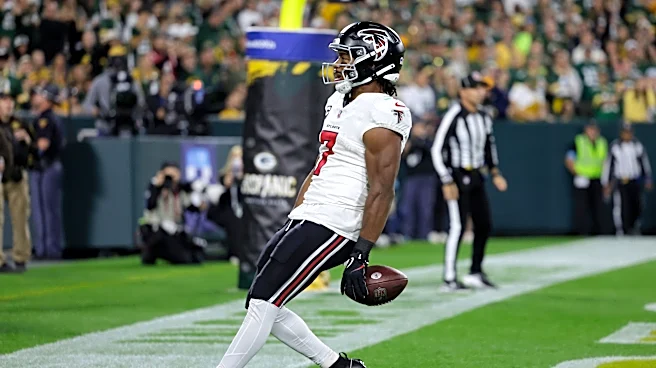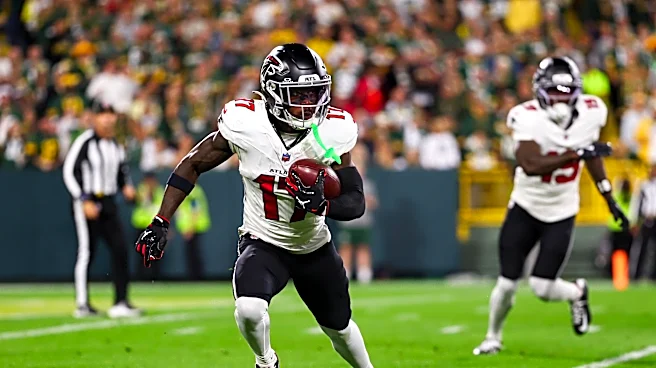



After a dominant offensive performance in the Atlanta Falcons’ Week 3 win over the Green Bay Packers, it might seem counterintuitive to suggest the offense is barely scratching the surface of its potential.
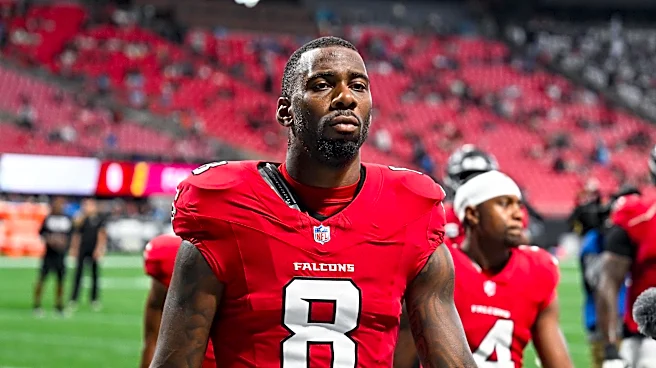
Yet despite their 35-point explosion fueled by Bijan Robinson and Drake London, one major element of the Falcons’ attack remains missing: the tight ends. Kyle Pitts has been an afterthought so far in 2026, and fans of Roman history might liken him to the Lepidus of the team’s skill-position triumvirate.
But it’s not just Pitts, but rather the tight end position as a whole. The Falcons rank 30th in targeting the tight end position, with just 13 throws, according to Fantasy Pros. And that’s despite being among the highest-ranked teams in lining up multiple tight ends on the field.
What does a ‘TE-friendly’ offense actually mean for Atlanta?
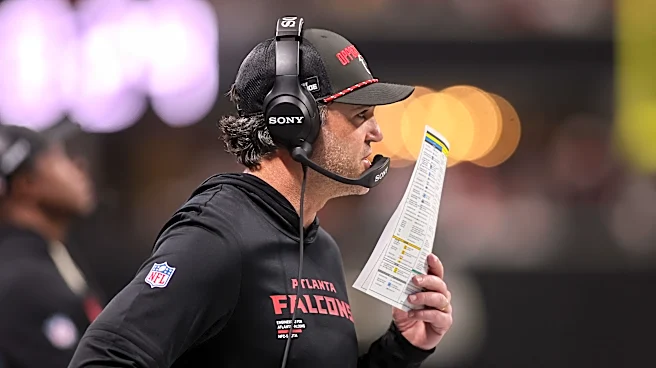
This may surprise many, given the reputation of Kevin Stefanski’s offenses with the Cleveland Browns as tight end-friendly. Under Stefanski, the Browns routinely ranked high among the teams that threw the ball to tight ends the most. With over 900 targets across six seasons, they ranked only behind the Kansas City Chiefs in targets to tight ends.
But it’s fair to question if that has less to do with the offense being designed to feature tight ends, and more to do with the fact that the Browns generally lacked reliable weapons at wide receiver during those years. After all, Stefanski’s offense in Cleveland rarely featured a true No. 1 wideout, outside of 13 games from an injury-plagued Odell Beckham Jr. and a two-and-a-half-year run with Amari Cooper.
According to Fantasy Pros, the Falcons are currently targeting wide receivers on 59 percent of passes, which is in line with the Browns’ 56 percent target rate across Cooper’s two full seasons in 2022 and 2023. However, only about 17 percent of the Browns’ passes in those two years went to running backs, compared with 24 percent for the Falcons this year.
How Bijan and Drake destroy Kyle Pitts’ target share
The obvious conclusion is that Robinson’s presence in the offense is funneling targets away from tight ends compared to Stefanski’s time in Cleveland. While the Browns did have a pass-catching running back in Kareem Hunt in 2022 and 2023, splitting reps with Nick Chubb and Jerome Ford meant they never featured an everydown threat like Robinson.
Against the Packers, Bijan was targeted only twice, suggesting that much of his pass-game production is owed to two games of dysfunctional quarterbacking by Cooper Rush. With Michael Penix back at the helm, the Falcons offense should actualize its full potential. Under Penix, the offense should be less reliant on checkdowns and screens to Robinson to fuel the passing game, meaning there’s greater upside for tight ends like Pitts to prosper.
We saw a glimpse of this in Green Bay, where Penix targeted tight end Austin Hooper on a scoring drive just before halftime. Yet, on both Hooper catches, he was lined up inline while Pitts was split out wide. Would Pitts benefit from getting more inline snaps?
To be fair, Pitts has lined up inline on 43 percent of plays where he runs a route, roughly the same rate as last year’s breakout season, according to PFF. But it raises lingering concerns that Pitts struggles to thrive in the Falcons’ offense because of London’s presence. It seems like a zero-sum game where both players rarely thrive simultaneously because their skill sets overlap as “power slot” receivers.
The final frontier for the Falcons offense
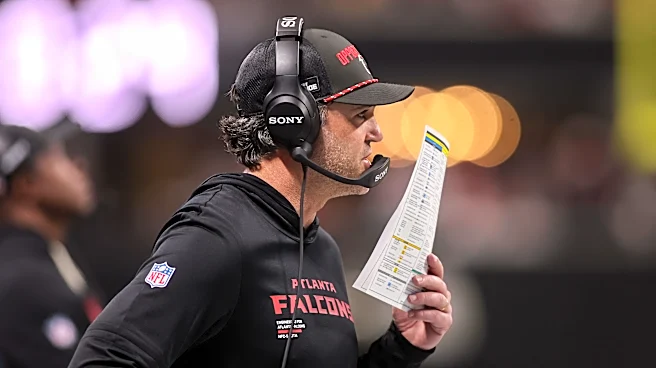
Three games into the season is still too early to draw sweeping conclusions, but the more games Pitts remains an afterthought while London thrives, the more credence that lends to the theory. So much of 2026 is about proving that this version of the offense led by Stefanski and offensive coordinator Tommy Rees can get both players involved. Ultimately, the Falcons are now financially committed to maximizing the duo after extending both players this offseason. I’m on record as skeptical of the decision to extend Pitts, but there’s still plenty of football left to play to quiet naysayers like me.
Penix’s return opens up many more possibilities for the Falcons offense, especially since opposing defenses will now have to defend every blade of grass. Against the Packers, the Falcons showed they didn’t need to involve the tight end to put up a lot of points, but NFL defenses will adjust with a renewed focus on keeping playmakers like Bijan and London at bay.
This should naturally open up opportunities for Pitts and the rest of the tight ends. If the team can unlock that upside, it should lead to many more days of peak production as seen in Green Bay. Now that the Falcons have found stability at quarterback, getting the tight ends more involved remains the final piece to fully realize this offense’s potential.