





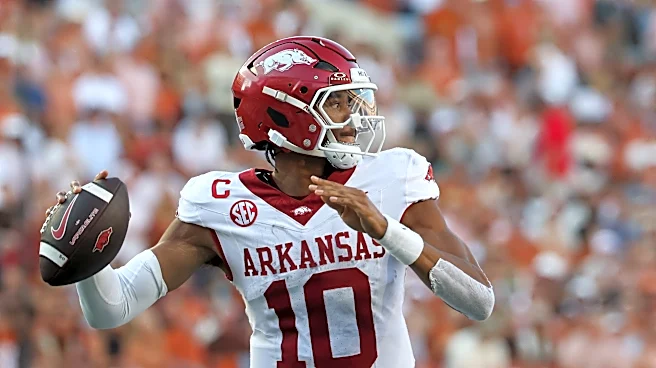
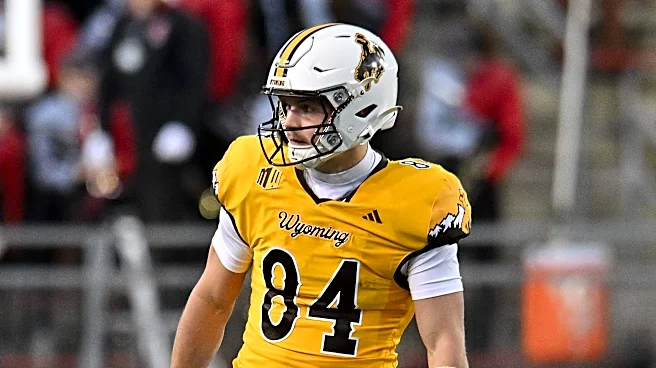
For years, the relationship between the Mountain West and the Pac-12 has lived somewhere between regional kinship and identity crisis; neighbors separated not just by geography, but by perception.
Now, with both leagues navigating uncertain futures and evolving reputations, the question deserves more than surface-level debate.
So, should the Mountain West and Pac-12 schedule more games against one another?
Absolutely.
But only if both conferences are prepared for what those games truly represent.
Because
this is no longer just about filling out non-conference schedules or cashing guarantee checks. It’s also about legitimacy, pride and the increasingly blurred line between historical prestige and present-day performance.
From the Mountain West perspective, these games are opportunities and often, statements.
For decades, programs like Boise State, Fresno State, San Diego State, and Air Force have spent Saturdays trying to prove that “Group of Five” is more branding than football reality. When Mountain West teams line up against Pac-12 opponents, it becomes a referendum not just on one roster, but on the conference’s collective credibility.
Wins are ammunition. Losses, depending on competitiveness, can still reinforce respect.
Lately, the Mountain West has shown it can swing.
For the Pac-12, particularly in its reconfigured, post-realignment existence, scheduling Mountain West opponents may feel more complicated. Historically, the Pac-12 carried power conference stature, often viewing Mountain West matchups as regional tune-ups rather than competitive litmus tests. But college football’s tectonic shifts have changed the equation. With membership uncertainty, media scrutiny and questions about long-term relevance, every game now carries image implications.
That’s where the contentiousness lies.
If the Pac-12 continues scheduling Mountain West schools and starts losing too often, the old hierarchy weakens, of course. The “power” label becomes harder to defend when the supposed undercard keeps landing punches. On the other hand, avoiding those matchups altogether could also be perceived as insecurity.
In the spirit of competition, that would be a mistake.
College football has always thrived on regional friction. Backyard battles, recruiting overlap, institutional ego; that’s the lifeblood of meaningful non-conference football.
Mountain West vs. Pac-12 games should feel personal because, increasingly, they are. They recruit many of the same athletes. They chase similar television windows. They fight for fan attention across overlapping western markets.
So why not settle some of it under the lights?
The valid expectation from the Mountain West is clear: respect must be earned, but it must also be available. If this conference continues investing, winning, and producing NFL talent, it deserves the chance to measure itself consistently against its nearest perceived peer.
The Pac-12’s expectation, fair or not, is that it should still maintain a competitive edge. That burden doesn’t disappear because the college sports landscape has become chaotic. If anything, it intensifies.
Ultimately, these games should happen because they force both leagues to confront reality.
For the Mountain West, it’s a chance to prove ascent.
For the Pac-12, it’s a chance to defend relevance.
For fans? It’s exactly what college football needs: less assumption, more evidence.
So schedule them. Embrace the tension. Let the helmets decide what conference branding no longer can.