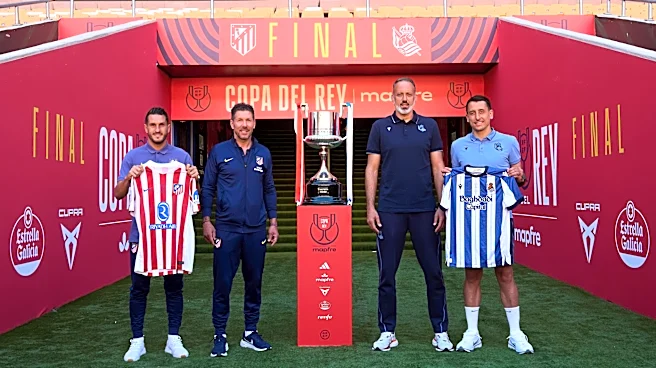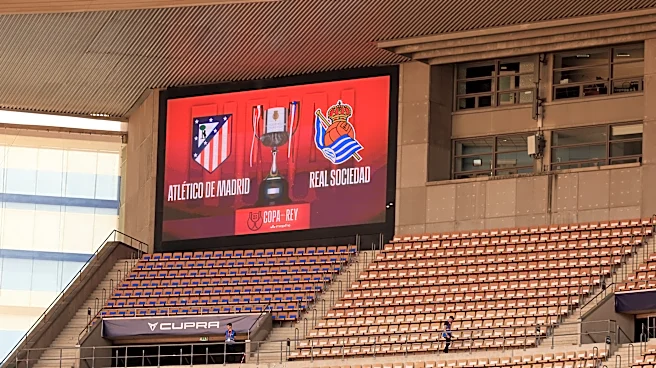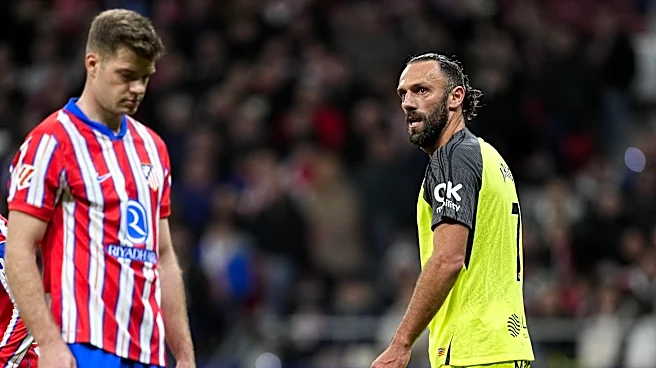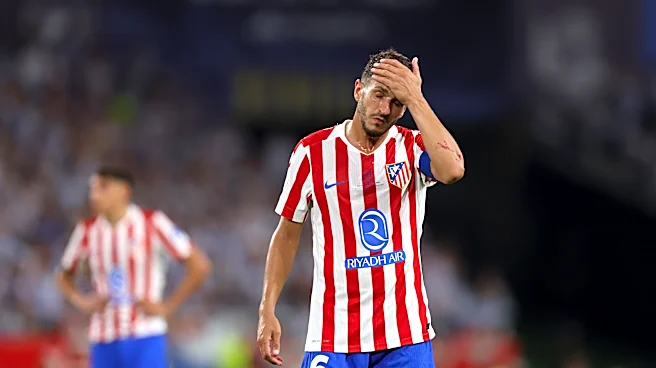




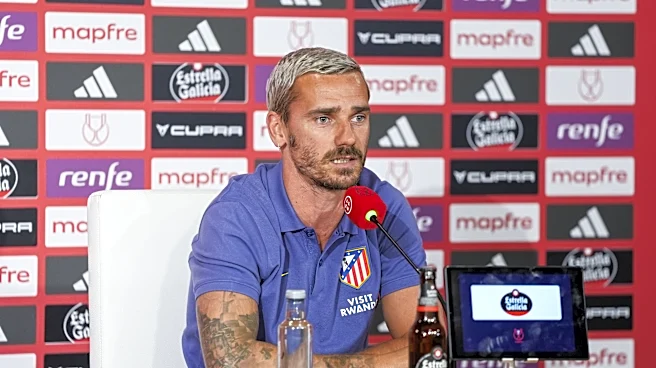
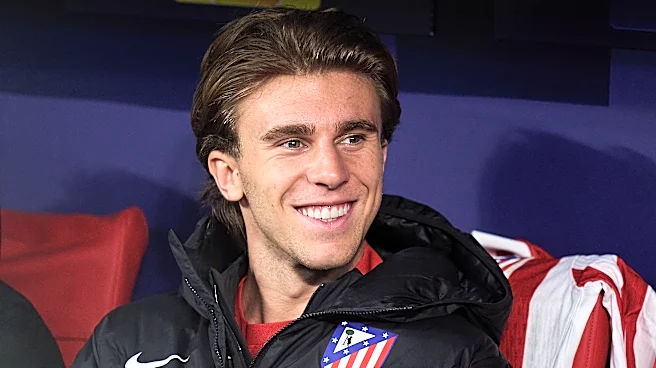
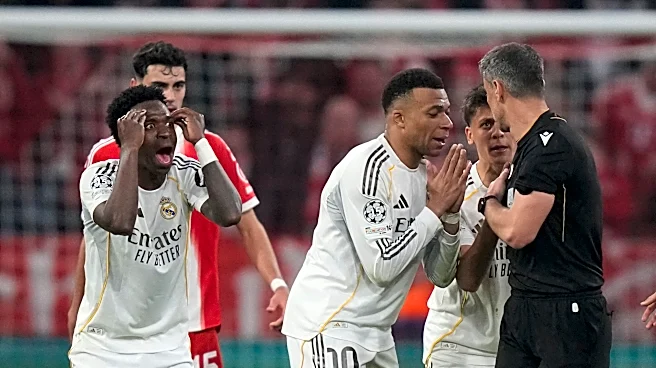
A first Copa del Rey final in 13 years gave Atlético Madrid a real shot at silverware for the first time since 2021 at La Cartuja against Real Sociedad. But a painful penalty shootout defeat after a 2-2 tie means more suffering and pain for Colchoneros.
Here’s where Atleti went wrong on Saturday night.
1. Juan Musso showed why he’s second-choice
First of all, full credit to Juan Musso for being the closest Jan Oblak has had to a real rival in his entire time at Atlético Madrid. But in Seville, it all went wrong.
Musso didn’t cover himself in
glory with the first goal. I don’t include the decision to give a penalty for a tap on Gonçalo Guedes’ shoulder here to avoid it becoming a refereeing rant after a game in which Javier Alberola Rojas is not the main reason for Atlético’s defeat. But that decision was an appalling one. And it was one that Musso gave him to make.
Then the penalty shoot-out, where Musso went the wrong way repeatedly, as he did for Mikel Oyarzabal’s in-game effort, reflected a lack of preparation and a poor penalty record. In his career, Musso has saved 10.9% of penalties, compared to Oblak’s 20.8%. That could’ve been the difference.
2. The difference in rest periods
Between Real Sociedad’s last match ending last Saturday and the Copa del Rey final starting, Atlético Madrid played two matches: a La Liga tie against Sevilla, with heavy rotations, and a Champions League quarter-final second leg against Barcelona. It was logical, therefore, that Atleti struggled to find a breakthrough late on against tired legs as the clock ticked. Where their quality could have made the difference in other circumstances in these closing stages, Atleti were exhausted.
Why? In part, because the RFEF screwed up. Their decision to place the Copa del Rey final in Seville in the middle of their incredibly-popular Feria de Abril holiday in the city meant a late change to the schedule, bringing forward the final by a week to avoid the clash, albeit coinciding with a week including Champions League action in midweek. Had both finalists — or neither — been involved in Europe, it wouldn’t have been a problem. Unfortunately for them, it was.
3. This wasn’t Atleti’s strongest XI
It’s an excuse, but it’s a good one. Aside from Musso, the deputy for the cup, you could count at least two players who most likely would not feature in Atleti’s strongest line-up. Nahuel Molina and Robin Le Normand, impressive in recent weeks but enjoying his worst season in many years, are firmly squad players who would almost certainly have been on the bench had Dávid Hancko and Pablo Barrios been fit. It would have seen Marcos Llorente return to right-back, his normal role, and could have changed the game entirely from the early moments.
A perfect line-up is rare, but this Atleti side was missing several key players across the board.

4. Penalties aren’t Atleti’s forte
There was almost a sense of impending doom as a shootout neared. Many saw it coming that the shootout ended in defeat, repeating the outcome of the only previous Copa final between the two clubs in 1987, when La Real also prevailed on penalties.
The pattern is uncomfortable enough that it has become part of how Atlético fans process big nights, echoing the painful 2016 Champions League final. Julián Alvarez’s “double-touch” penalty against Real Madrid a year ago had left a scar, and no other player has stepped forward as a clinical spot-kick taker since then.
Once again, 12 yards provided to be the killer for an Atlético side who will feel that they edged it in the 120 minutes.
5. A lack of depth on the bench
It said a lot that when Diego Simeone was forced into changes, he was forced into changing the formation.
Simeone’s captain, the 34-year-old Koke, should not have been required to play 120 minutes. The fact that he was, in testament to him and his work rate, reflects poorly on the squad management by the likes of Carlos Bucero, Mateu Alemany, and Miguel Ángel Gil.
If we consider the period of 25 to 28 to be the peak of a footballer’s career, it is notable that Atlético currently have no midfielders in that age range. Rodrigo de Paul, for all his sins, filled that gap as an experienced leader who could rotate with Koke, but he was sold. Barrios, Johnny Cardoso, or January signings Rodrigo Mendoza or Obed Vargas are some way off cementing such a role.
There can be those who argue that the starting XI should get the job done, but when they didn’t, the chances fell to Cardoso, Sørloth and Álex Baena. All three missed.
6. One eye still on the Champions League?
The big question: if Atleti were out of the Champions League, would the likes of Barrios, Hancko or José María Giménez have been risked here?
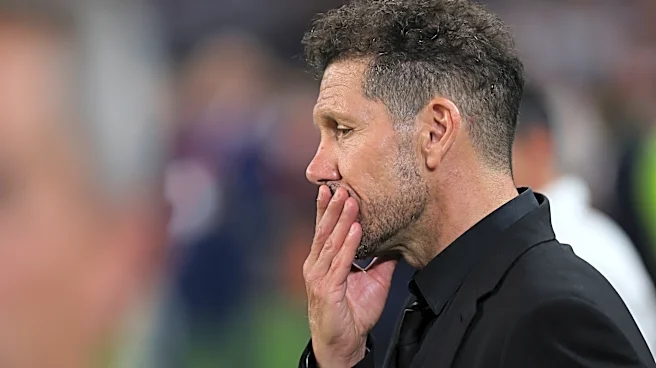
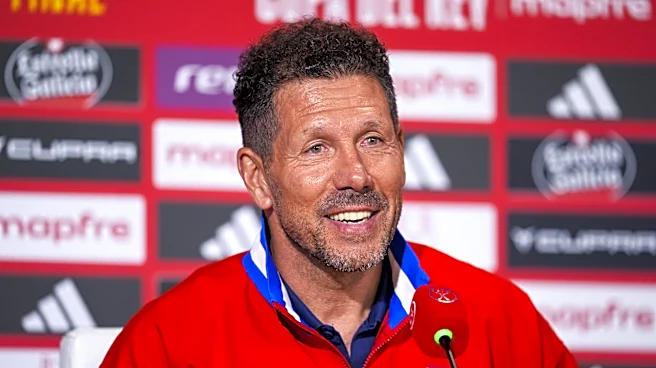
“I’m not thinking about Arsenal; this really hurts,” Cholo Simeone said after the game in Seville, but could the same be said for his players and his medical team?
It is hard to envisage that the opening goal on 15 seconds would have been conceded with the experienced leadership of the backline which is offered by Hancko or Giménez. It’s hard to envisage that Atleti would have struggled through to battle to the final whistle with barely any creativity had Barrios been on the field.
These are small differences, but at this level, the fine margins make a significant difference.
7. A one-dimensional approach through Ademola Lookman
You could be forgiven for forgetting that Giuliano Simeone was on the field or that anyone was on the right flank for much of the first half. Time and time again, Atleti would opt for the long ball over the top to the left flank and for Ademola Lookman to chase. Sometimes it worked, but it exhausted the Nigerian and it made Atleti’s approach incredibly predictable.
Contrary to what many Atleti fans may argue, taking him off made sense. Atleti needed more presence in the box, without sacrificing the quality of Julián or Antoine Griezmann. To do so meant a change in shape, and Lookman plays no role as a wing-back. He was tiring, struggling to track back, and leaving gaps that could be exploited.
On paper, replacing Lookman seemed madness given his performance, but it was striking while the iron was hot, rather than waiting for it to go lukewarm.

8. A lack of cutting edge
It’s not the first time this season that we talk about Atleti missing their chances. But once again here, Atlético Madrid had the chances to win this game inside 120 minutes.
Their 1.96 xG was far more than Real Sociedad’s 1.62, but the Basque side were just more clinical. They had 40% of shots on target, compared to Atleti’s 21%. Even if we just look at Baena’s 87th-minute chance worth 0.61 xG, or Cardoso’s 91st-minute chance worth 0.29 xG, the chances were there for Atlético to take this game, but they failed to do so. That was ultimately the difference between the two teams.