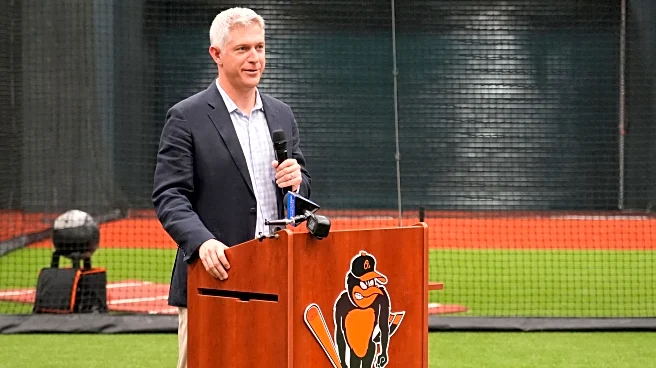

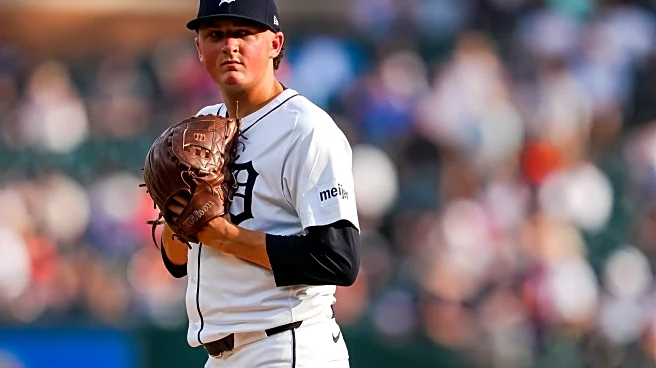
It’s become something of an annual tradition in Birdland: the hot stove season heats up, the rumor mill churns out names of frontline starters, and Orioles fans allow themselves to dream. This year, it was Framber Valdez, the crafty lefty who’s been one of baseball’s most reliable arms. Mike Elias’s comments earlier this offseason suggested the team was ready to swim in the deep end, to finally make the kind of splash that announces championship intentions.
And then, as if on cue, the pivot. Valdez
recently announced a $115 million deal with the Detroit Tigers, while the Orioles cashed in all their chips on … a one-year, $18.5M contrct.
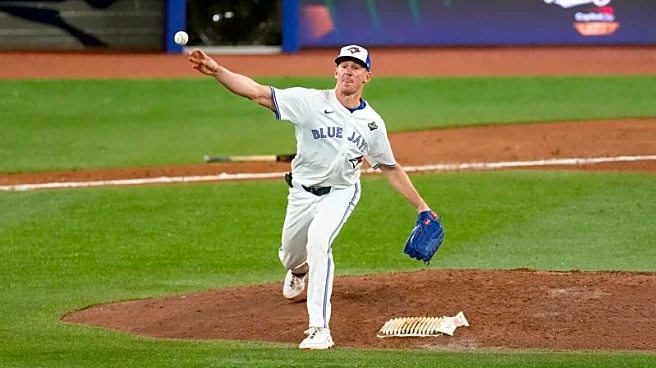
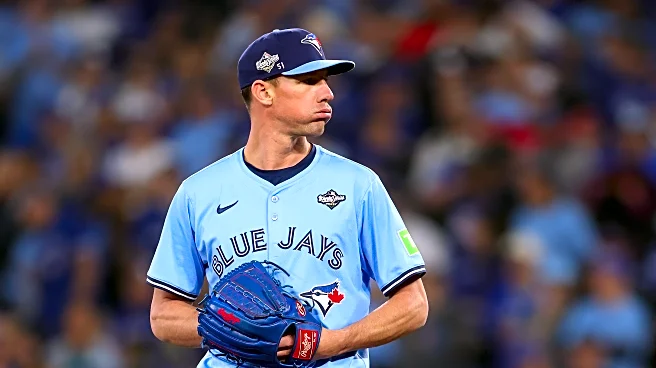
Look the signing isn’t a disaster. It’s gotten mixed reviews here in Birdland, but nobody’s furious about it. Bassitt is a solid major league pitcher who posted respectable numbers in 2025, including a strong strikeout-to-innings ratio in the postseason. He’s durable, he’s experienced, and he knows how to navigate a lineup the third time through the order. He’s not chopped liver.
But he’s also not what we were promised. And that gap between expectation and reality has become uncomfortably familiar.
Cast your mind back a few offseasons. The names then were Dylan Cease and Max Fried—legitimate top-of-the-rotation arms who would have transformed the Orioles’ pitching staff. Instead, the team zigged when fans expected them to zag, opting for the safer, cheaper, shorter-term solution. Jordan Lyles. Kyle Gibson. Charlie Morton. Tomoyuki Sugano. Bassitt.
The pattern has become so predictable that it’s practically a signature of the Elias era: dream big in December, settle in January.
The question that nags at me isn’t whether Bassitt can help. He can. It’s whether this approach—the perpetual one-year deal, the endless bridge contracts, the faith that everything will break right—is actually a viable path to a championship. Because when you look around the American League East, the Orioles’ division rivals aren’t playing it safe. The Yankees have made moves. The Blue Jays have been aggressive. Even the Red Sox, who’ve had their own organizational soul-searching to do, have shown more willingness to commit.
The Orioles, meanwhile, are still asking us to trust the process.
And it’s true, the process could work. The best-case scenario for Baltimore’s 2025 rotation is genuinely exciting: Kyle Bradish returns to Cy Young form after his injury, Trevor Rogers replicates his magical comeback season, Shane Baz rediscovers his pre-injury stuff, and Zach Eflin’s back holds up. Add a steady Bassitt to that mix, and you’ve got something.
But that’s an awful lot of ifs. It’s a rotation built on the assumption that everyone hits a ceiling they’ve reached, in most cases, exactly once. It’s a plan that requires the baseball gods to smile on Baltimore while frowning on everyone else. It’s hope dressed up as strategy.
Maybe I’m being too harsh. Results have a way of silencing concerns about process, and if the Orioles surprise everyone and make a deep October run, I’ll happily eat these words. Good outcomes quiet the haters, myself potentially included.
But here’s what bothers me: this has become a philosophy, not just a tactic. Don’t draft pitchers high. Avoid the raw high school talent. Squeeze value out of waiver wire pickups and veterans willing to bet on themselves with short-term deals. It’s smart, in its way—analytically defensible, fiscally responsible, low-risk in any individual transaction.
It’s also not inspiring. And it’s not how you build a champion.
The Tampa Bay Rays have been doing this dance for years, finding value in the margins, developing what they have, never quite spending like the big boys. They’ve been to one World Series this century. They lost. At some point, you have to wonder whether the ceiling on this approach is “perpetually competitive” rather than “champion.”
The Orioles have a young core that’s ready to win now. Gunnar Henderson isn’t getting any cheaper. Adley Rutschman’s window is open. The time to push the chips to the center of the table is now, not in some hypothetical future when all the one-year deals finally add up to something.
Chris Bassitt will take the ball every fifth day and give the Orioles a chance to win. That’s valuable. But when you’re chasing a championship, “giving yourself a chance” isn’t the same as “going for it.” And after another offseason of watching the Orioles linked to aces only to settle for something less, it’s hard not to feel like we’re watching the same movie for the third or fourth time.
Plan B can work. Sometimes the backup option turns out to be the right call all along.
But it sure would be nice, just once, to see what Plan A looks like.