

The 2026-27 season starts in three weeks and Gonzaga still can’t tell you with any real degree of certainty who it’ll have playing in it.
The Zags open against Purdue on November 2 at T-Mobile Arena in Las Vegas, and four players on the roster remain ineligible or on the verge of ineligibility. Back in July the assumption was that the courts would sort this whole mess out before anyone’s season got too damaged. October has gone the other way and things are not looking any better for the Zags than
they did a month ago.
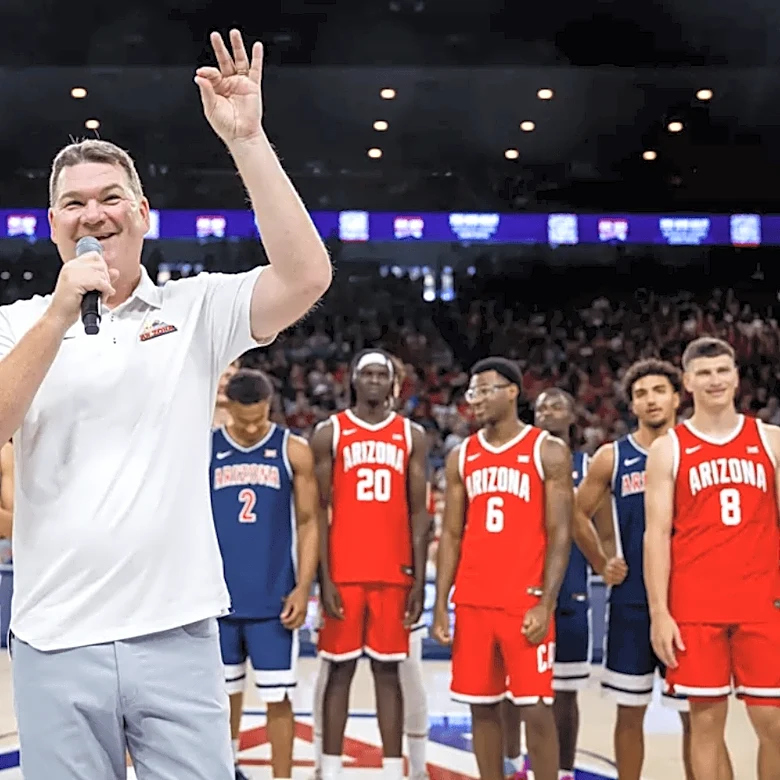
The insult on top of the injury came at Kraziness in the Kennel last week when Gonzaga fans finally watched this roster play together for the first time. What they saw was well worth the wait. At full strength and without any ineligibility question marks, the dudes on this roster comprise what looks to be one of the most exciting Gonzaga teams in recent memory. But it may also have been the only night all of them share a floor this season.
Gonzaga plays an exhibition at Arkansas on October 24. The opener is 21 days out. Here’s where all four of Gonzaga’s eligibility question-marks stand.
Izan Almansa – Currently Ineligibile
Almansa’s waiver request has been with the NCAA since May, and the hold-up hinges on the subject of what he was paid as a professional: 2023-24 with G League Ignite, 2024-25 with the Perth Wildcats in Australia’s NBL, and last season with Real Madrid. Guidance the NCAA sent its members in May reiterated that a former pro can’t have received more than actual and necessary expenses, and clearing that standard means producing years of contracts and bank records, often translated, with each round of follow-up questions taking weeks. There’s no hearing date and no deadline. He played at Kraziness on October 3, which means he has a practice waiver, but that is not the same thing as clearance. Tyon Grant-Foster had a practice waiver last October, the NCAA denied his eligibility a week later, and he ended up in Spokane County Superior Court getting an injunction.
The reason for optimism is that clearances have started landing. Nathan De Sousa got through a few weeks ago after about three months. Arkansas’s Miikka Muurinen was cleared, and Auburn got Narcisse Ngoy on October 8, though with two years of eligibility instead of four. The reason for pessimism is that the player whose history most resembles Almansa’s got denied: Babacar Sane, the other former Ignite player in this cycle, had his reinstatement rejected on August 13 and went to court in Queens County. Oklahoma’s Akoldah Gak was denied outright. LSU is waiting on four international players and three of them have already hired an attorney in case the answers come back unfavorably. Six conferences have banned former pros regardless of what a court says, and the Pac-12 still hasn’t taken a position (though there’s no indication it intends to, either).
At Kraziness he played 14 minutes and finished with seven points and seven rebounds, four of them offensive. That’s what Gonzaga is missing without him on the floor. Braden Huff and Massamba Diop give the Zags a starting frontcourt as good as any in the country, but neither attack the boards the way Almansa does. Diop also committed four fouls in 17 minutes at Kraziness and his backup, 7-foot-1 Sam Funches committed three in nine. Without Almansa the frontcourt depth consists of Funches, Parker Jefferson, and (if eligible) perhaps an extremely un-physical interior presence in 6-foot-11 Chauncey Wiggins. In short, Gonzaga’s frontcourt depth without Almansa is of extreme concern for the Zags.
Xaivian Lee – Eligible (for now…)
Lee is eligible today, but that eligibility is protected by a temporary restraining order out of Santa Clara County. He’s one of roughly 76 plaintiffs in Glancey v. NCAA, which argues the NCAA broke its own bylaws and violated California’s Unfair Competition Law by denying the class of 2022 a fifth season. Judge Beth McGowen heard the preliminary injunction motion on September 29 and never got to a ruling, because the court ran out of time before all the players and coaches could testify. The hearing resumes October 20 and the TRO holds until then.
A preliminary injunction would last the life of the case rather than a few weeks, and California has been the one state where the NCAA hasn’t managed to get a players’ win undone on appeal. The NCAA is expected to appeal any injunction immediately and ask for a stay, which is exactly the sequence that took Bennett and Wiggins off the floor. And Glancey runs on the same third-party-beneficiary contract theory that Ohio’s First District rejected on October 2. Ohio law doesn’t bind a California judge, but it’s the most detailed appellate opinion in the country on this question and it went the NCAA’s way, so the NCAA will put it in front of McGowen. Lee’s backstop if California fails is Wisne, the federal class action, and Wisne is stayed.
He played 20 minutes at Kraziness and scored 9 points on 3-of-6 shooting from three, with four assists and no turnovers. Without Lee the job falls to Nathan De Sousa by default and the Zags would enter a second consecutive season with a spectacular frontcourt, an unproven European import point guard in his first season of college basketball, and Davis Fogle.
Javon Bennett – Currently Ineligible
Bennett is the worst off of the four. The Ohio case he’s part of, captioned Borovicanin v. NCAA, didn’t get paused on October 2. It got reversed. A unanimous First District panel threw out Judge Christopher Wagner’s July 9 injunction and sent the case back to the trial court, with Presiding Judge Crouse writing that the NCAA is a voluntary association whose application of its own rules is entitled to deference. The panel also found nothing in the record showing the NCAA acted arbitrarily, and rejected the argument that the 2026-27 bylaws grant the class of 2022 a fifth year on their face.
On October 6 the players went to the Ohio Supreme Court with a jurisdictional memo and an emergency motion to stay the reversal and put the injunction back. The NCAA filed its opposition on October 8 and there’s been no ruling. That same court denied a similar emergency motion on September 23 and dismissed the earlier appeal five days later, and it has to agree to take the case before it ever reaches the merits.
The other path is the Tenth Circuit, which hears argument in Wisne tomorrow morning. That’s the federal class action that gave every class-of-2022 player a fifth year before the stay came down on August 21, and the stay went 2-1, with Judges Tymkovich and Kelly finding the NCAA had made a strong showing it would win. A Wisne reversal is the one ruling that brings Bennett and Wiggins back at the same time. Keyshawn Hall, who was in the Ohio case, filed fresh in Queens County and got a restraining order, and the NCAA is now trying to get that case dismissed specifically because he’d been part of the Ohio litigation. Nothing reported says Bennett is attempting the same thing.
Chauncey Wiggins – Currently Ineligibile
Wiggins won bigger than Bennett did and has less to show for it. Judge Henry Thompson granted an interlocutory injunction in Cobb County on August 5, finding the NCAA had applied its own rules arbitrarily, and went further by barring the NCAA from enforcing its Rule of Restitution against any school that played the plaintiffs. That’s the provision that lets the NCAA vacate wins and strip revenue after the fact, and knocking it out is what made it safe for Gonzaga to sign him the next night. On September 9 the Georgia Court of Appeals stayed all of it in a single paragraph with no reasoning given.
Since then, nothing. No briefing schedule, no argument date, no filings logged in Godfrey v. NCAA at all. The trial in Cobb County is set for sometime in January, which does Wiggins no good in November. Two things could still move. The Georgia panel could lift its own stay before hearing the appeal, which is within its power and requires no schedule. Or the Tenth Circuit could reverse in Wisne after tomorrow’s argument, since the Georgia plaintiffs were class members there too. Adding him to the California suit came up as an option in August and there’s no reporting that anyone has tried it. Arizona is in the identical spot with RJ Godfrey, the named plaintiff in the same case, and Tommy Lloyd’s public position is that he hopes common sense prevails.
Final Thoughts
Three of these four cases turn on the same question, and one ruling could settle all three. The Tenth Circuit hears arguments in Wisne tomorrow morning (Oct 13). If that panel affirms the injunction and lifts the stay, the nationwide fifth year for the class of 2022 comes back, and Wiggins, Bennett, and Lee are granted full eligibility status for the rest of the season. It could all end there as soon as tomorrow evening, though those whose job it is to pay attention to this stuff indicate that a ruling from the bench on the same day is highly unlikely.
Almansa is outside all of it. No court can order the NCAA to process an international eligibility file faster, and no ruling about the class of 2022 touches a review of what a player earned in the G League. That one gets answered when the NCAA decides to answer it. Gonzaga opens against Purdue in 21 days and plays at Arkansas in 12. It’s unlikely we will have any definitive answers on this roster before the season actually tips off in Las Vegas.