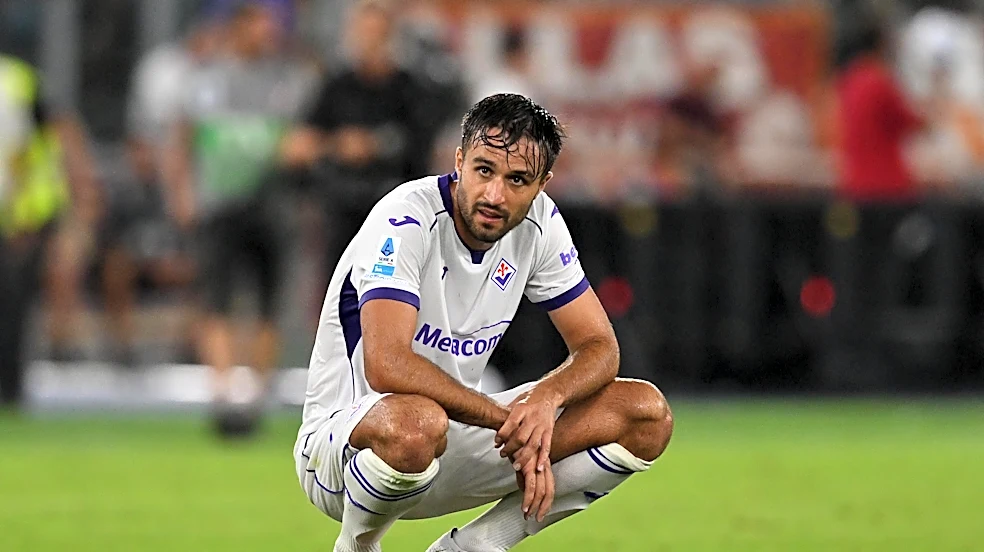



On 8 October, Fiorentina extended Luca Ranieri’s contract. I liked that decision. In his first game after signing, Ranieri dropped an all-time clanger. He was slow stepping up on the initial shot in the sequence that led to Genoa’s opener and then got booked and missed a clearance in front of the goal within 30 seconds, getting himself subbed at the half. Paolo Vanoli benched him against Como and sure enough, his replacement Marin Pongračić scored Fiorentina’s only goal of the game.
Validated by a single
result, the prevailing opinion seems to be, “Ranieri should be benched forever unless Vanoli can bury him in a lightless dungeon like that kid in Omelas.” As you’ve probably guessed by now, I’m going to push back on that. Part of it is that my contrarian nature, part of it is that I like Ranieri and dislike seeing him get dumped on, and part of it is my belief about how to run a successful team. I’ll start with the tactical side and hopefully drag this towards a more general conclusion. I thought about doing a list but don’t think that would capture the way I’m thinking about this, mostly because the way I’m thinking about this is jumbled. Bear with me.
On a tactical level, Ranieri’s an awkward fit next to Radu Drǎgușin. They both prefer sticking tight to an opposing forward and can struggle against pace, although Ranieri at least has shown an ability to make big tackles along the touchlines. They’re both awkward on the ball, which impedes any attempt to build from deep. They’re both astonishingly prone to brain farts. In short, I don’t think they’d be a complementary pairing even if they were both in form. Which they aren’t.
Pongračić has provided me with two years of evidence that he isn’t the solution either. He’s every bit as capable of bozo moments as Ranieri. Maybe there’s a bit less variance in his performance as a function of his physical and technical profile as compared to Luca but the ex-captain’s a better fit in my mind for squishier reasons. If Pongračić was the solution all along, why’s he been on the bench this whole time? Vanoli, after all, saw him up close for most of a season. Ranieri, for all his foibles, has mostly kept his spot.
In the absence of a personnel or tactical solution, I’d rather see Viery in the middle. He’s prone to the mistakes you expect from young centerbacks, particularly when thrust into an unfamiliar leftback role, but I think he’s got the characteristics to grow into a long-term solution in the heart of defense. Unfortunately, he’s needed out wide for the moment, especially because Víctor Valdepeñas hasn’t held up out of possession. Once Fabiano Parisi is back, I hope Viery gets more chances in the middle, though. I wrote in the Pisa match report that he’s the best CB on the roster and while that was obvious hyperbole, it’s closer to being true than anyone would like.
A mild non sequitur because I can’t figure out a narrative transition: The nature of defending in soccer is brutal. Attackers get to make as many mistakes as they want without costing the team a win, but a defender can have a perfect 89:59.99 and still be the villain. Playing professionally requires a psychotic level of self-confidence, one that often veers into self-delusion out of necessity, and that goes double for the guys whose work is background. Perhaps for this reason, I tend to be more forgiving of defenders than a lot of people. I’ve also spent a majority of my (very amateur) career at centerback so some of this is probably reflexive.
Ranieri was execrably bad against Genoa and needed to come off but let’s not pretend that he was the only blemish in an otherwise-flawless team. Because his performance was the worst, it’s the one we remember. It’s simple cognitive bias. I’d add that a lot of errors we assign to defenders are the result of things going wrong upstream: a forward or midfielder lost a ball or blew a marking assignment or whatever. The defenders are often guilty by proximity more than action, well-meaning bystanders rushing to aid the victim at the scene of the crime rather than outright perpetrators.
Regardless, it’s not always wise to bench players every time they make a mistake. Human beings perform at a higher level when they feel valued and secure. That means a coach has to back a player through the occasional wobble not just for that player’s sake but for the sake of the squad. If a senior player, a guy who’s worn the armband and just got an extension, can get hooked after a bad half and never see the pitch again, nobody’s safe. Everyone will play too careful, too rigid, and create a feedback loop of ass as the bad performances lead to more pressure and more fear and worse performances.
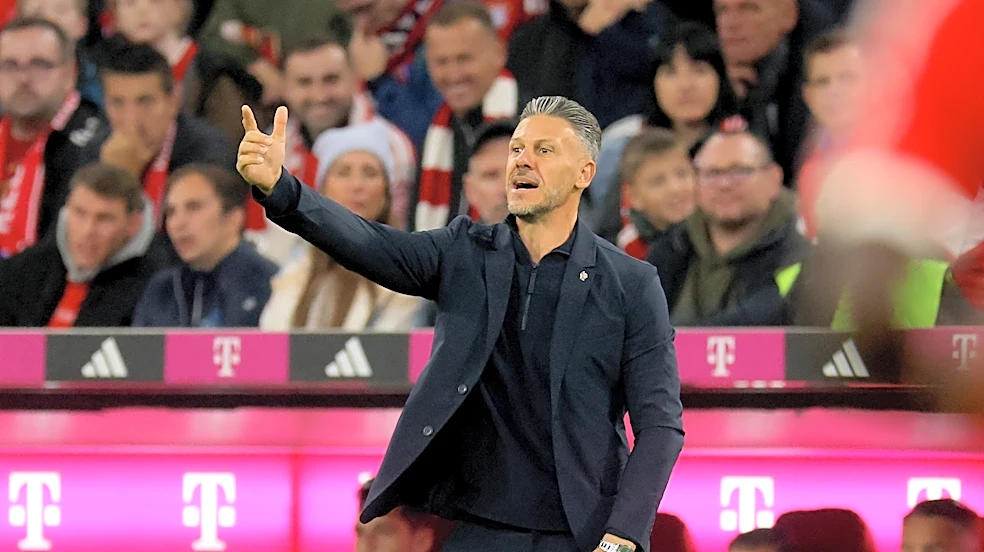
I’m not saying that guys playing like shit deserve to start every game because benching them could make somebody sad. What I am saying is that the reaction to Ranieri’s horror show has been disproportionate. That makes sense for fans, who live and die with every individual result. For the coach, though, the calculus is different. Vanoli’s job is to take a longer view. If he thinks that Ranieri will help the team more than Pongračić in the long run, he’ll stick with Luca despite the fan outrage.
It’s worth pointing out, too, that Ranieri’s lost his place previously under Vanoli. He kept his nose to the grindstone and won it back. Even if he’s out of the starting lineup for now, he should elbow his way back in sooner than later. There’s a reason Fiorentina looks better when Luca’s at his best and worse when he struggles: he’s the emotional bellwether of the this team.
I’m veering into armchair psychology but bear with me. Ranieri’s attitude is critical for a good team. Beyond his physical/technical/tactical profile, his emotional profile matters. It’s why he had the armband, albeit briefly: Stefano Pioli understood that Ranieri’s the symbol of the team but didn’t realize he isn’t its leader; not his greatest sin, perhaps, but a significant one. Luca’s at his best when he can engage in antics: booting some poor winger up in the air, grinning psychotically, maintaining distressingly intense eye contact as he hugs a teammate for making a good tackle.
That kind of energy is infectious and necessary. It galvanizes the group, which is forced to react positively out of social requirement until it becomes genuine. I don’t think his shtick works as well when the team’s doing badly but when things level out, he’s the sort of personality who can take everyone up another level, which is a powerful ability. Add to that his obvious big brother energy—Pietro Comuzzo never would’ve become the player he is without Ranieri’s constant encouragment—and his importance to a team of young, newly-arrived players is only amplified.
That sort of arm-around-the-shoulders veteran should be a beloved figure in any team even if his on-field impact leaves him hovering around the Manuel Pasqual Zone: good enough to stick around but not good enough to tempt bigger outfits. For everyone but Como (i.e. cash injections that should raise the eyebrow of anyone paying attention), these limited players are the bricks a club is built of and on which all further construction rests, even if the fans would prefer marble.
As supporters, we endlessly repeat, “We want players who understand the importance of the badge, who bleed for the shirt, who respect the club and love it like we do.” I won’t pretend to know what’s in Ranieri’s mind but nobody who’s watched him play can doubt his commitment. Even through a bad performance (or string of performances), he’s held up his end of the bargain. He works hard and his mistakes are honest ones, manifestations of his limits rather than laziness or ego. I’ll take that guy over a sulky genius any day.