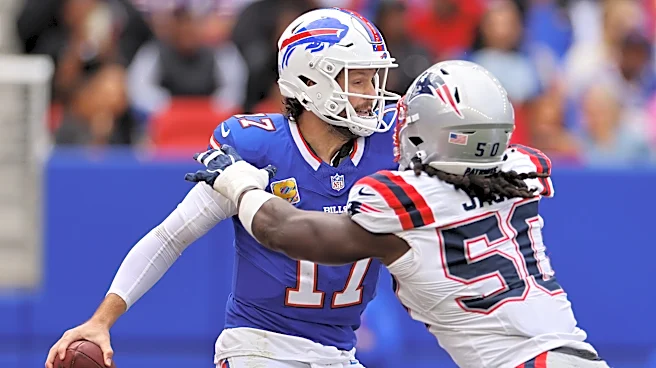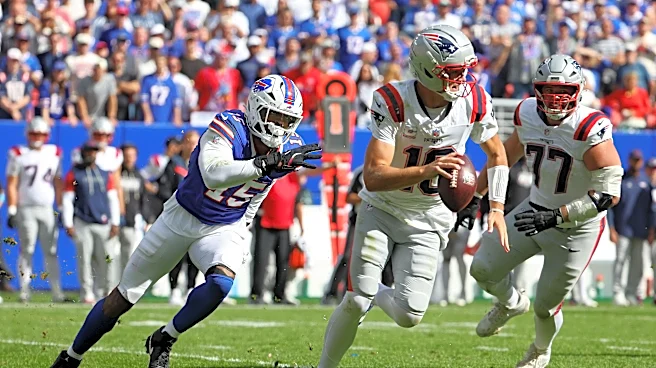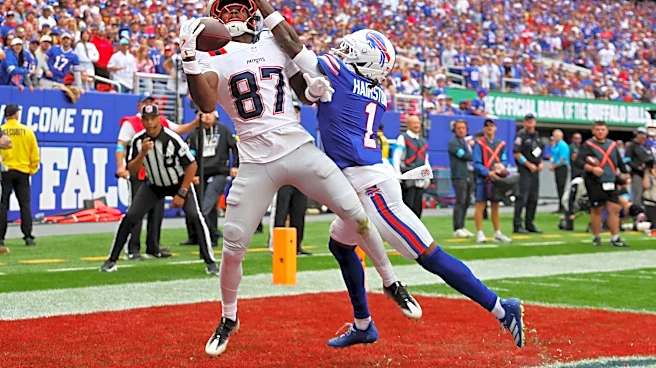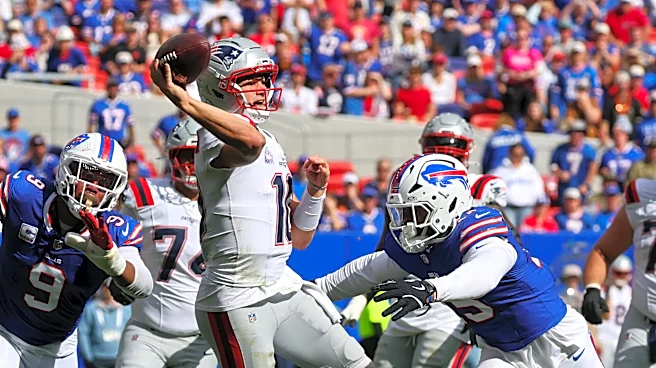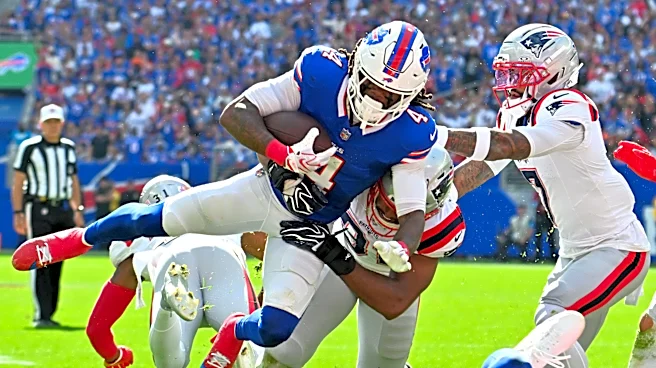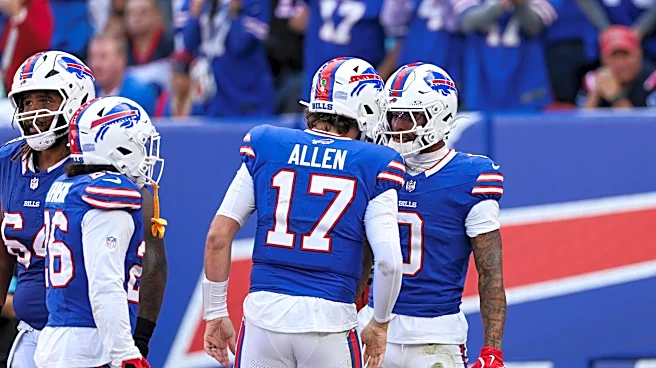


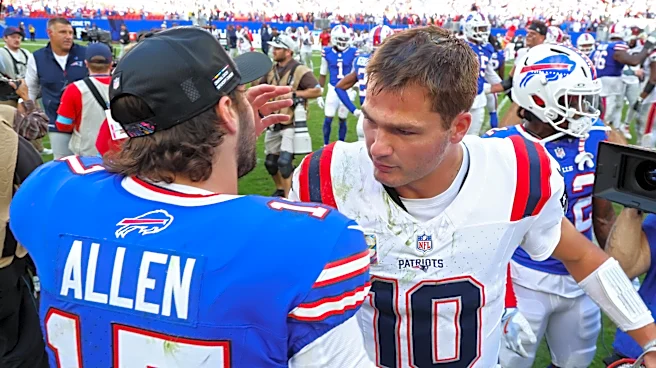
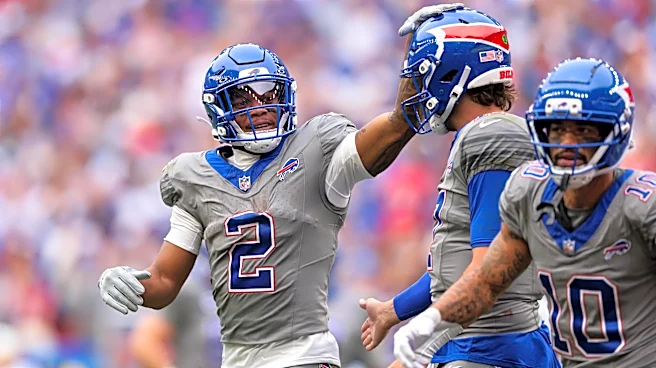
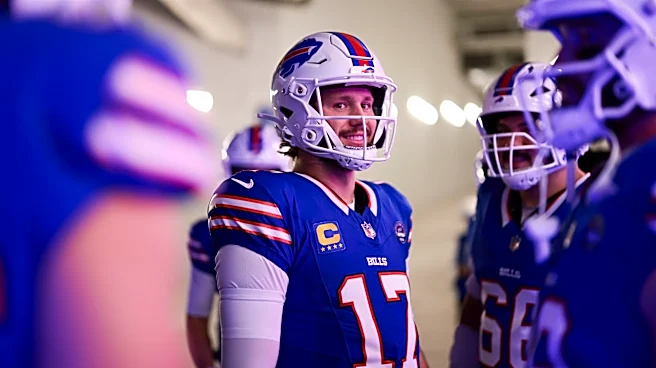
The Buffalo Bills are 3-1, and while that mark leaves them in first place in the AFC East, it feels like it could be—and should be—better. After winning their first three games, the Bills dropped a 29-26 decision to the New England Patriots on Sunday, breathing life into the Pats while making the AFC East standings a bit closer. Four games into the 2026 season, these Bills look like most of the Buffalo teams in the Josh Allen era: talented, flawed, and going as far as No. 17 can take them.
Back in
the old days, when the NFL played a 16-game regular-season schedule, the season divided neatly into four quarters. Now, with that seventeenth game in the fold, the math doesn’t quite math as easily. Fortunately for me, I teach English and not math, so the extra decimals after we divide 17 by 4 won’t bother me much.
We also can’t call this portion of the season the “quarter pole,” as our friend Matt Warren has always been so passionately clear about. That horse racing term refers to the pole that is one-quarter mile away from the finish line, not from the starting line. This part of the season finds us much farther away from the end than the beginning.
Our first quarter grades show a Buffalo team that has immense potential, but also that has one unit clearly lagging behind the others.
_____________________________________________________________________________
Quarterbacks: B+
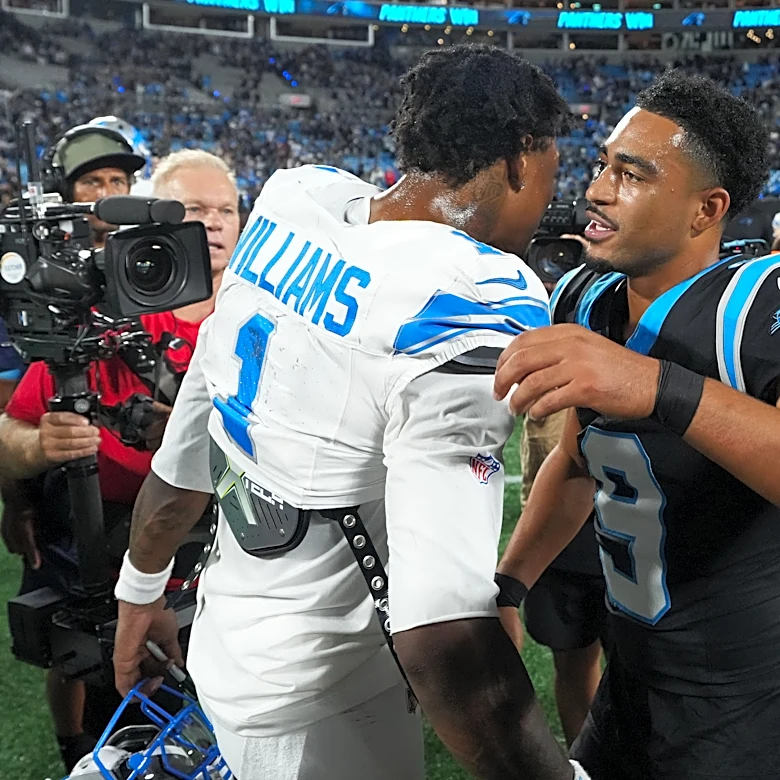
If I were to give a report card-style comment, my summation of Allen’s play so far would be this: “Performs inconsistently; work quality varies.” At times this season, Allen has been masterful. In the first two games of the season, he threw for 582 yards and five touchdowns with no turnovers. He had 92 rushing yards and four more touchdowns on the ground. He had a QB rating of 125.8 and he completed 66.7% of his passes. In Buffalo’s last two games, though, he’s not been nearly as effective.
Allen is still completing passes at a high rate, completing 66.1% of his throws in the last two games. However, he’s passed for 457 yards with one touchdown against three interceptions. He’s rushed 13 times for just 26 yards, adding three more scores on the ground. His quarterback rating is just 73.9 over those two games, and he’s also lost a fumble. Allen shouldn’t need to be superhuman every week for Buffalo to compete, and while he played better against the Patriots than he did against the Los Angeles Chargers, he still wasn’t as good as he was in Weeks One and Two.
Running Backs: B+
This is not a James Cook III message, as his individual grade is really what boosts this entire grouping. None of Cook’s backups—Ray Davis, Frank Gore Jr., and Ty Johnson have all suited up this season—have provided much in the way of production, so it’s a group buoyed by Cook and his gaudy six yards per carry average. Cook has 70 rushes for 421 yards and three touchdowns this season; however, he’s already fumbled twice. He also has provided next to nothing as a receiver, catching just six of ten targets for 24 yards. What have Cook’s backups done?
Well, the aforementioned trio has just four total carries this season—not a typo—for 12 yards. Davis has one reception for four yards, while Johnson has six receptions for 59 yards. Cook is a dynamic rusher, but I’d really like to see the Bills incorporate some sort of change-of-pace out of the backfield. Whether that means using someone else to rest his legs or using Cook as a receiver more is up to the coaching staff, but right now, Buffalo’s a little predictable in how they’re deploying Cook.
Wide Receivers: B
This is another grouping where there has definitely been some good—DJ Moore’s first game as a Bill, Keon Coleman’s performance against New England—but the overall production of the group leaves some room for improvement. Moore’s effectiveness has been hampered by a shoulder injury that he suffered in the second quarter of Buffalo’s second game, a 41-31 win over the Detroit Lions. After catching five passes for 100 yards and a score against the Houston Texans in the opening week, he’s caught just seven passes for 78 yards in the three games since. Buffalo really targets three receivers in the passing game, as Moore (20 targets), Khalil Shakir (a team-high 23 targets), and Coleman (16 targets) all outpace the fourth receiver, Joshua Palmer (9 targets) in that category. Shakir was invisible for much of the season until the New England game, too, as he essentially doubled his season totals by catching seven passes for 82 yards on the afternoon.
Coleman has been extremely efficient, catching 14 of his 16 targets, and he has more receiving yards (217) than anyone in his positional group. Palmer has caught two highlight-reel touchdowns, but he’s also missed a handful of easy grabs, and he has shown little ability to win in a contested catch situation. Rookie Skyler Bell has yet to see the field, and Greg Dortch hasn’t seen a target in the passing game. A healthy Moore amplifies this group, and I wouldn’t be mad at a shuffle of the gameday jerseys to see if Bell can provide some juice. Aside from the two touchdowns, it wouldn’t be difficult for him to match Palmer’s production (three catches on nine targets for 80 yards).
Tight Ends: B+
This likely would have been an A or an A- if the gameplan on Sunday had actually included the team’s best receiver. Sure, the Patriots knew that they had to key on Dalton Kincaid, but how does the head coach and play caller allow them to entirely eighty-six No. 86? Kincaid leads the team in receptions (15; tied with Shakir) and receiving yards (270). He didn’t see his second target of the game on Sunday until the Bills’ final drive, and that’s when he made his first catch. Dawson Knox has caught all six of his targets for 30 yards and a score. Jackson Hawes has just one target, but he remains a menace as an in-line blocker.
Speaking of blocking, Kincaid has improved tremendously in that area; while he once was a liability on the outside, he’s done a nice job clearing space for Cook in the run game. It’s inexcusable for someone with Kincaid’s talent to see two targets in a game, and it’s inexplicable why that would happen in a game where DJ Moore was out with an injury. The tight end group has pulled its weight.
Offensive Line: C+
This grade is a tale of two halves. In the run game, the blocking has been close to A-level. In the pass game, there are too many instances where guys who are paid handsomely are losing one-on-ones to sustain such a high mark. Dion Dawkins, for example, is having a rough go of it at left tackle. He lost weight in the offseason to improve his quickness and agility, but I’ve seen him lose battle against bull rushes far too often this season. There’s a lot of lean and reach in his technique, as well, which doesn’t help that bull rush. HisPro Football Focus grades have been good this season, but that’s because of his run block grade (85.3, third-best at tackle) boosting his pass-block grade (68.3, 35th among tackles).
Spencer Brown has the opposite issue, as the eye test has shown him to be great for much of the season, but his PFF grades are middling. The interior offensive line has seen some mixed returns, as well, with Connor McGovern anchoring (he appeared to allow his first sack in a very long time against the Chargers, but it seems that it wasn’t credited to him), O’Cyrus Torrence showing improvement, and Alec Anderson playing some hit-or-miss ball. Overall, this is a unit that seems to have taken a brief step back from last season, as they’ve been strong in run blocking and not nearly as good in pass protection. Hopefully, as the group adjusts to having Anderson in the lineup full-time, they’ll continue to gel and improve as the season progresses.
Defensive Line: B
Deone Walker is elite. The big second-year man has generated plenty of buzz this season, and deservedly so. DeWayne Carter has become a nice rotational piece, and he’s honestly played well enough where I would be comfortable with him starting games. Landon Jackson has stepped forward, as well, as someone who can jump in the mix and use his length to impact both the run game and the pass game. Ed Oliver, however, has been on a milk carton, as a Week Two hip injury slowed him down, and it looks like a knee injury suffered against New England is poised to slow him further. T.J. Sanders hasn’t played due to a litany of injuries.
Greg Gaines has provided some value in the middle, but this group mostly feels like it’s Walker and some rotational pieces. That’s fine for most of the names here, but for players like Sanders and Oliver, their inability to contribute much is holding the unit back. Buffalo’s defense is much improved against the run, and while their pass rush has been solid, it’s not translating into gains in the pass defense. More to come on that later.
Outside Linebackers: A-
Greg Rousseau is a dude. Bradley Chubb has been very good. Michael Hoecht isn’t all the way there yet as he works back from an Achilles tear last season, but he’s been able to make an impact in the pass rush. Even rookie T.J. Parker, who started slowly, notched his first career sack, albeit in a partial capacity, during Sunday’s loss to New England. Buffalo’s foursome of outside linebackers hasn’t really had to work in third-year man Javon Solomon, either, as he has mostly been deployed on special teams.
Veteran Mike Danna has been a healthy scratch in each game this season, so he hasn’t even had to play. While the defense has been frustrating overall, it’s not because of the rush linebacker group. They’ve started hot for new coordinator Jim Leonhard, with Rousseau’s development into a true game-wrecker .
Inside Linebackers: C-
This group has looked strong against the run, as Buffalo is containing opposing team’s running backs. Last week, they allowed quarterback Drake Maye to run for 54 yards on eight carries, but they held New England’s running backs to just 89 yards on 27 carries. Those QB runs often come down to scheme, as someone like Maye can identify when there isn’t a spy on him and take off, especially against man coverage. Speaking of coverage, whether it’s been Dorian Williams, Terrel Bernard, or Kaleb Elarms-Orr, the linebacker group has been brutal. Williams has never been great in that area, so his struggles aren’t surprising, but Bernard seems to have regressed tremendously this season.
He received the dreaded vote of confidence from head coach Joe Brady in Monday’s press conference following the New England loss, but Bernard hasn’t passed the eye test for quite some time now. Expect an overhaul to this group next season. For now, the Bills have some options—veteran Shaq Thompson, who I thought outplayed Bernard last season, is on the practice squad—but their truest hope is to trust that the group will improve with more time on task. I am hopeful, but I’m not holding my breath, either.
Secondary: F
Perhaps I should break this down by corners and safeties (and maybe in future installments I will), but for now, the entire defensive secondary can lump together into a bucket of bad. Buffalo’s top four corners—Christian Benford, Maxwell Hairston, Davison Igbinosun, and Dee Alford—have been varying degrees of poor, and I don’t think it’s a stretch to say that Igbinosun has been the best of the bunch relative to preseason expectations. Cole Bishop hasn’t looked comfortable, CJ Gardner-Johnson has been somewhere between below average and okay, and Damar Hamlin is a downright liability athletically. Injuries aren’t helping this group, as Jordan Hancock is on injured reserve, Benford missed Sunday’s game, Alford hurt his ankle, and Te’Cory Couch, who was elevated from the practice squad, injured his hamstring.
The coverage changes that Jim Leonhard might want to make haven’t worked, and whether that’s because of poor coaching or a lack of talent on the back end might be up for debate, but I’d say it’s a mixture of both. Buffalo clearly doesn’t have the horses to run the kind of race Leonhard wants to run. It’s on him and the defensive staff to put the players in a position to succeed. He has to find something that works for this group, and fast, because aside from a solid defensive effort against an offensively-challenged Chargers team, this defense has looked atrocious. Most of those issues have been a result of breakdowns in coverage. The defensive secondary must be better, and I suppose the silver lining is that there’s really only one way for them to go from here as the season moves ahead.
Special Teams: A
Tyler Bass has made all six of his field goal attempts, and he’s 13-for-14 on PATs. Tommy Doman Jr. is averaging 48.6 yards per punt, and he has a net average of 45 yards per punt. Four of his nine punts have been downed inside the 20-yard line. The Bills are fifth in average drive start, averaging a start from on their 32.8 yard line. Greg Dortch has been a positive addition, as he’s averaging 8.8 yards per punt return, and he’s also done a great job covering punts.
Dortch also has mastered the fake-out move, drawing gunners towards him as punts fly harmlessly over his head and into the end zone for a touchback. Sam Franklin Jr., Javon Solomon, and Joe Andreessen have been outstanding on kick coverage, as well. Buffalo is in the top half of the league in opponent drive start, as teams are beginning their drives on the 29.4 yard line on average. New special teams coordinator Jeff Rodgers is doing a good job with his group.
Coaching: B
Regardless of how cranky I am about Sunday’s loss, it’s hard to say that a team that’s No. 1 overall in scoring with a strong special teams group is poorly coached. And, as much as I’d like to downgrade the staff for the loss to the Patriots—to be clear, Mike Vrabel and his staff coached circles around Joe Brady and his staff last weekend—one day does not a season make.
This is a coaching staff that faces its first week after a loss, and they are preparing for a team projected by most major outlets to win or appear in the Super Bowl in February. This week gives them a tremendous opportunity to show some mettle. Overall, they’ve earned some solid marks, especially on special teams and on offense, but I think that even they would tell you that there’s room to improve.