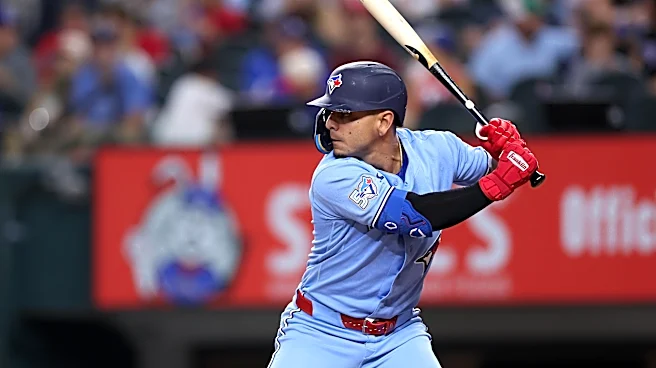

Bo Bichette, a former second round draft pick of the Blue Jays and son of four-time All-Star Dante Bichette, authored one of the biggest plays of the iconic Game 7 of the 2025 World Series when he cracked a three-run home run off Shohei Ohtani in the third inning. At the time, it was impossible to imagine Bichette, a two-time All-Star with Toronto, as anything other than a Blue Jay for life, despite his impending free agency. It seemed like he and the Jays were inextricably linked, and his return
that winter was a mere formality.
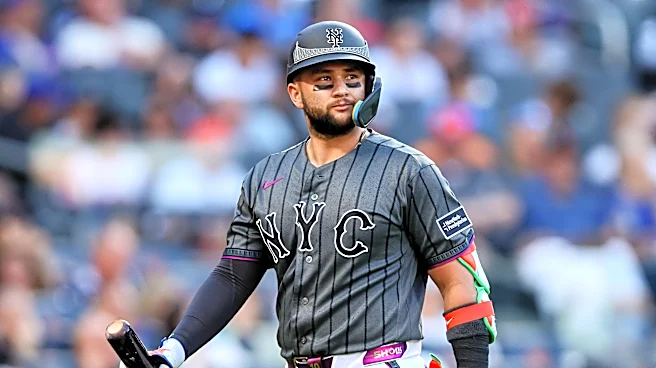
Then, a series of unforeseen events happened along the way, as they often do in the MLB offseason. The Mets let their own homegrown star Pete Alonso, sign elsewhere, and they traded another, Brandon Nimmo, to the Rangers. In an effort to beef up their offense, they made an aggressive play for Kyle Tucker, who ended up with the Dodgers on a short-term, high-AAV deal. Needing something to appease the fanbase and looking to plug a hole in their lineup, they landed Bichette within 24 hours of losing out on Tucker, much to the surprise of the entire league. The deal was for $126 million over three years ($42 million AAV), with opts out strategically offered after each year.
The deal seemed, at the time, like a win for both sides. Given his age, the high AAV, and the ability to re-enter the market in search of that elusive long-term contract, it seemed like the marriage would be convenient for both parties. Thomas Henderson, in his Bichette season preview, went so far as to predict the following:
The Mets and Bichette agreed to the three-year deal, but in all actuality it is likely a one-year contract…In all likelihood, Bichette will perform well enough to forgo the $84 million left on his contract to chase long-term stability, which is part of the reason why the Mets were into him in the first place.
To Thomas’ credit, this was an extremely rational and level-headed prediction, and one that I’d guess 99% of Mets fans envisioned when the deal was announced. However, a not-so-funny thing happened along the way: Bichette performed well below his career norms, becoming one of the most disappointing Mets during the course of an overly-frustrating 2026 season. As a result, the near-certainty of his opt out has reversed, and Bichette exercised his player option for 2027. Given his overall numbers and the uncertainty associated with the looming lockout, it’s hard to blame him.
Bichette fell victim to one of the most common occurrences of star players coming to New York—the slow start. And oh boy, was it ever slow. Bichette gave fans immediate buyer’s remorse with a 2-for-22 start over his first five games. He strung together hits in 10 of his next 11 games and raised his slash line to .250/.300/.328 while also finally contributing his first home run in his 15th game in orange and blue, but he hit another dry spell that saw him go 13-for-62 (.210) to close out the month.
At the end of April, he had posted a paltry .590 OPS and 64 wRC+, not just well below his career norms but also below his career-worst 2024 season, one that was marred by injuries. To that point, he only had two home runs and seven total extra base hits, while driving in just 14 runs as the Mets continued to slide out of contention before the calendar even turned to May. His May was even worse, as he hit .207/.279/.297 across the calendar month, his worst month as a Met. He finished the month with a 64 wRC+ and a .576 OPS, well below what you’d expect from Bichette. During this span, he suffered through a career-worst 71 at-bat stretch in which he failed to pick up an extra base hit, a streak that mercifully ended with a home run on May 18 against the Nationals. It was at this point that fans really began to wonder if we’d ever see the elite version of Bichette at Citi Field.
After two consecutive goose eggs to begin June, Bichette turned a corner on June 3. The third baseman picked up his first four-hit game as a Met while driving him three runs to help New York beat the Mariners 7-1. It seemed like a positive development, and Bichette ran with it as he finally started to resemble the guy who owned a career 122 wRC+ and an .806 OPS. From June 3 through the All-Star break, he raised his batting average by 42 points and his OPS by 107 points, as he hit .331/.354/.515 with five homers and a 137 wRC+ across 35 games. This was, undoubtably, his best stretch as a Met, as Bichette finally seemed to be entering his comfort zone.
Bichette was demonstrably better than he was in April and May throughout the remainder of the season, but he was still far from what the team was hoping he’d be, which is an impact bat in the lineup. He hit .289/.337/.447 with 13 home runs and a 117 wRC+ in his final 99 games of the year after hitting .213/.271/.229 with five homers and a 61 wRC+ in his first 61 games. Despite that, and this is not something that can be quantified well with statistics, but it never felt like Bichette ever had a defining moment with the club. I even searched Google for his biggest moments as a Met in 2026 to refresh my memory, and not much really came up. The best I could unearth was his six-RBI game in a 7-5 win against the Braves on June 12, his five-hit game against the Pirates in an 11-1 victory on August 9 and his go-ahead, three-run home run in the eighth inning of the team’s 7-5 win over the Giants on September 6. Perhaps it’s due to the team’s place in the standings, but none of these really stood out as particularly impactful or meaningful, except maybe his home run against San Francisco.
He finished the year with a 96 wRC+ and a .702 OPS, his second-worst output in both categories behind only his 2024 campaign. After posting at least 3.8 fWAR in four of his previous five seasons, he managed just 1.9 fWAR in 160 games. On the bright side, he avoided injury and managed to play in a career-high 160 games while falling one plate appearance short of matching his career-high from 2022. He also walked at a career-best 7% clip in 2026, so that’s something.
Nearly 1,100 words into this review and I have not touched upon his defense, which was the one thing fans couldn’t accurately gauge heading into 2026. Bichette had spent his entire career at shortstop, but as a consequence of signing here, had to shift to third base—shortstop is, after all, occupied by Francisco Lindor, and Marcus Semien was penciled in at second. Having never played an inning in the field outside of shortstop in the majors, it stood to reason that this change could be a disaster, especially given the uncertainty of how his arm would play making those long-range throws. After some early-season growing pains, his defense was pretty much a non-factor, which isn’t the worst thing in the world.
Perhaps it’s because his offensive shortcomings took center stage, but you basically forgot he was playing a new position. He posted a 1 OAA but -8 DRS at third in 943 2/3 innings at the position. Because of Lindor’s injuries, he saw more time at short than we would have otherwise liked, and he posted -2 OAA and -2 DRS in 391 1/3 innings there. He also played one inning at second, his first and only inning at the position in the majors to date. He had already started showing decline at short in 2025, finishing his final year in Toronto with -13 OAA and -12 DRS, which is not ideal. Given his defensive output in 2026, you’d take those numbers going forward.
So that brings us to Bichette exercising his player option for 2027. Bichette took the safest option, which was a guaranteed $42 million coming off the worst fully-healthy season of his career and with the chance that offseason will be completely chaotic given the truncated free agency period leading up to the lockout. Bichette gave himself security and can still opt out after 2027, but even that seems unlikely. More realistically, he’ll take the guaranteed $84 million in front of him and re-enter the market at 30 years old and get the long-term deal he’s been seeking. That’s not a bad deal for Bichette, and it makes too much sense.
How you view that mostly depends on how you gauge his 2026 season. The best-case scenario is that Bichette has an incredible bounce-back performance, which means the Mets get a bona fide stud in the middle of their lineup next year to give Lindor and Juan Soto the support they were hoping for this year. If you’re more of a cynic, another year like last year at a $42 million tag would not be ideal for the Mets’ plans.
All that is to say that fans should get comfortable seeing Bichette manning third and batting in the middle of the team’s lineup. Bichette, despite what he showed for parts of this year, is a professional hitter and an All-Star talent, so there are worse problems to have than worrying about Bichette returning to your team for another season.