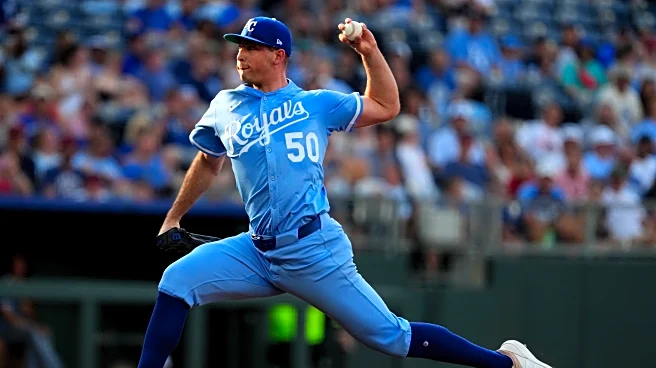

It’s been 11 years since the Mets last won the division, coincidentally the last time they made it to the World Series, losing to the Royals in five games. A historic second-half collapse saw them plummet from division leaders to being dumped out of the playoff picture entirely with a loss to the Marlins on the final day of the regular season. Perhaps the embarrassment of that demise served as a spur in owner Steve Cohen’s side, because he authorized arguably the most significant roster upheaval
of any team this past winter, but will it be enough to improve their fortunes in a tough NL East?
New York Mets
2025 record: 83-79 (2nd, NL East)
2026 FanGraphs projection: 90-72 (1st, NL East)
Following a three-game sweep of the Nationals in the second week of June, the Mets held a 5.5-game lead over the Phillies. The Queens outfit then proceeded to lose its next seven games, finishing the month with just three wins in a 17-game span. What once looked like a lock to make the playoffs evaporated in a moment, leaving the Mets needing a win against the Marlins on the final day of the regular season to sneak in as the final NL Wild Card ahead of the Reds. That did not come to pass.
Going from an 89-win team that pushed the Dodgers to six games in the 2025 NLCS to an 83-win team that missed the playoffs entirely did not sit well in Queens. Determined to avoid a repeat of such an ignominious finish, Cohen authored a veritable clearing of house over the winter, purging many of the Mets’ mainstays of the last decade.
That included allowing Pete Alonso and Edwin Díaz to depart in free agency. It was surprising to see the Mets decline to match the Orioles’ offer to Alonso, seemingly content to watch the franchise leader in home runs and fan favorite depart 200 miles south down I-95. The same can’t be said for Díaz, the Mets just about matching the Dodgers’ offer which ultimately proved enough to convince the three-time All-Star closer to switch coasts. Then there were the frankly stunning trades of Brandon Nimmo and Jeff McNeil, the Mets swapping Nimmo for Marcus Semien from the Rangers in December before sending McNeil to the Athletics for a pitching prospect and cash considerations amid vague and since-refuted rumors of their roles in stirring clubhouse disharmony.
With the departures of Alonso, Díaz, Nimmo, and McNeil, the Mets subtracted their four longest-tenured players to usher in a new era built in the image of team president David Stearns. He chose a peculiar strategy of targeting poor-fielding middle infielders and asking them to learn new positions, starting with a two-year, $40 million deal for Jorge Polanco to take Alonso’s place at first. They followed this up by stealing Bo Bichette out from underneath the Phillies at the last minute, inking the longtime Blue Jay for three years and $126 million to be their new third baseman.
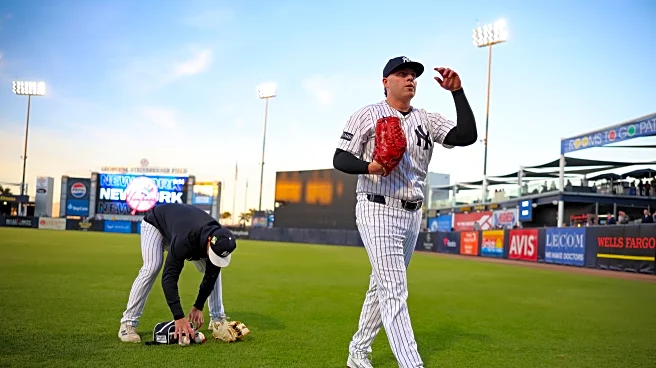
Those weren’t the only holes they needed to plug, the trades of Nimmo and McNeil and free agency departures of Cedric Mullins and Starling Marte creating a pair of vacancies in the outfield, while the exits of Díaz and Trade Deadline acquisitions Tyler Rogers, Ryan Helsley, and Gregory Soto necessitated a bullpen rebuild. To that end, the Mets acquired perennial trade candidate Luis Robert Jr. from the White Sox to man center, and look poised to hand top hitting prospect Carson Benge a legitimate opportunity to play left. Stearns then shifted his attention to the bullpen across town, signing 2025 Yankees closer and setup man Devin Williams and Luke Weaver for a combined $73 million.
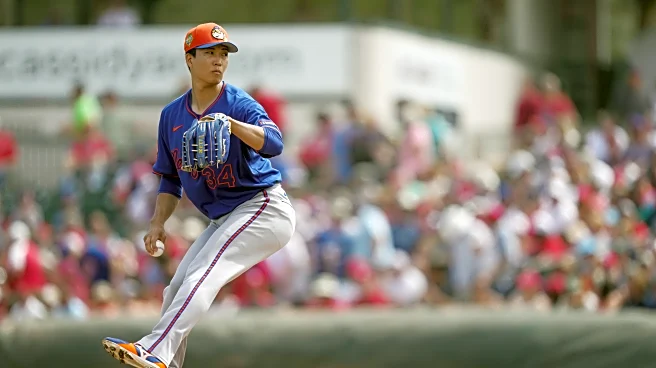
The pièce de résistance of their offseason saw the Mets acquire two-time All-Star Freddy Peralta to be their long-elusive ace, sending a pair of highly regarded prospects in shortstop Jett Williams and pitcher Brandon Sproat to the Brewers to complete the deal. Even with the addition of Peralta, there are still major question marks looming over the rotation. They have six players — Peralta, Nolan McLean, David Peterson, Clay Holmes, Sean Manaea, and Kodai Senga — penciled into the starting staff, yet none are projected to be worth three wins as several models expect significant regression from Peralta and Peterson. Top prospect McLean impressed upon his call-up and could very well smash the over on his projections, and Peterson finally put it all together in his age-29 season, but outside of Peralta there is still a ton of downside and injury risk surrounding the other five starters.
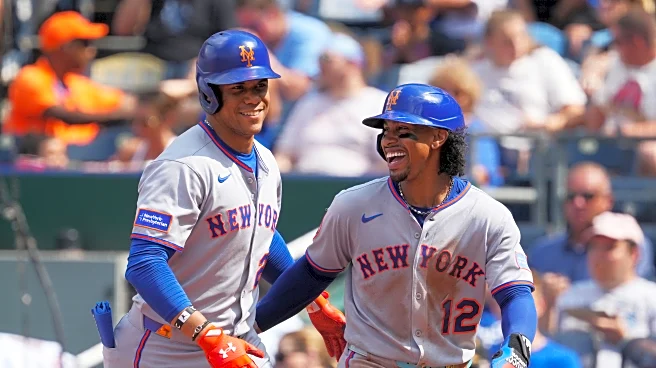
Things look a lot rosier on the hitting side. Any roster built around Juan Soto and Francisco Lindor is an enviable starting point. In Soto and Lindor, the Mets boast two of the top ten position players in baseball in terms of projected fWAR for 2026, Soto projected for a 163 wRC+ and 6.1 fWAR and Lindor a 123 wRC+ and 5.0 fWAR. Bichette’s addition should go a long way to replacing the production lost from Alonso’s departure, and on the whole this is now a team with improved infield versatility and outfield defense.
A peak at various projection systems confirms that these offseason moves should improve the Mets’ outlook for 2026. FanGraphs predicts the Mets to win the division with a 92-70 record, assigning them a 79.3-percent chance to make the playoffs. PECOTA agrees, tabbing the Mets for a division-leading 89-73 record and 82.3-percent playoff odds. The question is how much the disparity between the offense and pitching projections will play a role. The Mets are projected to field the second-best offense in MLB with 31.5 batting wins, but sits middle of the pack at just 15.6 pitching wins. You could easily see the offense carrying them in most of their wins. All eyes will be turned toward the pitching staff — how much will they drag down the offense and can they avoid a similar collapse to the one that doomed the team over the summer and down the stretch last season?
More Pinstripe Alley MLB team season previews can be found here.