

Every week, we’re digging into the trenches, because that’s where the real action happens. We shine the spotlight on the Dallas Cowboys offensive line, who’s holding it down, who’s opening holes for the running backs, and who’s keeping Dak Prescott clean. Let’s get to it.
Trench Dashboard
Here are the Cowboys offensive line metrics for the 2026 season so far.
Pass Block Win Rate – 50% 16th
Run Block Win Rate – 67% 31st
Pressure rate allowed – 28% 10th
Sacks allowed – 3 (2nd)
Last three week trend: Pass pro good, run blocking
improving
The Pressure Point
Every opponent will look at the Cowboys offensive line and ask, where can we break it? Here’s what to watch for.
PRESSURE POINT: Terence Steele has a Will Anderson Jr. problem
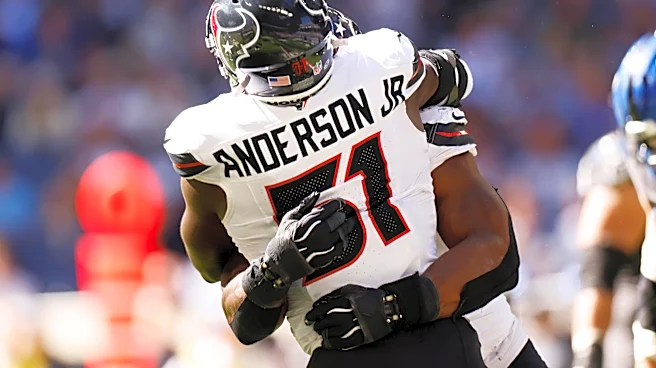
There is no need to overcomplicate the biggest concern for Dallas this week. Will Anderson Jr. is playing outstanding football.
Against Indianapolis last week, Anderson produced nine pressures from only 32 pass-rush snaps. PFF credited him with three sacks and gave him a 93.3 pass-rush grade for the game. Official NFL statistics credit Anderson with 2.5 sacks in the game and four through three weeks.
Anderson was on the left side of its defensive front, meaning many of his snaps naturally bring him toward Dallas’ right tackle. Steele has already been the more concerning tackle in pass protection this season, while Tyler Guyton has taken a noticeable step forward on the opposite side.
Anderson can win in several ways. He is quick enough to race around the outside, but he also has the strength to drive a tackle backwards toward the quarterback.
PRESSURE POINT: Houston can squeeze the pocket from both directions
Stopping Anderson does not end the problem. Danielle Hunter is on the opposite edge. His start statistically has been quieter with four pressures and one sack, but this is a player who generated 92 pressures across the 2025 season.
Houston also has Sheldon Rankins attacking through the middle. Rankins has six pressures and a 72.3 PFF pass-rush grade through three games.
If Anderson pushes Steele backwards from one side while Hunter does the same from the other, Prescott normally has room to step forward. If Rankins is also winning through the middle, that escape route disappears. That is how Houston can create sacks without having to blitz heavily.
The good news is Dallas has allowed only three sacks through three games, so the protection has generally held up well despite Smith’s absence. Keeping that number low against this front would be one of the offensive line’s best performances of the season.
Where to attack
Every defensive line has a weakness, here’s the Texans soft spots and where the Cowboys offensive line should attack.
GREEN LIGHT: Run toward Danielle Hunter, not Will Anderson
Houston does not have an obvious weakness against the run. The Texans have allowed only 260 rushing yards through three games at 3.5 yards per carry, with opponents yet to reach 90 rushing yards in a game. But Dallas still has to run the football, the key is choosing where.
Anderson currently owns a 91.0 PFF run-defense grade. Running repeatedly toward him would be asking for trouble, Hunter is a different story.
His current 50.6 run-defense grade ranks 88th among qualifying edge defenders. That gives Dallas a target. When Hunter is lined up opposite Tyler Guyton, Dallas should test that side with Javonte Williams. Let Guyton use the strength he has shown as a run blocker and make Hunter repeatedly defend rather than rush Prescott.
Guyton’s development is particularly encouraging here. He currently carries a 79.6 PFF run-blocking grade, sixth among offensive tackles. That is strength against weakness. Dallas finally established a running game against Baltimore. It should not abandon it just because Houston has impressive season-long rushing numbers.
GREEN LIGHT: Attack Sheldon Rankins in the running game
There is another possible opening inside. Rankins has provided useful pass rush production, but his run defense has been significantly weaker. His current 41.5 PFF run-defense grade ranks 100th among qualifying interior defensive linemen.
This is where Tyler Booker and Cooper Beebe should become important. Booker has been one of Dallas’ best run blockers this season. Through the available PFF data, his 78.6 run-blocking grade ranked ninth among guards.
Dallas can put Booker and Beebe together on combination blocks against Houston’s interior defenders. That is exactly the type of physical football Dallas showed more of against Baltimore.
Houston is good against the run overall, so these yards will not necessarily come easily. But Dallas does not need five yards every time. Four yards on first down is useful because it keeps Anderson and Hunter guessing.
The Chaos Report
Here’s the Houston Texans defensive trends for this season at the defensive line.
Sack Total – 11 (3rd)
Pass Rush Win Rate – 42% 30th
Run Stop Win Rate – 31% 10th
QB Pressure Rate – 23% (26th)
Last three week trend: Pass rush trending up
Matchup of the week
Terence Steele vs. Will Anderson Jr.
This may be the most important individual offensive-line matchup Dallas has faced this season. Anderson is not simply playing well. He is currently one of the most disruptive defenders in football.
Steele struggled at times against Baltimore and was also responsible for a costly holding penalty that removed an important Dallas first down. If Steele handles Anderson himself, Dallas can leave tight ends in the passing game and allow running backs to release into routes.
If Steele needs constant help, Houston begins dictating what Dallas can do offensively. That is why this matchup affects much more than two players.
Best route to success:
Stay out of third-and-long and make Houston’s edge rushers defend the entire playbook rather than simply hunt Prescott.
Injury Updates:
Nothing to add to the Cowboys, but Tyler Smith can officially return from injured reserve after this week.
For Houston, Jadeveon Clowney and Mario Edwards Jr. are both questionable. Kayden McDonald went to IR with an ankle injury two weeks ago.