

Earlier this year I took a look at two positive examples of teams that had been in the Colorado Rockies position and seemed to have turned things around. The Miami Marlins turned a 100-loss team in 2024 into an almost .500 squad in each of the last two seasons while the Chicago White Sox have taken their team to the playoffs just two seasons after losing 121 games in a single season.
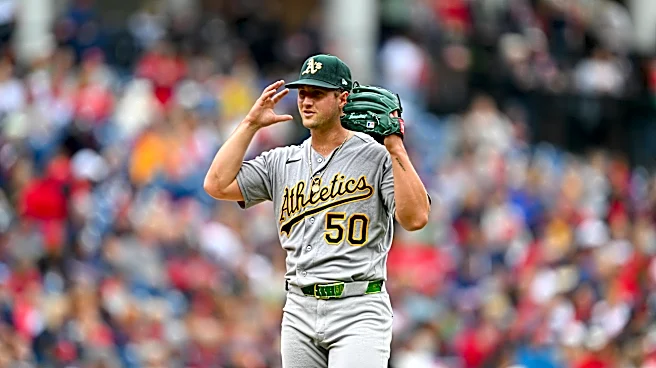
Coming into the season, the Athletics looked like they were perhaps on a similar upwards trajectory. Coming off an
abysmal 50-112 record in 2024, the A’s had won more games in each of the past two season. They had what looked like a young core of exciting hitters and a shiny new ballpark being built in Las Vegas. It appeared as though the franchise was on the upswing.
Instead, the Athletics fortunes took a dive back into the same lowly tier of teams that the Rockies currently occupy and lost 98 games.
As important as it is to diagnose what has caused teams to have success and emulate them, it’s equally as important to consider the circumstances that have led other teams to continued failure.
So, which portions of the Athletics troubles can the Rockies learn from?
Don’t abandon your fanbase
First, we have to get the obvious factor out of the way since it has little bearing currently on the Rockies. The largest factor looming over the Athletics organization is unique to their franchise.
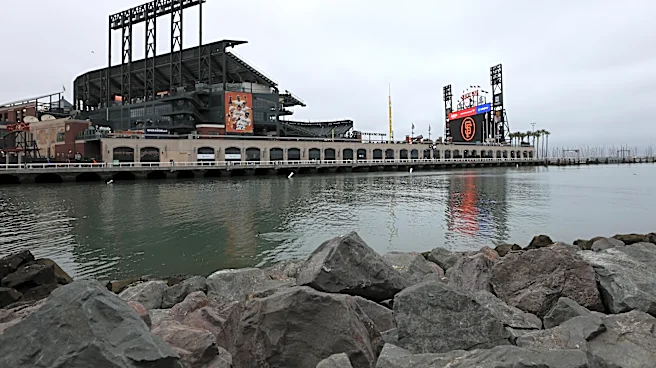
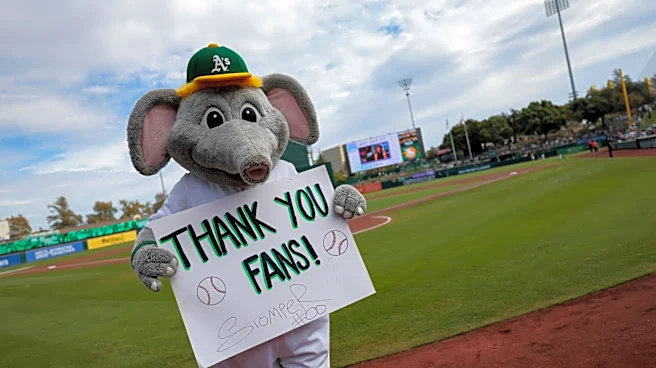
Owner John Fisher chose to move the team away from Oakland, its home for decades, after failing to secure a sweetheart deal with the local government. This has left the team in a transitory period for the past two seasons where they have been playing in a minor-league ballpark in West Sacramento.
In theory, they only need to stay there for one more season until they move to their currently under construction, new ballpark in Las Vegas.
This doesn’t change the fact that they have sacrificed all good will they had with the people who had previously attended their games. Fisher cut off decades of attachment from the people of Oakland in order to move somewhere that he wouldn’t need to pay as much of the construction costs for a new stadium.
Ultimately, this transitional period may come to pass, and the team’s new roots in Las Vegas could eventually prove strong. It is, however, a wild gamble that has had clear negative effects on the team in the short term before even considering the emotional cost to the people of the Bay Area.

The team’s temporary ballpark in Sacramento has been a frequent source of complaints from players accustomed to Major League-style accommodations. There have been rumblings for the past two offseasons that the ballpark has been a stumbling block in attempting to convince free agents to sign with the team.
Beyond the players, the lack of seating at the small ballpark has meant that their attendance numbers have been dramatically lower than all other teams for the past two seasons.
These are not factors that directly result in wins and losses on the field, but they are certainly additional hurdles to overcome in attempting to put together a winning roster. This has been, and remains, an entirely self-inflicted problem.
The most extreme version of this problem is not one the Rockies have come close to matching. Their ownership has not made any public rumblings of being dissatisfied with their home in Denver or Coors Field. If anything, the team’s yearly attendance has seemed relatively immune to their poor play on the field throughout much of their history.
That being said, the Rockies attendance has started to dip over the past few seasons. After ranking ninth in all of Major League Baseball as recently as 2021, the Rockies have slipped in the attendance rankings every season since. In 2026 they ranked 18th in the league.

They have a long way to go to reach the utter lack of fan support that John Fisher A’s currently have, but they should be careful not to take that for granted in the long term.
Don’t underestimate the importance of depth
In 2025, the Athletics lineup was one of the most exciting in baseball:
- Veteran slugger Brent Rooker played all 162 games and hit 30 home runs for the third straight season.
- Catcher Shea Langeliers proved that his breakout 2024 wasn’t a fluke by hitting 31 home runs of his own.
- Tyler Soderstrom finally made good on his prospect pedigree with a 120 wRC+ while learning a position entirely new to him.
- Rookie shortstop Jacob Wilson hit the ground running and was both second in the Major League batting title and American League Rookie of the Year races.
Second, that is, to the A’s other rookie star Nick Kurtz.
The fourth overall pick in 2024 (one after the Rockies selected Charlie Condon), Kurtz rocketed through the minor leagues and made his debut at the end of April the following season. In his rookie season, Kurtz was not only unanimously voted Rookie of the Year but also his .290/.383/.619 slash line earned him American League MVP votes.
With all five of these players and bounce-back candidate Lawrence Butler under team control through at least 2028, the A’s had an offensive core to envy at the conclusion of the 2025 season.
So what happened in 2026? Injuries exposed a lack of depth.
Every player named above other than Butler spent at least some time on the injured list in 2025. To make it worse, Langeliers was the only one of these players to avoid an elongated stay on the 60-day injured list.
Without a consistent showing from this offensive core, the rest of the team’s faults were on full display. Their lack of pitching talent could not be papered over by mashing home runs the way the front office had drawn it up. A lack of major league baseline talent available in their depth chart was exposed as soon as the their core started going down.
Essentially, they had no fallback options to keep them afloat.

For the 2026 A’s, the plan was to let the exciting lineup core mash and hope that would be enough. As soon as a couple of the key players went down, there was no one else on the team to keep it from sinking back to a nearly 100-loss season.
The Rockies roster is a bit different than the Athletics was heading into last season.
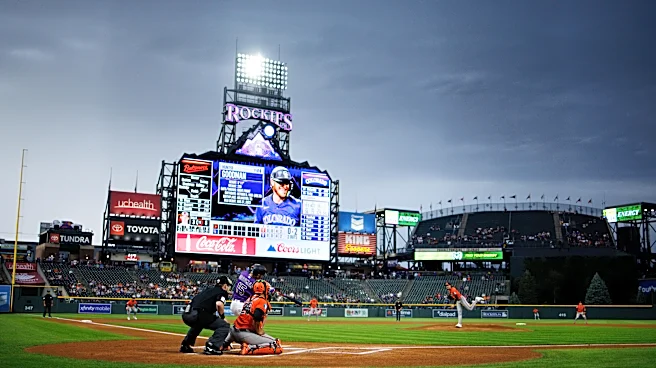
The Rockies have managed to cultivate some exiciting potential core offensive players in Hunter Goodman, TJ Rumfield, and Cole Carrigg, but they don’t yet have anyone that will factor into the MVP race. The Rockies have not been able to cultivate nearly the ceiling that the Athletics did over the past two seasons.
On the flipside, the Rockies front office has made it a point since they were installed last offseason to “raise the floor” of the roster. The additions of players like Willi Castro, Mickey Moniak, Troy Johnston, and Connor Norby are the sort of depth moves that the Athletics failed to make.
While the front office looks to find more upside, they would be wise to also continue adding even more complementary pieces lest they fall into the same trap as the 2026 A’s.
Spend some money
Many of the 2026 Athletics roster problems could have easily been solved in the offseason had they been willing to do one thing: Spend money on free agents.
The team entered last offseason having had their pitching staff put up the 22nd worst fWAR in the Majors despite having employed Mason Miller for the first half of the season.
How did they address this obvious roster weakness? They signed notable aces Aaron Civale, Mark Leiter Jr., and Scott Barlow all for a total of less than $10 million.

That’s not to take anything away from those specific players — a team can never have enough competent big leaguers. (See the first section about not having enough depth.) If the team had already been fielding an expensive roster, simply supplementing it with small deals around the edges like those is both understandable and commendable.
The A’s, on the other hand, only spent a total of $95 million dollars on their 2026 payroll.
With the fifth-lowest payroll commitments in the league, the Athletics decided that the best way to bolster their feeble pitching staff was to sign a handful of depth arms and hope that their small collection of highly touted prospects would be able to make the leap sooner rather than later.
It wasn’t an impossible plan. All of the Athletics most highly rated pitching prospects (Gage Jump, Kade Morris, Jamie Arnold, Wei-En Lin, and Braden Nett) started the season in Double-A or higher.
The future core of their rotation was on the cusp of the majors, so why spend money on high-priced free agents just to block those young players?
Pitching prospects, as it turns out, are not guaranteed to remain healthy, much less live up to their potential. Jump and Morris both made their Major League debuts in 2026, but neither managed an ERA below 5.47. Arnold only just made it to Triple-A to end the season. Lin and Nett both missed significant time to injury. (Lin is still out recovering from Tommy John surgery.)
All told, the youthful wave of reinforcements to an abysmal pitching staff failed to materialize fast enough to matter for the 2026 season.
Had they simply spent money to bring in a handful of short-term stopgaps via free agency, perhaps their team as a whole could have weathered the injuries on the lineup side a bit more. Given that their division was won by the .500 Houston Astros, they would not have needed much to become legitimate contenders.
Instead, they sat on their hands during the winter and continued their modus operandi of moving forward with the cheaper internal options.

The Rockies, heading into this offseason, face a similar choice, albeit within a different specific context. They can either pump money into addressing an abysmal starting rotation, or they can play around with some marginal upgrades and wait for a wave of pitching prospects.
The problem for the Rockies is that they really don’t have an identifiable wave of pitching talent in the minor league system anywhere near what the A’s had coming into 2026. Ensuring that Chase Dollander has a spot in the rotation when his arm is healthy is not reason enough to avoid bringing in outside talent.
If there are quality starting pitchers willing to come to Denver for just money,the front office shouldn’t be scared of spending.
Conclusions
While the 2026 Athletics and the 2027 Rockies aren’t exact mirrors of one another, there are enough similarities to learn from.
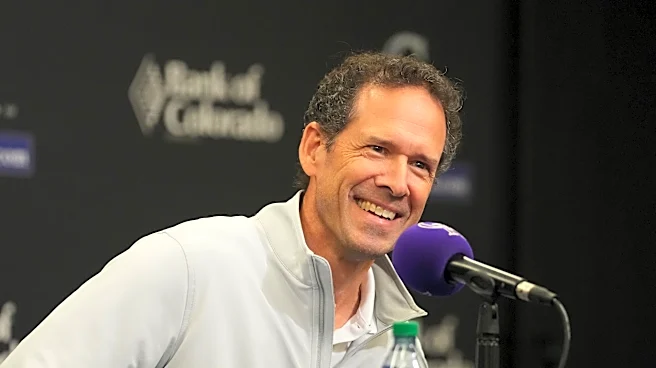
Ultimately, the Athletics rise to prominence was stymied by ownership level decisions that hamstrung their front office. For the Rockies to avoid taking a similar step backwards it is on ownership to not settle for good enough. They should instead continue to empower the front office to make whatever moves they believe will improve the team and not take half measures.
Join the conversation!
Sign up for a user account and get:
- Fewer ads
- Create community posts
- Comment on articles, community posts
- Rec comments, community posts
- New, improved notifications system!
Download the SB Nation app on iOS or Android.
Please keep in mind our Purple Row Community Guidelines when you’re commenting. Thanks!